Leave Your Message
0%

So, you know how Renewable Energy has really shaken up the way we think about power? Well, one of the coolest innovations out there right now is the Vertical Solar Pole. Basically, these are like solar panels built into tall, vertical structures—pretty smart because they make good use of limited space and boost efficiency. Since so many cities are expanding and land is getting scarcer, these poles seem like a pretty neat solution for urban areas.

And let’s be honest, the benefits are pretty impressive. They save a ton of space and can produce energy efficiently. The best part? Their vertical setup lets them catch sunlight from different angles all day long, which really amps up their energy output—especially in busy, crowded places.

Of course, not every spot is perfect for these poles. Things like shadows cast by tall buildings or other obstructions can cut their effectiveness. So, it’s super important to check out a location carefully before going ahead with installing one.

All in all, as we move toward a more sustainable future, Vertical Solar Poles seem like a pretty promising tool. They manage to look good while doing a whole lot of good. That said, the upfront costs and ongoing maintenance can be a bit daunting. Communities need to weigh the pros and cons—think about the benefits versus the hurdles. The choices we make now about these technologies will really shape how we get our energy down the line. It’s worth taking a moment to really consider the long-term impacts before jumping in.
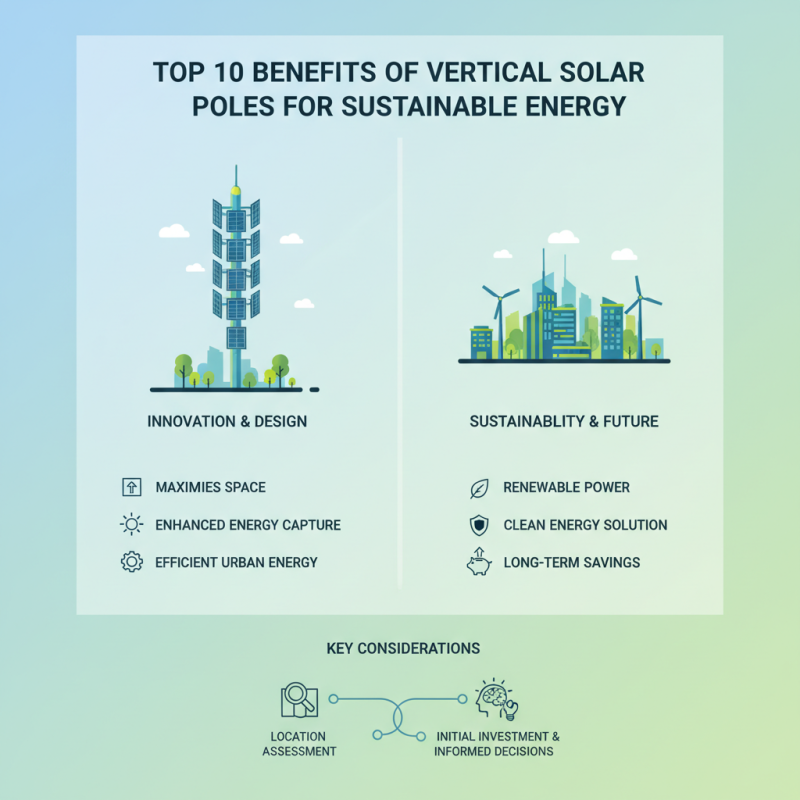
Top 10 Benefits of Vertical Solar Poles for Sustainable Energy?

Overview of Vertical Solar Poles in Sustainable Energy Solutions

Vertical solar poles represent a transformative innovation in sustainable energy solutions. These installations maximize solar energy capture in urban environments. According to the International Renewable Energy Agency, urban areas contribute to over 70% of global greenhouse gas emissions. Vertical solar poles can significantly mitigate this impact. Their design allows for easy integration into existing infrastructures, like parks and rooftops.

These solar structures can produce energy efficiently while taking up minimal space. A study by the National Renewable Energy Laboratory indicates that vertical installations can increase energy output by up to 30% compared to traditional panels. This is crucial as cities face space constraints. Additionally, vertical solar poles can offer dual benefits, functioning as smart lighting solutions at night. However, maintenance can be challenging.

Deployment costs can also be a concern, varying greatly based on location and installation. It's essential for cities to weigh these factors when considering vertical solar technology. While the benefits are evident, urban planners must acknowledge potential obstacles. More research and pilot programs are necessary to optimize these systems for broader adoption. Finding the right balance between innovation and practicality will take time.

Top 10 Benefits of Vertical Solar Poles for Sustainable Energy

Benefit Description Impact on Sustainability Estimated Cost Savings
Space Efficiency Vertical solar poles utilize vertical spaces without requiring extensive ground area. Maximizes land use in urban areas. 10-30% reduction in land acquisition costs.
Increased Energy Generation Higher energy capture due to optimal sun exposure at height. Contributes to higher renewable energy output. Potential energy generation increase of 20% over traditional panels.
Aesthetic Integration Modern designs blend with urban architecture. Enhances the visual appeal of urban landscapes. Can increase property values by up to 15%.
Reduced Environmental Footprint Utilizes lesser materials and fewer resources than traditional solar setups. Supports eco-friendly construction practices. Saves approximately 5-10% on construction materials.
Lower Maintenance Costs Easier access for cleaning and maintenance. Longer lifespan due to reduced accumulation of debris. Up to 20% savings on maintenance costs.
Multipurpose Functionality Can serve as streetlights or communication poles. Maximizes utility of space and infrastructure. Cost avoidance for additional installations.
Improved Air Quality Helps reduce carbon footprints through clean energy production. Contributes to urban air quality improvement. Potential health cost savings from reduced pollution.
Energy Independence Can provide energy for local communities without dependence on grid. Fosters local energy resilience. Significant savings in energy costs over time.
Scalability Easily deployable in various urban environments. Facilitates rapid energy infrastructure development. Lower costs associated with incremental installations.
Job Creation Installation and maintenance of vertical solar poles create job opportunities. Supports local economies through green jobs. Economic boost through sustainable employment.

Key Advantages of Vertical Solar Pole Design for Urban Environments

Urban environments are increasingly adopting vertical solar poles. These innovative designs maximize space while harnessing solar energy effectively. They present an excellent opportunity to generate green energy in compact city spaces.

Vertical solar poles are not only space-efficient but also visually appealing. Their sleek design blends well with modern architecture. This integration enhances the aesthetics of urban areas. However, they may not suit every environment. Consider how shadows from buildings can affect energy output.

Tips: Ensure to position solar poles away from heavy shadows. It’s crucial for maximizing solar capture. Regular maintenance also keeps them efficient. Clean panels will help maintain energy production over time.

These poles can also serve multiple purposes. They can support lighting, signage, or even urban Wi-Fi. This multifunctional capability can reduce the need for additional infrastructure. Still, it’s essential to ensure that designs are durable enough to withstand harsh urban conditions. Sometimes, practicality may lose out to creative designs.

Efficiency Improvements in Energy Generation with Vertical Solar Poles

Vertical solar poles are a novel approach that offers significant efficiency improvements in energy generation. These installations leverage compact designs that optimize space, making them ideal for urban environments. Reportedly, vertical solar poles can capture sunlight more effectively due to their ability to adjust angles with the sun’s position throughout the day. This can lead to energy generation increases of 20% compared to traditional horizontal panels.

Furthermore, industry studies suggest vertical solar technology can produce energy even in low-light conditions. In fact, some reports indicate a 15% efficiency boost in cloudy weather. This factor is crucial in regions where sunlight is not abundant year-round. While the technology is promising, it still faces challenges. The infrastructure costs for installation can be significant, and maintenance requires careful planning and resources.

Despite these hurdles, the potential benefits cannot be ignored. Community adoption of vertical solar poles could encourage local energy solutions and resilience. Innovative designs are still being tested, and the market is evolving. Close observation is necessary to ensure the technology meets energy needs sustainably while being economically viable.

Top 10 Benefits of Vertical Solar Poles for Sustainable Energy

This chart illustrates the top 10 benefits of vertical solar poles for sustainable energy, based on various factors including efficiency, space utilization, and environmental impact. Each benefit is scored from 1 to 10, showcasing their importance in the renewable energy landscape.

Environmental Impact Reduction through Vertical Solar Technology

Vertical solar poles represent a significant advancement in sustainable energy technology. They occupy less ground space and can be installed in urban environments. This innovative approach allows for greater solar energy capture without disrupting existing landscapes. Their design also minimizes environmental footprint, which is vital for reducing carbon emissions. Additionally, vertical installations can enhance aesthetics in crowded areas.

Implementing vertical solar technology leads to various environmental impacts. For instance, they reduce the need for extensive land clearance. Restoration of natural habitats is possible as a result. Furthermore, these poles can improve energy efficiency. They often achieve higher energy production during peak hours. However, challenges persist. Maintenance can be tricky, and the initial installation costs may deter some. There’s also a need for comprehensive studies on long-term viability. Understanding these factors can guide future developments in solar technology.

Space Optimization and Land Use Efficiency with Vertical Solar Poles

Top 10 Benefits of Vertical Solar Poles for Sustainable Energy?

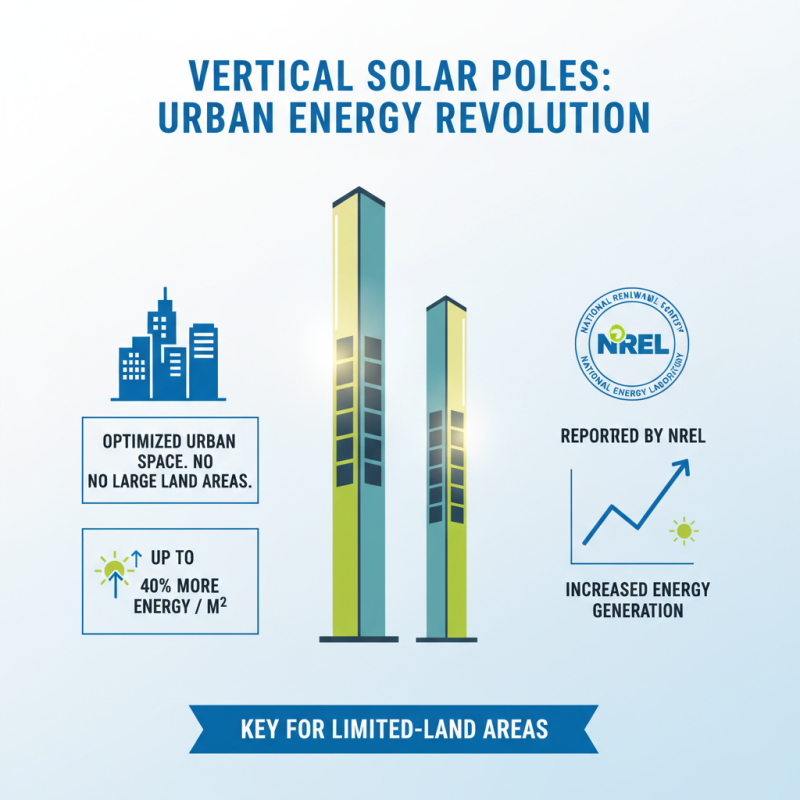
The introduction of vertical solar poles transforms the landscape of renewable energy. They optimize space without occupying large land areas. According to a report from the National Renewable Energy Laboratory, a vertical solar installation can generate up to 40% more energy per square meter compared to traditional panels. This is crucial in urban settings, where land is limited.

Vertical solar poles are often installed along sidewalks or in small public spaces. They utilize otherwise unused areas. By integrating solar technology into urban infrastructure, cities can enhance energy efficiency. A recent study indicated that these installations can reduce land use by 90%, compared to conventional solar farms. This raises questions: Is maximizing utility on limited land enough? Are we sacrificing aesthetic values for efficiency?

While vertical solar poles offer many benefits, they also present challenges. Maintenance can be complicated due to their height. Weather impacts might be more pronounced, affecting performance. Additionally, public acceptance can vary. Are communities ready to embrace this change? These considerations reflect the need for ongoing dialogue as we innovate in the field of sustainable energy.

Cost-Effectiveness of Vertical Solar Poles Compared to Traditional Solar Systems

Vertical solar poles are gaining traction as a viable alternative to traditional solar systems. Their design allows for higher energy capture without requiring extensive ground space. This efficiency is critical, especially in urban environments where land is at a premium. According to the National Renewable Energy Laboratory (NREL), these poles can achieve up to 30% more energy production during peak sunlight hours compared to standard panels.

Cost-effectiveness is a major consideration. Installation of vertical solar poles can be lower by 15% due to reduced land preparation and maintenance needs. The upfront costs might be slightly higher, but the return on investment can be quicker. Research by the International Renewable Energy Agency (IRENA) shows that vertical systems can provide energy cost savings of about 20% over the lifespan of the project. However, one must consider potential drawbacks, such as aesthetics and structural stability in high winds.

Urban planners are exploring vertical solar as part of mixed-use developments. These systems can double as art installations while providing renewable energy. Potential issues regarding local regulations and building codes must be navigated carefully. There's a definite shift toward integrating energy solutions into the urban fabric, yet disconnects in policy and technology can hinder progress. Ultimately, while vertical solar poles present exciting opportunities, their long-term success hinges on balancing costs, efficiency, and community acceptance.

Future Trends and Innovations in Vertical Solar Pole Development

The development of vertical solar poles showcases exciting trends in sustainable energy. These innovative structures maximize sunlight capture. They can be deployed in urban areas, where space is limited. This growing trend also encourages the integration of solar energy into everyday life.

Future designs are focusing on smart technology. Sensors can optimize energy production based on weather conditions. Some prototypes even allow for energy storage within the pole itself. This could lead to a more efficient and reliable energy supply. However, challenges remain in terms of scalability and cost.

Moreover, aesthetics play a role in these developments. Vertical solar poles can enhance city landscapes while providing energy. Public acceptance is crucial for widespread adoption. Designers must consider both functionality and visual appeal. The journey toward innovative solar solutions continues to require imagination and critical reflection.

FAQS

: What is the main purpose of the product?

: The product aims to enhance everyday experiences through innovative features and usability.

Who can use this product?

Anyone looking to improve daily tasks can benefit from its features.

How do I start using it?

Simply follow the provided setup instructions to get started quickly.

Are there any maintenance requirements?

Regular cleaning and occasional updates are recommended to ensure optimal performance.

What is the expected lifespan of the product?

The product is designed for long-term use, but actual lifespan varies by user habits.

Can I return the product if I'm not satisfied?

Returns may be accepted within a specified period, but conditions apply.

Is this product easy to understand?

While many find it intuitive, some may need extra time to adjust.

Can I use it without prior experience?

Yes, but some users may find a learning curve at first.

Are there any common issues?

Some users report minor glitches that can usually be resolved quickly.

How can I provide feedback?

Feedback can be submitted through designated channels for improvement.

Conclusion

Vertical Solar Poles represent a transformative approach to sustainable energy solutions, offering numerous benefits, particularly in urban environments. Their unique design maximizes space efficiency and optimizes land use, making them ideal for areas where traditional solar panels may not be feasible. By capturing sunlight at various angles, Vertical Solar Poles can significantly improve energy generation efficiency, translating to lower costs and reduced environmental impact compared to conventional solar systems.

Moreover, as cities continue to expand, the integration of Vertical Solar Poles into urban infrastructures presents an opportunity to enhance energy accessibility while minimizing the ecological footprint. Looking ahead, innovations in Vertical Solar Pole technology are poised to further advance their capacity and effectiveness, paving the way for a cleaner, more sustainable future in energy generation.

Sophia

Sophia

Sophia is a dedicated marketing professional at Zhongshan Sanhui Lighting Technology Co., Ltd., where she leverages her expertise to elevate the company's brand presence. With a deep understanding of the lighting industry, she excels in showcasing the innovative products that Sanhui offers. Her......
Previous Unlocking Smart City Solutions Top Tips for Sourcing Quality Suppliers