Leave Your Message


So, choosing the best Vertical Solar Pole for buyers around the world? It takes way more than just eyeballing panel size or whatever brightness number is on the spec sheet. Climate matters. Pole height matters. Battery chemistry, wind exposure, road use, and how easy it is to service—all of that shapes how the thing performs over the long haul. A solid system should still light up the area it's supposed to light after a few cloudy days. Not just during a nice little product demo.
Dr. Elena Marquez, a solar-lighting systems engineer and independent infrastructure consultant, puts it well: “The best solar pole is not the brightest one; it is the one that remains dependable when conditions become inconvenient.” That's a big deal if you're comparing a Vertical Solar Pole Street Light across different regions. A coastal road? It may need beefier corrosion protection. A high-altitude project? You'll want to think hard about battery temperature. Dense city areas? Maybe controlled optics make more sense than blasting out extra lumens.
This guide digs into the practical stuff behind a confident purchase—photovoltaic efficiency, battery capacity, smart dimming, light distribution, structural stability, and replacement planning. It also looks at supplier documentation, testing records, warranty clarity, and after-sales support. Honestly, these details can be the difference between an installation that lasts and an expensive experiment.
No single model wins everywhere. Yeah, that's the uncomfortable truth. A compact pole might be great for a pedestrian path but totally wrong for a wide highway. A super-powerful unit can create glare you don't need—and costs you more. Global buyers should push back on shiny specs and ask for real operating data. Even experienced buyers can miss local humidity, dust, or seasonal darkness. The outline below should help you compare products, suppliers, and project risks more clearly before you pick a Vertical Solar Pole.
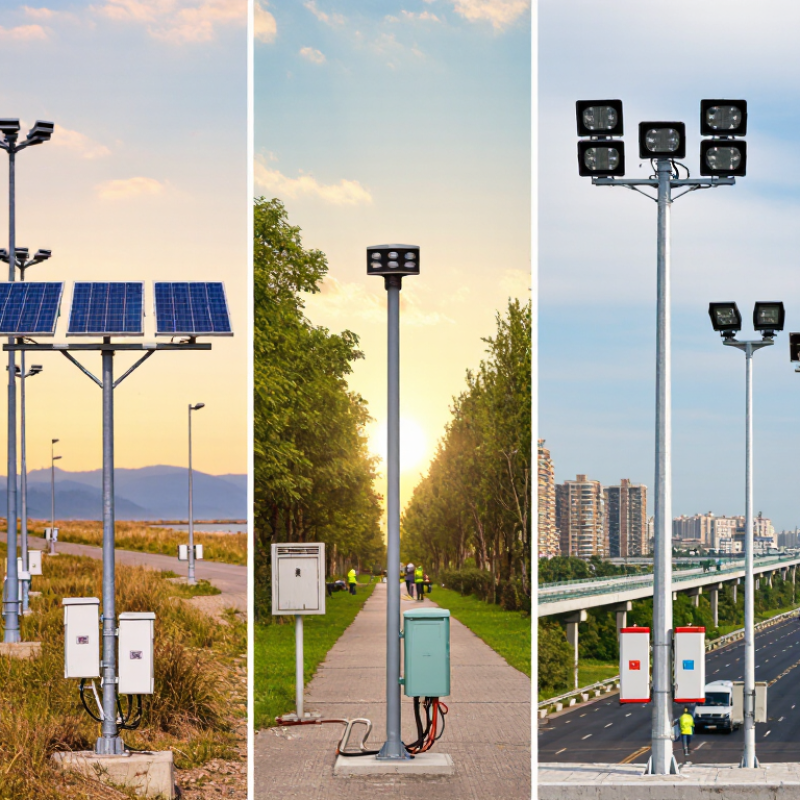
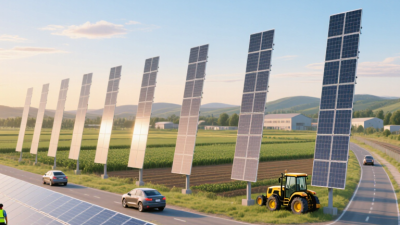
A Vertical Solar Pole is a freestanding solar structure with photovoltaic panels mounted upright around a central post. Unlike rooftop systems, it uses vertical space and needs little ground area. The panels convert sunlight into direct-current electricity through photovoltaic cells. A charge controller regulates this energy before sending it to a battery. An inverter may convert stored power into alternating current for compatible equipment. At night, the battery supplies energy.
Vertical panels can perform well when morning and afternoon sunlight reaches both sides. Their upright design may also reduce snow accumulation and simplify access for cleaning. However, output depends strongly on panel direction, local latitude, shading, and seasonal sunlight. A pole placed beside a tall wall can lose significant production. Installation experience shows that wind loading and soil stability deserve equal attention. A stronger foundation often matters more than a slightly larger panel.
Tips: Check the solar path during different seasons before installation. Confirm the pole’s corrosion protection, cable sealing, and weather rating. Ask for tested electrical specifications and follow local installation rules. Keep batteries in a dry, ventilated enclosure. Do not assume vertical means maintenance-free. Dust still collects.
A vertical solar pole combines a pole-mounted photovoltaic system, rechargeable battery, Led Lighting or other electrical equipment, and a control unit in one independent structure.
| Vertical Solar Pole Configuration | Solar Module Arrangement | Typical PV Capacity | Typical Daily Energy Yield* | Recommended Battery Storage | Typical LED Lighting Output | Common Pole Height | Key Advantages | Best-Fit Applications |
|---|---|---|---|---|---|---|---|---|
| Compact Single-Sided Pole | One vertically mounted module facing the primary solar direction | 50–150 Wp | 0.18–0.60 kWh per day | 0.5–1.5 kWh usable capacity | 10–30 W | 3–6 m | Low installation cost, small foundation, simple maintenance, and suitable for limited lighting loads | Walkways, residential compounds, rural paths, small parking areas, and remote facilities |
| Dual-Sided Vertical Pole | Two opposing vertical modules that collect sunlight from different directions | 100–300 Wp | 0.36–1.20 kWh per day | 1.0–3.0 kWh usable capacity | 20–60 W | 4–8 m | Better use of available solar exposure and improved energy collection where the sun direction changes during the day | Roads, two-way pedestrian routes, campuses, commercial sites, and medium-sized parking areas |
| Bifacial Vertical Pole | Bifacial photovoltaic modules mounted vertically to generate electricity from front and rear irradiance | 150–400 Wp | 0.54–1.60 kWh per day | 1.5–4.0 kWh usable capacity | 30–80 W | 5–10 m | Can benefit from reflected light, requires less tilt clearance, and performs well in narrow or space-constrained sites | Urban streets, landscaped areas, snowy regions, high-reflectance ground surfaces, and constrained sites |
| Multi-Module High-Output Pole | Several vertically aligned or distributed modules mounted around a reinforced pole structure | 300–800 Wp | 1.08–3.20 kWh per day | 3.0–8.0 kWh usable capacity | 60–150 W | 6–12 m | Higher lighting autonomy, increased electrical capacity, and compatibility with larger public infrastructure | Main roads, logistics yards, transport terminals, industrial sites, and large public spaces |
| Solar Pole with Optional Wind Assistance | Vertical photovoltaic modules combined with a small wind turbine and hybrid charge controller | 100–500 Wp solar input, plus site-dependent wind generation | Solar yield of 0.36–2.00 kWh per day, plus variable wind output | 2.0–8.0 kWh usable capacity | 30–120 W | 5–12 m | Additional generation during cloudy or low-sun periods when the site has consistent wind resources | Coastal areas, islands, open plains, mountain locations, and remote monitoring stations |
| Smart Solar Lighting Pole | Vertical PV modules connected to LED lighting, sensors, communications, and remote monitoring equipment | 100–500 Wp | 0.36–2.00 kWh per day | 1.5–6.0 kWh usable capacity | 20–100 W | 4–10 m | Supports dimming, motion detection, fault alerts, environmental sensors, cameras, and remote performance monitoring | Smart cities, public security zones, transport corridors, campuses, and connected infrastructure projects |
*Indicative energy yields are based on approximately 4–5 peak-sun-hours per day and an overall system efficiency of about 75–85%. Actual performance depends on latitude, seasonal solar radiation, shading, module orientation, temperature, battery condition, lighting schedule, wind conditions, and local design standards. A suitable vertical solar pole should be selected according to required autonomy, wind-load requirements, battery temperature range, corrosion protection, local electrical regulations, and available solar resources.
It is a freestanding structure with photovoltaic panels fixed upright around a central post. The panels produce direct-current electricity from sunlight. A controller manages charging, while an inverter may supply alternating current. At night, stored battery power operates compatible equipment.
Upright panels use little ground space. Both sides may receive morning and afternoon sunlight. Their angle can reduce snow buildup. Cleaning access may also be easier. Still, vertical does not mean maintenance-free.
Panel direction, latitude, shade, and seasonal sunlight strongly affect output. A nearby tall wall can block valuable light. Check the solar path during different seasons. Predictions can be wrong.
Very important. Wind pressure can stress the pole and its anchor bolts. Soil stability affects long-term safety. A stronger foundation may help more than slightly larger panels. This detail is easy to underestimate.
Hot-dip galvanized steel resists moisture and road salt. Aluminum can reduce weight, but alloy quality matters. Stainless steel suits coastal areas, though it may cost more. Damaged protective coating needs quick repair.
Look for sealed cable glands, drainage holes, and weather-resistant wiring. Batteries need dry, ventilated enclosures. Lithium battery packs require management and overcharge protection. Inspect hinges and fasteners personally. Strong-looking poles can hide weak hardware.
Request current electrical, battery, environmental, and electromagnetic test reports. Check the laboratory, model number, test date, and product configuration. A certificate image alone proves little. Local installation rules still apply.
Compare the pole, panels, battery, controller, lighting unit, transport, installation, and maintenance costs. Obtain at least three written quotations. A low price may conceal thin steel or weak battery cells. The cheapest option can become expensive after one rainy season.
Test one sample outdoors for several weeks. Observe charging, nighttime runtime, corrosion, cable sealing, and panel cleanliness. Confirm spare-part availability and support response times. Leave room for uncertainty. Field conditions rarely match laboratory predictions.
A Vertical Solar Pole is a compact renewable-energy structure that mounts solar panels vertically around a pole or supporting frame. It captures sunlight while using less ground space than traditional layouts, making it suitable for streets, parking areas, pathways, farms, commercial sites, and remote facilities. The best design depends on local goals, including lighting, charging, monitoring, or standalone power. Buyers should compare panel orientation, number of modules, battery capacity, daily energy output, shading conditions, and overall conversion efficiency rather than focusing only on rated wattage.
Long-term performance depends on corrosion-resistant materials, stable foundations, secure wiring, weatherproof enclosures, and safety features such as overload protection and reliable grounding. Climate, wind, snow, temperature, sunlight availability, soil conditions, and installation access can significantly affect the selection and maintenance plan. Before purchasing, global buyers should evaluate the complete cost, including equipment, transport, installation, servicing, and replacement components. Clear technical documentation, recognized certifications, warranty terms, quality control, and supplier experience are also essential for making a dependable and cost-effective decision.