Leave Your Message
0%

Picking out Smart City solutions isn't just about running a quick software features comparison. It’s more about gathering real proof, understanding the local vibe, and asking the right questions about long-term value. Sure, a platform might look super sleek during a fancy demo, but the reality on the ground? Well, that’s often a different story.

Boyd Cohen, who's an urban strategist and known for his Smart City research, sums it up with three words: 'livability, workability, and sustainability.' His perspective really hits home because technology should work for residents, workers, and city officials alike. When exploring solutions, you gotta ask: does this actually cut down bus delays? Will it make streetlight repairs quicker? Can it help emergency crews respond faster? These are things you can measure, not just pretty promises.

A solid evaluation should look at whether different tech systems can work together, if they’re secure from cyber threats, accessible for everyone, and who owns the data. And don’t forget to consider the overall cost during the entire lifecycle—not just the initial price tag. It’s also a good idea to check out how similar systems have already performed in cities with comparable infrastructure and climate. Something that works great for Siemens or Microsoft might need tweaking for a smaller town — because city size and scale matter a lot.

And hey, always ask for references! Procurement teams should request pilot results, service level agreements, training plans, and independent security reviews. It's also smart to see how sensors perform during heavy rain, network crashes, or rush hours—those details can tell you a lot about how mature and reliable the tech really is. Plus, they shed light on any assumptions that might not hold up in real life.

No one gets every decision perfect from the start. Sometimes, pilots flop because residents weren’t involved early enough. Other times, you end up with systems that can’t talk to each other at all. It’s not fun to learn these lessons the hard way, but they’re valuable. The key to a successful Smart City strategy? Find a balance between big ambitions and practical limits. Choose technology that can be managed, maintained, and trusted well after the cameras stop rolling at the launch event.

How to Choose Smart City Solutions for Global Buyers

Defining Smart City Solutions and Their Core Functions

How to Choose Smart City Solutions for Global Buyers

Smart city solutions are integrated systems that help cities manage services through connected data, sensors, software, and human decisions. They may monitor traffic, reduce energy waste, improve public safety, or simplify waste collection. The core purpose is practical: turning urban information into timely action. Data alone is not intelligence.

A reliable solution usually includes data collection, secure connectivity, analysis, and an operational response. For example, road sensors can identify congestion, while a control center adjusts signals and informs drivers. Energy meters can reveal unusual consumption in a public building. A maintenance team can then inspect the equipment before costs rise. These functions should work with existing city systems, not create another isolated dashboard.

Global buyers should examine accuracy, cybersecurity, accessibility, and long-term support. Local regulations, language needs, climate conditions, and network quality can change performance significantly. A solution tested in a dry climate may require different maintenance in a coastal city. Costs matter. Buyers should calculate installation, training, upgrades, and data management, not only the purchase price. In practice, pilot projects often reveal hidden assumptions. That is useful, although pilots can produce overly positive results when real users are not involved. Clear performance measures, independent testing, and transparent data policies make evaluation more credible. No platform solves every urban problem. Human judgment remains necessary.

Identifying Urban Needs, Stakeholders, and Development Priorities

A Smart City should begin with urban needs, not impressive equipment. UN DESA’s World Urbanization Prospects reports that 68% of people may live in cities by 2050. This pressure differs by location. One city may need reliable buses, while another needs flood warnings or safer water networks. Buyers should examine travel times, energy bills, public complaints, and climate risks before reviewing suppliers. A useful site visit can reveal details that spreadsheets miss, such as broken sensors beside a crowded bus stop.

Stakeholder mapping is equally important. Transport agencies, utility operators, residents, planners, emergency teams, and local businesses may define success differently. The World Bank estimates that cities produce about 70% of global greenhouse gas emissions and consume over two-thirds of global energy. Therefore, development priorities should connect service quality with measurable resource savings. A pilot could track waiting times, electricity use, maintenance calls, and access for older residents. Keep the indicators visible.

Procurement teams should also test data ownership, cybersecurity controls, interoperability, training, and long-term maintenance. ITU’s smart sustainable city indicator framework encourages measurable economic, environmental, and social performance. Yet indicators can become decoration. A polished dashboard can still hide a failed bus route. Buyers should request field evidence, independent evaluations, and clear failure procedures. Some assumptions will be wrong. That is normal. Review them with residents after each pilot, then adjust the investment plan.

Comparing Technologies, Suppliers, and System Compatibility

Choosing smart city solutions requires more than comparing impressive demonstrations. The question “Smart City What Is” should begin with a practical definition: connected infrastructure that solves measurable urban problems. The UN projects that 68% of the world’s population will live in cities by 2050. Buyers should therefore assess scalability, maintenance, and public value before selecting technology.

Compare suppliers through evidence, not polished presentations. Request three years of uptime records, cybersecurity procedures, training plans, and local repair capacity. Ask who owns the operational data. The McKinsey Global Institute reports that smart city applications can reduce commuting times by 15–20% and improve quality of life by 10–30%. These gains depend on reliable deployment, not isolated devices. A low-cost sensor may become expensive when batteries, calibration, and field visits are ignored. That assumption is often wrong.

System compatibility deserves equal attention. Check open APIs, common data formats, identity controls, and integration with existing transport, energy, and emergency systems. IDC estimated worldwide smart city technology spending at about $189 billion in 2023, showing the scale of buyer investment. Yet bigger budgets do not guarantee better outcomes. During site evaluations, test a real junction, control room, or water meter. Measure response time under poor connectivity. Document failures honestly. No system is perfect. A strong supplier explains limitations, supports independent audits, and accepts phased trials before citywide contracts.

How to Choose Smart City Solutions for Global Buyers

Comparing technology options by typical reported improvement potential helps buyers shortlist solutions before reviewing supplier capabilities, open APIs, cybersecurity controls, and compatibility with existing city systems.

The figures represent typical improvement ranges reported in public transport, energy, water, and municipal-service studies; actual results vary by infrastructure condition, data quality, procurement model, and local regulations. Buyers should validate baseline measurements and require standards-based integration during supplier evaluation.

Reference sources: U.S. Department of Energy solid-state lighting guidance, U.S. Federal Highway Administration adaptive signal control studies, U.S. EPA water-efficiency resources, and public municipal fleet-optimization studies.

Assessing Data Security, Privacy, and Regulatory Requirements

Choosing A Smart City solution begins with its data map, not its dashboard. Buyers should identify every sensor, database, cloud region, and staff role handling personal information. The 2024 Data Breach Investigations Report found that human involvement appeared in 68% of analyzed breaches. Strong training matters.

Ask suppliers to show encryption methods, access logs, retention settings, and incident response procedures. Do not accept “secure by design” as evidence. Request independent penetration-test results, audit records, and clear subcontractor controls. The 2024 Cost of a Data Breach Report placed the average breach cost at $4.88 million. That figure makes weak procurement assumptions expensive.

Regulatory fit requires local testing. A European deployment may involve GDPR, the NIS2 Directive, and emerging artificial intelligence rules. Other regions may require data localization, public-sector approvals, or strict biometric controls. A data protection impact assessment can expose unnecessary collection before installation. Keep only what the service genuinely needs. Delete it on schedule.

No checklist is perfect. A spreadsheet can miss a forgotten maintenance account or an old camera feed. Buyers should therefore run a small pilot, inspect real access behavior, and repeat reviews after major updates. Privacy promises are not enough. Operational proof is stronger.

How to Choose Smart City Solutions for Global Buyers - Assessing Data Security, Privacy, and Regulatory Requirements

Assessment Dimension Global Buyer Requirement Relevant Regulatory Considerations Evidence to Request Risk Indicator Recommended Procurement Action
Data classification Identify whether the solution processes public, operational, personal, sensitive, biometric, location, or children’s data. Privacy obligations generally increase when data can identify individuals or reveal health, precise location, biometrics, identity, or other sensitive characteristics. Data inventory, processing map, data-flow diagram, retention schedule, and data-category register. The supplier cannot clearly state what data is collected, inferred, stored, or shared. Require a documented data inventory before technical evaluation or contract award.
Purpose limitation Use collected data only for defined services such as traffic management, public safety, utilities, or environmental monitoring. Privacy laws commonly require specified purposes, transparency, and a lawful basis or other permitted justification for processing personal data. Purpose statement, lawful-basis assessment, privacy notice, consent design where applicable, and change-control procedure. The solution reuses municipal data for advertising, profiling, model training, or unrelated commercial purposes without clear authorization. Prohibit secondary use unless expressly approved, documented, and legally permitted.
Data minimization Collect only the fields, sensor readings, image detail, and retention period necessary for the stated service. Data-minimization principles are reflected in major privacy frameworks, including European, United Kingdom, Brazilian, and Asian data-protection regimes. Configuration settings, sample payloads, field-level collection controls, and privacy-impact assessment. The system requires continuous facial images, precise movement histories, or identifiable records when aggregated statistics would be sufficient. Prefer aggregation, masking, blurring, pseudonymization, and edge processing by default.
Security architecture Protect data in transit, at rest, in backups, and across connected devices, gateways, applications, and administrative interfaces. Security safeguards should be risk-based and appropriate to the sensitivity and volume of data processed. Architecture diagram, encryption standards, key-management process, network segmentation design, and secure-development policy. Shared administrator accounts, unencrypted backups, unsupported devices, or no documented vulnerability-management process. Set mandatory controls for encryption, least privilege, multifactor authentication, logging, patching, and secure configuration.
Privacy by design Build privacy controls into system design rather than relying only on policies or user notices. Some jurisdictions expressly or practically expect privacy by design, default privacy settings, and documented impact assessments for high-risk processing. Privacy-impact assessment, threat model, default settings, anonymization tests, and design-review records. Privacy controls are available only through custom development or are disabled by default. Make privacy configuration, testing, and auditability contractual acceptance criteria.
Individual rights Support access, correction, deletion, restriction, objection, portability, and related rights where applicable. Rights and response periods vary by jurisdiction; requests may involve residents, visitors, employees, or vulnerable groups. Rights-request workflow, identity-verification process, searchable records, deletion logs, and response-time commitments. The system cannot locate records across cameras, sensors, databases, or subcontractors. Require tested rights-management procedures and clear allocation of responsibilities between buyer and supplier.
Retention and deletion Define retention periods by data type, purpose, legal requirement, incident status, and archival need. Personal data should generally not be kept longer than necessary for the stated purpose or applicable legal obligation. Retention matrix, automated deletion settings, backup-expiration rules, and certificate of deletion process. Indefinite storage, undeletable backups, or retention controlled solely by the supplier. Specify maximum retention periods and require verifiable deletion at contract termination.
Cross-border data transfers Know where data is collected, accessed, processed, backed up, and supported. The European Economic Area, United Kingdom, Brazil, China, and other jurisdictions apply different transfer, localization, assessment, or contractual requirements. Subprocessor list, hosting locations, transfer mechanism, government-access policy, and data-residency options. The supplier cannot identify support locations or uses unrestricted global replication. Map every transfer and obtain legal review before permitting international access or replication.
Regional regulatory fit Evaluate deployment against the laws of the data subject’s location, collection location, service location, and buyer’s jurisdiction. Examples include the European Union and EEA data-protection framework, United Kingdom GDPR, California privacy requirements, Brazil’s LGPD, China’s PIPL, and Singapore’s PDPA. Jurisdiction matrix, legal assessment, regulatory registration evidence where required, and local counsel review for high-risk use cases. The supplier provides one generic privacy statement and cannot explain jurisdiction-specific obligations. Use a country-by-country compliance checklist before pilot deployment.
Biometric and facial-recognition use Treat facial templates, voiceprints, fingerprints, and other biometric identifiers as high-risk data. Biometric processing may require a specific legal basis, explicit authorization, strict necessity analysis, impact assessment, or prohibition in particular contexts. Algorithm description, accuracy and bias testing, human-oversight plan, retention policy, and independent impact assessment. The solution identifies individuals by default or lacks testing across age, gender, skin tone, disability, and environmental conditions. Require a necessity assessment and prohibit deployment until legal, ethical, and technical reviews are complete.
Artificial intelligence and automated decisions Ensure automated outputs used for enforcement, eligibility, access, or public services are explainable, reviewable, and contestable. High-risk AI rules and privacy laws may require transparency, human oversight, risk management, record keeping, and safeguards against discriminatory outcomes. Model cards, training-data summary, performance metrics, bias tests, audit logs, override controls, and incident records. The model is a black box, changes without notice, or makes consequential decisions without human review. Classify the use case by risk and require human approval for material decisions affecting individuals.
Incident response Detect, contain, investigate, document, and communicate cyber incidents and personal-data breaches. Notification duties and deadlines vary; some frameworks require rapid notification to regulators and affected individuals when risk thresholds are met. Incident-response plan, 24-hour escalation contact, breach-notification procedure, tabletop-test results, and forensic-retention policy. No defined notification timeline, no after-hours contact, or no evidence of incident exercises. Set contractual notification deadlines, cooperation duties, investigation access, and remediation obligations.
Third-party and subprocessor control Maintain visibility and control over cloud providers, analytics services, maintenance contractors, and device suppliers. Controllers and public-sector buyers generally need contractual assurances, due diligence, and oversight of processors and subprocessors. Subprocessor register, due-diligence results, flow-down contracts, change-notice process, and audit rights. Unknown subcontractors, unrestricted subcontracting, or no right to object to material changes. Approve critical subprocessors and require advance notice of changes.
Auditability and transparency Provide reliable logs and documentation showing who accessed data, what changed, and how controls operated. Accountability principles require organizations to demonstrate compliance, not merely claim it. Independent assurance reports, penetration-test summary, access logs, policy records, audit rights, and remediation history. Only marketing claims are provided, with no independent testing or verifiable control evidence. Score evidence quality separately from product functionality and make high-risk gaps disqualifying.
Interoperability and exit Avoid lock-in and preserve access to operational data when changing suppliers or ending the contract. Data portability, public-record duties, procurement rules, and continuity obligations may affect exit planning. Open API documentation, export formats, migration plan, service-continuity plan, and verified deletion procedure. Proprietary formats, unaffordable extraction fees, or dependence on undocumented interfaces. Include portability testing, transition assistance, and deletion certification in the contract.
Operational resilience Maintain essential city services during outages, cyberattacks, connectivity loss, equipment failure, or supplier disruption. Critical-infrastructure and public-sector resilience expectations may require continuity, recovery, redundancy, and incident coordination. Recovery-time and recovery-point objectives, disaster-recovery test results, redundancy design, offline procedures, and service-level reports. A single point of failure can disable safety, transport, water, energy, or emergency-response functions. Run a resilience exercise before full deployment and require measurable recovery commitments.
Suggested evaluation scale: Low Risk = documented controls and verified evidence; Medium Risk = controls exist but require remediation; High Risk = material legal, security, privacy, or continuity gap.

Calculating Costs, Benefits, Scalability, and Long-Term Value

Global buyers should compare smart city projects through lifecycle cost, not purchase price alone.A Solar Street Light may need batteries, controls, civil works, inspections, and software updates. Request a five-year cost model with labor, replacement parts, energy savings, and disposal fees. During aDubai Smart City Solar Street Light Installation, record mounting time, road access delays, and nighttime illumination levels. Small differences matter.

Benefits need measurable evidence. Track energy reduction, fault response time, maintenance visits, and public safety indicators before scaling. Estimate benefits under cloudy weeks, dust accumulation, and battery degradation. A pilot with 50 lights can expose weak assumptions before a 5,000-light rollout. Do not trust optimistic projections without field records. Yet, early data can mislead.

Scalability depends on compatible components, trained technicians, secure data practices, and clear maintenance procedures. Check whether local teams can replace a battery without specialized equipment. Long-term value also includes service availability and the cost of system changes. Use independent testing, documented performance limits, and transparent warranty terms when comparing proposals. One weakness remains: traffic patterns may change after installation. Rural districts may also produce different savings than central streets. Recalculate the model when those conditions shift.

Planning Procurement, Pilot Testing, Deployment, and Performance Review

How to Choose Smart City Solutions for Global Buyers

Planning Procurement, Pilot Testing, Deployment, and Performance Review

A reliable procurement plan begins with a measurable public problem. Define service goals, operating conditions, data ownership, and maintenance duties before comparing suppliers. Require evidence from similar climates, not polished demonstrations. Technical teams should inspect security controls, accessibility features, interoperability, and compliance with local laws. Procurement documents should also include service-level targets, training requirements, spare parts, and exit procedures.

Pilot testing should use real streets, buildings, and users. A limited trial can expose weak connectivity, poor sensor placement, or confusing staff workflows. Keep the pilot long enough to capture weather, traffic, and seasonal demand. For solar-powered infrastructure, a Smart City MPPT Solution can improve energy harvesting under changing sunlight. Measure battery cycles, downtime, installation time, and technician workload. Small details matter.

Deployment needs staged acceptance checks. Test one district before expanding across the city. Record configuration changes and retain clear maintenance logs. Independent security reviews can find risks internal teams overlook. Performance review should compare results with the original baseline, using transparent indicators such as response time, energy use, fault rates, and resident feedback. Not every pilot will succeed. That is useful evidence. A target may prove unrealistic, or the technology may fit one neighborhood but fail elsewhere. Review committees should document these limits instead of hiding them, then adjust budgets, specifications, or rollout plans accordingly.

Smart Solar Flood Lights from China: Eco-Friendly Outdoor Lighting Solutions for Every Space

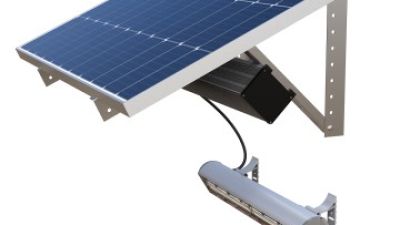
Smart solar flood lights from China offer a practical and eco-friendly way to illuminate gardens, driveways, patios, pathways, farms, and commercial outdoor areas. Designed to capture sunlight during the day and convert it into usable energy after dark, these lights provide bright, dependable illumination while reducing reliance on conventional electricity. Their renewable power source helps lower ongoing energy costs and supports more sustainable outdoor lighting practices.

Manufactured through experienced suppliers and factories, solar flood lights are available in various brightness levels, sizes, and designs to suit different spaces. Many models include efficient LED technology, automatic dusk-to-dawn operation, motion-sensing options, and adjustable panels for more flexible light coverage. Since they do not require underground wiring or complicated electrical connections, installation can be completed with less disruption to walls, gardens, pavements, and other outdoor surfaces.

These lighting solutions are suitable for residential entrances, parking areas, warehouses, construction sites, recreational spaces, and remote locations where grid power may be limited. Weather-resistant construction helps them perform in changing outdoor conditions, while cordless operation offers greater placement flexibility. By choosing solar flood lights produced in China, buyers can access versatile outdoor illumination that combines energy efficiency, simple installation, and practical performance for everyday use.

FAQS

What is a smart city solution?

It connects urban infrastructure to solve measurable problems. Examples include smarter lighting, transport control, energy monitoring, and water management. The technology should serve residents, not impress visitors.

How should cities compare technology suppliers?

Request three years of uptime records, cybersecurity procedures, training plans, and local repair details. Ask who owns operational data. Presentations are not enough.

What should buyers check before integrating a new system?

Check open APIs, common data formats, identity controls, and links with existing transport, energy, and emergency systems. Test one real junction or control room. Compatibility can fail quietly.

How can cities calculate the true project cost?

Build a five-year model covering equipment, labor, batteries, inspections, software updates, replacement parts, and disposal. Include road access delays and installation time. Cheap equipment may cost more later.

What should a pilot project measure?

Track energy savings, fault response, maintenance visits, and public safety indicators. A pilot with 50 lights can reveal weak assumptions before larger deployment. Early data can still mislead.

How do weather and site conditions affect performance?

Test cloudy weeks, dust accumulation, battery aging, and poor connectivity. Central streets may produce different results than rural districts. Recalculate the model when conditions change.

What makes a smart city system scalable?

Use compatible components, trained local technicians, secure data practices, and clear maintenance procedures. Check whether workers can replace batteries without special equipment. Scaling is not automatic.

What should a reliable supplier disclose?

The supplier should explain performance limits, warranty terms, service coverage, and known weaknesses. Independent testing and phased trials reduce risk. No system is perfect.

Conclusion

Choosing the right Smart City solution requires a clear understanding of local challenges, development goals, and the people affected by urban change. Global buyers should first define the solution’s core functions, such as improving mobility, public safety, energy efficiency, environmental monitoring, or municipal services. They should then consult governments, communities, businesses, and technology teams to identify priorities and ensure that proposed systems address practical needs. Comparing suppliers should include technology performance, interoperability, implementation experience, service quality, and compatibility with existing infrastructure.

A responsible evaluation must also examine data security, privacy protection, and compliance with applicable regulations in every operating region. Buyers should calculate total costs alongside expected benefits, maintenance needs, scalability, and long-term value rather than focusing only on the initial purchase price. A phased procurement strategy can reduce risk through pilot testing, measurable performance targets, staff training, and structured feedback. After deployment, regular reviews should assess reliability, user satisfaction, financial results, and social impact, allowing the solution to evolve as city needs and technologies change.


Isabella

Isabella

Isabella is a dedicated marketing professional at Zhongshan Sanhui Lighting Technology Co., Ltd., where she has honed her expertise in the lighting industry. With a keen understanding of the company's innovative products and services, Isabella plays a crucial role in promoting the company's core......
Previous What Is an LED Street Light and How Does It Work?