Leave Your Message
0%

You know, Forest Fire Detection is honestly pretty vital when it comes to protecting our natural landscapes. With wildfires happening more often these days, keeping a close eye on things is more important than ever. It’s not just about spotting smoke anymore — technology needs to step up and catch fires early before they get out of hand.

There are a bunch of different ways to detect forest fires. Satellites, for example, can pick up heat from way above, while ground sensors give us real-time updates. But, honestly, no system is perfectly foolproof. False alarms happen, and sometimes fires can slip through the cracks early on. So, yeah — there’s always room for improvement.

Organizations like FireWatch Technologies are really pushing the envelope, coming up with smarter solutions. They’re focusing on combining AI with the tools we already have, which is pretty cool. Still, it’s a bit of a balancing act — making sure the tech works well in real-world situations without over-promising. Understanding how all these pieces fit together is actually pretty key if we wanna do a better job managing our forests.
What is Forest Fire Detection and How Does It Work?

Definition of Forest Fire Detection

What is Forest Fire Detection and How Does It Work?

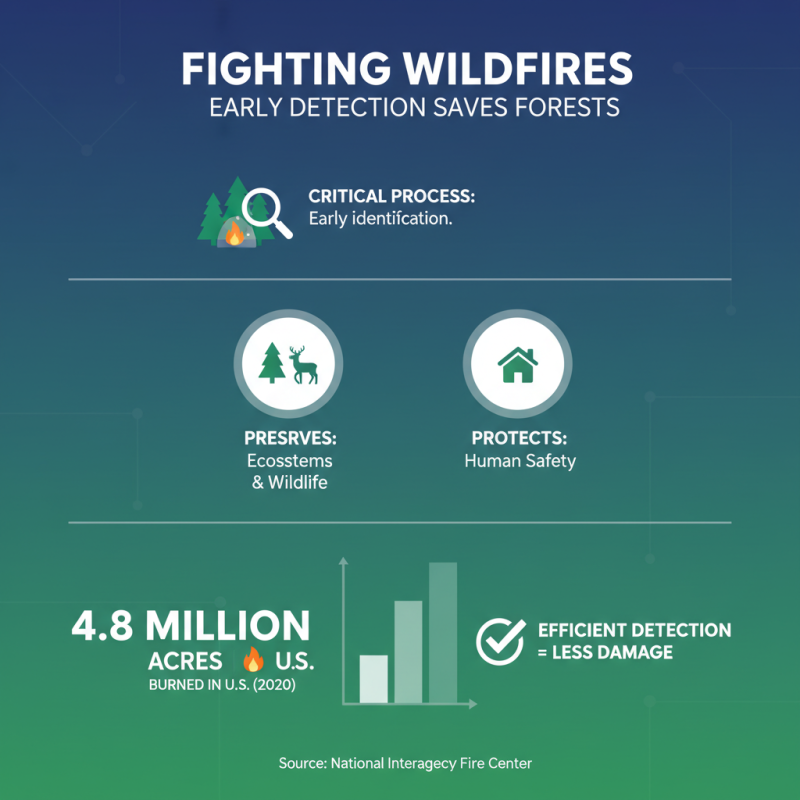
Forest Fire Detection is a critical process that enables early identification of wildfires. This technology is essential for preserving forest ecosystems, wildlife habitats, and human safety. According to the National Interagency Fire Center, 4.8 million acres of land were burned by wildfires in the United States in 2020 alone. Efficient detection can significantly reduce the damage caused by these fires.

The definition of forest fire detection includes the use of various tools and methods. These range from satellite imagery and infrared sensors to ground-based monitoring. Remote sensing technology can cover vast areas rapidly. According to the European Space Agency, satellite data has improved fire detection accuracy by 15% over the past few years. However, not all areas are adequately covered, and delayed alerts remain a persistent issue.

Human observation and reporting still play a crucial role. Local communities often serve as the first line of defense. Yet, misinformation or slow communication can hinder effective responses. According to a study by the International Journal of Wildland Fire, nearly 80% of wildfire reports come from public sources. This highlights a need for improved public awareness and education about fire protection. Enhanced training and resources could empower local people to act swiftly.

Importance of Early Detection in Forest Fires

Early detection of forest fires is crucial for many reasons. Forests play a key role in our ecosystem. They provide habitat for wildlife and help combat climate change. When a fire starts, it won’t take long for it to spread. Rapid identification is essential to minimize damage. A small fire can become a large one in minutes. Early intervention saves lives, property, and natural resources.

Technologies for forest fire detection are evolving. Various methods are used, like drones and thermal imaging. These tools enhance the likelihood of discovering fires early. Collaborations among communities can aid in sharing information. However, there are challenges. Not all regions have the same resources. Disparities can lead to inadequate responses. Inadequate training for responders can also delay action. Understanding the effectiveness of these detection systems is vital for improvement.

With the rise of new technologies for CE Certification Forest Fire Detection, awareness is growing. But we need more than just technology. Education plays a fundamental role. Local communities must be informed about fire prevention measures. Engaging people can lead to faster detection. Ultimately, sustainable practices and awareness are necessary to protect our forests. Delayed responses can have dire consequences.

Technologies Used in Forest Fire Detection

What is Forest Fire Detection and How Does It Work?

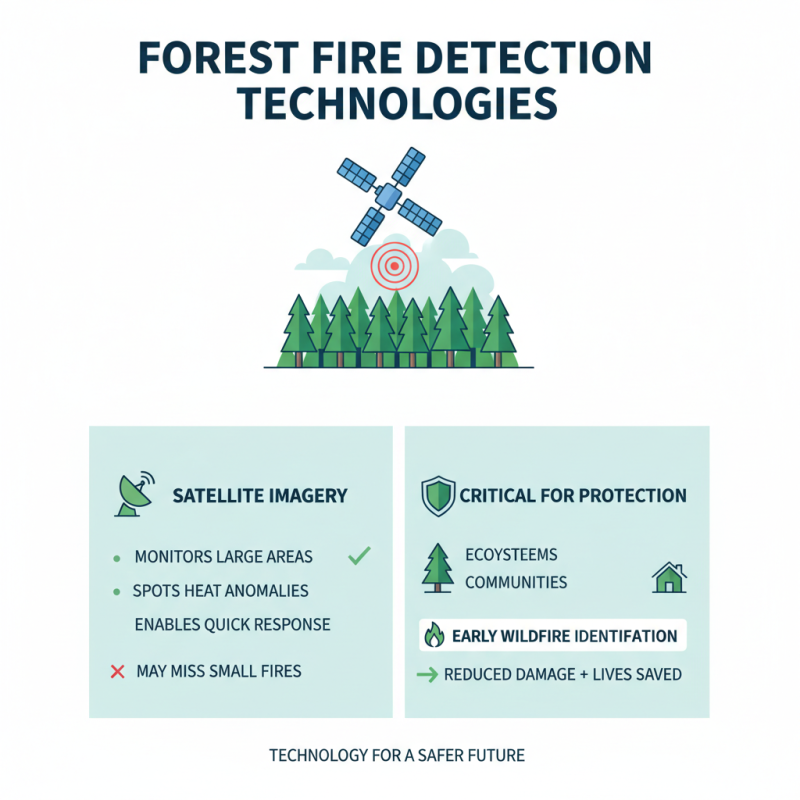
Forest fire detection is critical for protecting ecosystems and communities. Various technologies are employed to identify wildfires early. One common method is the use of satellite imagery. Satellites can monitor large areas of forest land, spotting heat anomalies. This method enables quick response times but it sometimes misses small fires.

Drones are increasingly utilized, offering a close-up view of forest conditions. They can access hard-to-reach areas and carry infrared sensors. These sensors detect temperature differences that indicate a fire. While drones provide valuable data, they require skilled operators to ensure effective monitoring.

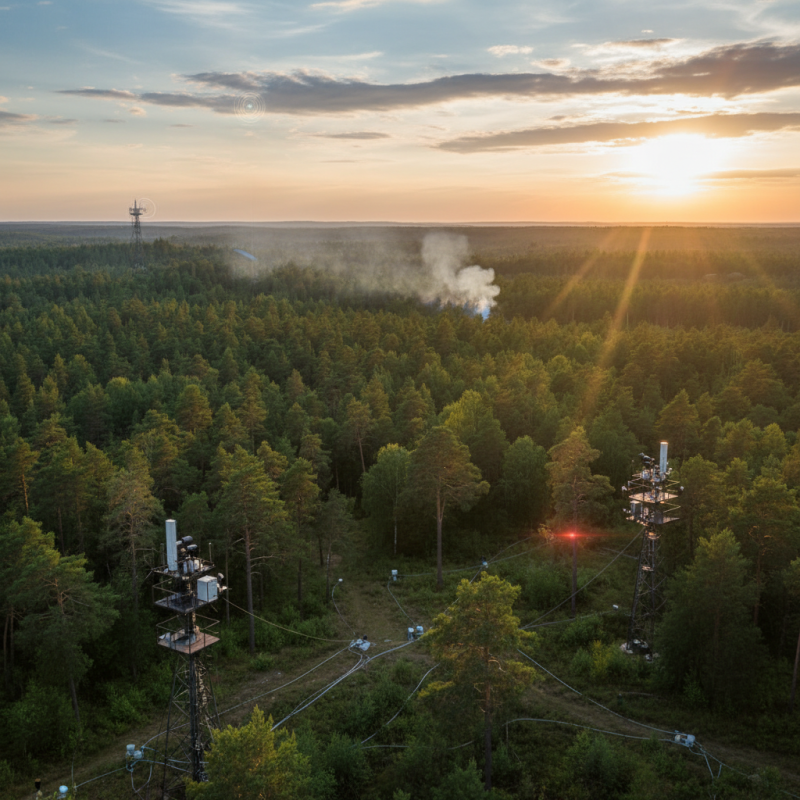
Ground-based sensors also play a vital role. These devices can measure changes in air quality and temperature. They relay real-time information to dedicated monitoring stations. However, they have limitations, as their coverage is restricted to specific locations. Cooperation among Forest Fire Detection Manufacturers is essential. Improved connectivity and technology sharing could lead to better systems. Continuous refinement of these technologies is necessary to ensure reliability.

How Sensors and Cameras Work in Fire Detection

Forest fire detection plays a crucial role in minimizing damage and preserving ecosystems. Sensors and cameras are central to this technology. They utilize various methods to identify smoke and heat signatures from wildfires. Infrared cameras are particularly effective. They detect temperature variations, showing where a fire may start. Sensors can analyze air quality, monitoring for particles that indicate combustion.

The integration of these systems has proven effective. According to industry reports, automated fire detection can reduce response times by up to 50%. This rapid identification helps fire teams mobilize quickly. However, challenges remain. False positives can occur from natural phenomena, leading to unnecessary alarms. Continuous improvement is essential to increase the reliability of these systems.

Tips: Regular maintenance of sensors is critical. Clean lenses can enhance detection accuracy. Training personnel to interpret sensor data can also improve response strategies. Investing in High-Quality Forest Fire Detection systems ensures a safer environment for communities and wildlife. Integration and adaptability to new technologies are vital for advancements in fire detection methods.

The Role of Satellite Imagery in Monitoring Fires

Satellite imagery plays a crucial role in monitoring forest fires. It provides real-time data needed for rapid response efforts. According to a report by the Global Forest Watch, about 40 million acres of forest are lost each year due to wildfires. This loss highlights the need for efficient detection methods.

Advanced satellites, equipped with thermal imaging and multispectral sensors, capture clear images of fire-affected areas. This technology can detect heat signatures and changes in vegetation health. The European Space Agency has stated that satellites can monitor large regions, making them essential in tracking fire spread. In some cases, they can alert authorities before fires spread to populated areas.

However, there are challenges. Cloud cover can obscure satellite views. Additionally, the data generated is vast and often requires careful analysis. Not every fire is detected immediately, leading to delayed responses. The reliance on technology should not overshadow the need for ground-based reports. Combining satellite data with local knowledge enhances detection and response efficiency. There is room for improvement in integrating various data sources.

Data Analysis and Alert Systems in Fire Detection

Forest fire detection relies heavily on data analysis and alert systems. Sensors in forests collect crucial information. For example, temperature, humidity, and smoke levels are monitored continuously. According to the U.S. Forest Service, 80% of wildfires are detected through these sensory systems before they spread significantly. This timely detection enables rapid response efforts.

Data analysis plays a vital role in predicting fire outbreaks. Algorithms process data to identify patterns. A study by the National Oceanic and Atmospheric Administration (NOAA) highlighted that integrating historical fire data can improve prediction accuracy by nearly 30%. However, challenges remain. False alarms can occur due to weather fluctuations, leading to unnecessary mobilization of resources. Addressing this issue is crucial for efficiency.

Alert systems also need refinement. Many rely on outdated technologies, leading to delayed notifications. A recent report indicated that older systems cannot keep pace with newer fire patterns. Frequent updates and training for personnel are essential. Inadequate information can hinder effective responses and put ecosystems at risk. Continuous evolution in technology and methodologies is necessary for better outcomes.

Challenges and Limitations of Current Detection Methods

Forest fire detection is crucial for preserving ecosystems. However, current methods face significant challenges. Satellite imagery and ground sensors are commonly used, but both have limitations. Satellite images can take time to process. Ground sensors often miss small fires early on. This delay in detection can lead to devastating consequences.

Data from the National Interagency Fire Center indicates that nearly 90% of wildfires are human-caused. Current detection methods often struggle with rapid urban expansion. Some areas may lack adequate sensor coverage. According to a study, up to 70% of small fires go undetected in certain regions. Issues arise from environmental factors too. Smoke, wind, and topography can hinder sensor effectiveness.

Despite advancements, detection remains imperfect. Emerging technologies show promise but need refinement. The reliance on a network of Forest Fire Detection Manufacturers is vital. They play a key role in improving detection accuracy. However, challenges persist. Integration of different technologies can be complex. Future developments must tackle these hurdles for better fire management.

What is Forest Fire Detection and How Does It Work? - Challenges and Limitations of Current Detection Methods

Detection Method Description Advantages Challenges
Satellite Remote Sensing Using satellites to monitor heat signatures and smoke plumes. Wide coverage and can detect fires in remote areas. High cost and time lag for data processing.
Ground-based Sensors Physical sensors placed in forests to detect smoke and temperature changes. High accuracy and real-time data collection. Limited coverage and can be easily damaged.
Drones Drones equipped with cameras and sensors for aerial monitoring. Flexible deployment and high-resolution imaging. Regulatory restrictions and Battery life limitations.
Machine Learning Algorithms Analyzing data from various sources to predict fire outbreaks. Improves accuracy over time with more data. Requires large datasets and complex model training.

FAQS

: What is the main topic of the article?

: The article discusses various ways to improve personal productivity.

How can I manage my time better?

Create a daily schedule. Prioritize tasks based on urgency.

What should I consider when setting goals?

Goals should be specific and achievable. Reflect on your progress often.

Are there techniques for reducing distractions?

Yes, consider turning off notifications. Designate a quiet workspace.

How does mindfulness contribute to productivity?

Mindfulness helps focus the mind. It can reduce stress levels significantly.

Can I improve my productivity through breaks?

Yes, short breaks can refresh the mind. Find a balance between work and rest.

What common mistakes should I avoid?

Avoid multitasking, as it can reduce efficiency. Also, don’t underestimate the importance of rest.

Is it important to review my progress?

Absolutely. Regular reviews help adjust goals. This process can lead to more effective strategies.

How often should I set new goals?

Regularly assess your situation. Adjust goals every few months as needed.

What if my productivity drops unexpectedly?

Reflect on your workload and stress. Consider taking a break to regain focus.

Conclusion

Forest Fire Detection is a critical process that involves identifying wildfires at their earliest stages to mitigate damage and enhance response efforts. Early detection plays a vital role in preventing the spread of fires, ultimately protecting ecosystems, wildlife, and human life. Various technologies, including sensors, cameras, and satellite imagery, are utilized to monitor and detect fires. Sensors measure temperature changes, while cameras can visually identify smoke and flames. Satellite imagery offers a broader perspective, helping to track larger areas and provide crucial data for analysis.

The effectiveness of Forest Fire Detection relies heavily on sophisticated data analysis and alert systems, which can rapidly disseminate information to firefighting services. However, challenges such as false alarms, environmental factors, and technological limitations remain hurdles that researchers and practitioners continue to address. Overall, advancements in detection methods contribute significantly to enhancing forest fire management and minimizing their impact on communities and the environment.


Isabella

Isabella

Isabella is a dedicated marketing professional at Zhongshan Sanhui Lighting Technology Co., Ltd., where she has honed her expertise in the lighting industry. With a keen understanding of the company's innovative products and services, Isabella plays a crucial role in promoting the company's core......
Previous Unlocking Smart City Solutions Top Tips for Sourcing Quality Suppliers