So, Road Safety equipment is basically all those practical things that help stop crashes, keep people safer on the road, and guide traffic when conditions change. You've got reflective signs, traffic cones, barriers, warning lights, road studs, speed displays, and high-vis clothing. Each one has its own job. A bright cone? It can mark out a temporary lane. And a reflective sign can still catch your eye when headlights hit it at night.
Out in real work zones, it’s often the little things that really matter. A barrier gets knocked loose? Heavy rain can shift it. Dust builds up, and next thing you know, road markings are hard to see. Or a warning lamp is damaged, and drivers end up with barely any time to react. That’s why experienced road crews don’t just set things up and forget them—they check equipment before use and keep an eye on it throughout the day. They’re also thinking about vehicle speed, weather, lighting, pedestrians moving around, and the layout of the road. Honestly, habits like these can go a long way toward keeping Road Safety dependable. They also fit right in with recognized engineering guidance and whatever local requirements are in place.
Look, no system is perfect. And that actually matters. Safety Road Safety isn’t just a slogan or another box to tick. You need equipment in the right place, checked regularly, and supervised by people who know what they’re doing. And yeah — safer roads are a shared job: manufacturers, contractors, transport authorities, and drivers all have a part to play. Good, reliable equipment isn't a substitute for careful decisions—but it sure can make those decisions easier to understand. I mean, a clearly marked barrier shows you where to go. A visible warning light buys you a little time. And those seconds? They can protect a worker, a cyclist, a passenger, or a kid crossing near a busy road. So getting a handle on what road safety equipment actually does is a pretty practical step toward safer, more responsible transport.
Definition and Scope of Road Safety Equipment
Road safety equipment includes physical products and systems that help prevent crashes, reduce injury, or guide road users through danger. Its scope covers permanent and temporary equipment. Examples include traffic signs, road markings, safety barriers, cones, warning lights, pedestrian railings, crash cushions, and vehicle detection systems. High visibility clothing also matters near moving traffic.
The equipment works through visibility, separation, warning, or impact control. A reflective sign should remain readable in rain and darkness. A barrier must guide a vehicle safely instead of creating a sharp hazard. During a roadside inspection, small details often matter: loose fixings, faded markings, blocked lamps, and damaged cones can change driver behavior within seconds.
CE Certification Safety Road Safety may appear in online searches, but the phrase needs careful interpretation. CE marking can show conformity with relevant European product requirements. It does not automatically prove that every road safety product is suitable, durable, or correctly installed. Test reports, material records, maintenance logs, and site conditions deserve equal attention. Standards help, yet judgment remains necessary. A device designed for a quiet access road may perform poorly beside a high-speed motorway. The definition is broad, and its boundaries are not always tidy. That is where careless assumptions begin.
Main Types of Road Safety Equipment
What Is Road Safety Equipment and Why Is It Important?
Main Types of Road Safety Equipment
Road safety equipment helps road users see hazards, understand movement, and survive mistakes. The need is serious. The World Health Organization reported about 1.19 million annual road deaths in its Global Status Report on Road Safety 2023. It also estimated 20–50 million non-fatal injuries each year. Equipment cannot replace careful driving. It can reduce confusion during a dangerous moment.
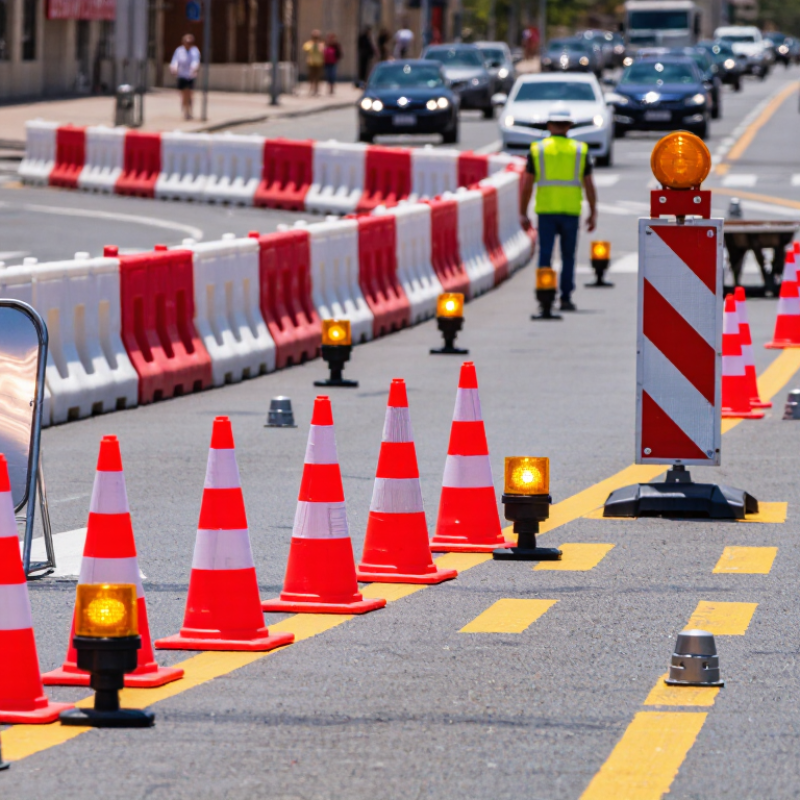
Traffic cones, delineator posts, and reflective barriers guide vehicles around work zones. Their bright colors matter during daylight. Their reflective surfaces matter after sunset. Warning signs and variable message boards give drivers time to slow down. Speed humps and rumble strips create physical feedback. Guardrails, crash cushions, and terminal systems absorb energy when vehicles leave the roadway. Temporary lighting improves visibility, but poor placement can create glare. This is an overlooked problem. Safety Road Safety Manufacturers should consider visibility, impact performance, weather resistance, and installation quality. The Federal Highway Administration links effective work-zone safety to clear guidance, positive protection, and consistent maintenance.
Tips: Inspect damaged cones and faded signs before every shift. Keep reflective faces clean. Place equipment according to the approved traffic plan, not personal judgment. Check visibility from a driver’s approach distance. A device may look obvious up close, yet disappear in rain. Review near-misses, too. They often expose weak layouts before a serious crash.
How Road Safety Equipment Supports Traffic Control
Road safety equipment supports traffic control by making road users notice, understand, and follow changing conditions. Cones, barriers, warning signs, lane separators, and temporary signals create visible boundaries around danger. At dawn or during heavy rain, reflective surfaces can give drivers an extra second to react. That second matters. The World Health Organization’s Global Status Report on Road Safety 2023 estimates 1.19 million people die in road crashes each year. It also reports that 20 to 50 million more suffer non-fatal injuries.
Effective equipment does more than occupy space. It guides vehicle flow, protects road workers, and separates pedestrians from moving traffic. A Safety Road Safety Manufacturer should test visibility, stability, impact resistance, and performance in poor weather. However, equipment alone is not magic. A correctly placed sign may still be missed if it is hidden behind branches or surrounded by visual clutter. Field inspections should check spacing, height, damage, and nighttime visibility. This practical step is easy to skip.
Tips: Match equipment to road speed and traffic volume. Use reflective devices before dark, not after. Keep pedestrian routes continuous and clear. Review every temporary layout after rain, construction changes, or a near miss. Small weaknesses deserve attention. A loose barrier, faded arrow, or blocked sign can quietly undermine the whole traffic-control plan. WHO data also shows that low- and middle-income countries face a disproportionate burden, so affordable, durable equipment and consistent training remain essential.
What Is Road Safety Equipment and Why Is It Important?
Road safety equipment—such as warning signs, lane markings, barriers, lighting, pedestrian signals and traffic-control devices—helps road users recognize hazards, follow traffic rules and move safely through shared spaces.
Why it matters: The World Health Organization reports that pedestrians, cyclists and users of powered two- and three-wheelers represent more than half of global road traffic deaths. Effective traffic-control equipment improves visibility, separates conflicting movements and gives vulnerable road users clearer, safer guidance.
Data source: World Health Organization, Global Status Report on Road Safety 2023. Percentages are global estimates of road traffic deaths by road-user group.
Materials and Standards Used in Road Safety Equipment
Road Safety equipment protects people where vehicles, weather, and human mistakes meet. Its materials must resist impact, corrosion, sunlight, and repeated temperature changes. Galvanized steel remains common for guardrails because its zinc coating slows rust in wet conditions. However, damaged coatings can expose bare metal quickly.
Concrete barriers provide strong separation and stable weight. They suit bridges, work zones, and busy roads, but poor placement can create a harsh impact.
Recycled polymers are lighter and easier to move. Their performance depends on formulation, ultraviolet resistance, and secure anchoring.
Reflective sheeting, glass beads, and weather-resistant pigments help drivers see equipment at night. Visibility fades. Maintenance cannot be treated as optional.
Standards turn material claims into measurable performance. Documents such as EN 1317, MASH, and relevant ASTM methods assess crash behavior, containment, deflection, visibility, and durability.
Requirements differ by region and application, so project teams should verify the current local specification. Testing should represent real installation details, including foundation depth, bolt spacing, end terminals, and road alignment.
A certified product may still fail when installed incorrectly. That gap deserves attention.
During roadside inspections, small defects often reveal larger risks. Loose fasteners, bent posts, blocked reflectors, and standing water can reduce protection before serious damage appears.
Engineers should record inspection dates, impact history, material condition, and replacement needs. No material is perfect.
Good Road Safety depends on suitable materials, verified standards, skilled installation, and honest maintenance records.
Where Road Safety Equipment Is Commonly Applied
Road safety equipment protects people where vehicles, cyclists, and pedestrians share limited space. Its application changes with traffic speed, road design, weather, and daily activity. Engineers and safety crews usually select equipment after assessing visibility, stopping distance, pedestrian movement, and collision risks.
On busy urban roads, cones, reflective barriers, warning signs, and temporary lane markers guide drivers around construction areas. At night, flashing lamps and high-visibility surfaces make work zones easier to recognize. School entrances often use pedestrian barriers, crossing signs, speed displays, and raised visibility panels. These tools help separate children from moving vehicles, especially during arrival and dismissal periods.
Road safety equipment also appears on highways, bridges, tunnels, and rural roads. Guardrails can reduce the severity of a vehicle leaving the carriageway. Delineator posts help drivers follow curves when fog or rain reduces contrast. In parking areas, wheel stops, convex mirrors, bollards, and directional signs control tight movements. Temporary barriers may also guide crowds near public events or emergency repairs.
Good placement matters as much as the equipment itself. A sign hidden behind a tree is almost useless. A cone can move after strong wind or contact with a vehicle. Regular inspections should check damage, dirt, fading, loose bases, and poor spacing. In practice, layouts are not always perfect, and field conditions can change quickly. Safety teams must adjust equipment after observing real traffic behavior, not only relying on the original plan.
Maintenance and Proper Use of Road Safety Equipment
What Is Road Safety Equipment and Why Is It Important?
Maintenance and Proper Use of Road Safety Equipment
Road safety equipment includes cones, barriers, warning signs, lamps, bollards, and high-visibility clothing. These tools guide drivers, protect workers, and separate moving traffic from work areas. Their value depends on condition, placement, and correct use. A clean sign is easier to notice in rain, dust, or low light.
During routine inspections, check each item before workers enter the road area. Look for cracks, loose fittings, faded surfaces, weak batteries, and missing reflective strips. A barrier may look solid but still move under light pressure. I have seen small defects become serious distractions during busy traffic periods. Small defects matter.
Cleaning is equally important. Dirt can hide damage and reduce visibility at night. Workers should follow approved instructions and local road authority guidance. They must position equipment at suitable distances and keep escape paths clear. When conditions change, the layout may need adjustment. Strong wind, heavy rain, and darkness can quickly reduce effectiveness.
Training should use real equipment, not only written procedures. A short demonstration can show how to secure a cone line or test a warning lamp. Records should include inspection dates, faults, repairs, and replacements. However, records alone cannot protect anyone. I sometimes find teams postponing replacement because equipment still appears usable. That judgment can be wrong. A second inspection by a trained person can reveal damage missed during a rushed check.
FAQS
It includes signs, markings, barriers, cones, warning lights, railings, crash cushions, and detection systems. Visibility and separation matter. High-visibility clothing also helps workers near moving traffic.
It warns drivers, separates traffic, guides movement, or controls impact energy. A reflective sign should remain readable in rain and darkness. Small failures can matter.
Galvanized steel, concrete, recycled polymers, reflective sheeting, glass beads, and weather-resistant pigments are common choices. Each material has limits. Steel can rust when its coating is damaged.
No. Lightweight barriers are easier to move, but they need proper anchoring and suitable material performance. Sunlight can weaken some polymers. Placement still matters.
No. Certification may show compliance with certain requirements, but it does not guarantee correct installation or long service life. Site conditions can change everything. Testing records deserve review.
Inspectors should check loose fasteners, bent posts, faded markings, blocked lamps, damaged cones, and standing water. Look closely. Small defects may reveal larger risks.
Foundation depth, bolt spacing, end treatments, and road alignment can change how equipment performs during impact. A suitable product can fail when installed poorly. That gap needs attention.
Maintenance should follow local requirements, site risk, weather exposure, and impact history. Keep dated inspection records. Replacement decisions may be imperfect, but ignoring damage is worse.
No. Equipment for a quiet access road may perform poorly beside a high-speed route. Traffic speed, weather, alignment, and nearby hazards require separate judgment. There is no universal answer.
Conclusion
Road Safety equipment includes the tools, devices, and structures used to protect road users, organize traffic, and reduce the risk of crashes. It covers items such as traffic signs, cones, barriers, delineators, road studs, warning lights, and pedestrian control facilities. These products support traffic control by guiding drivers, separating vehicles from work areas, highlighting hazards, and improving visibility in difficult conditions. They are commonly used on highways, urban streets, bridges, tunnels, parking areas, construction zones, and temporary emergency locations.
The effectiveness of road safety equipment depends on suitable materials, clear design, reliable performance, and compliance with applicable safety standards. Durable plastics, metals, reflective surfaces, and weather-resistant coatings help equipment withstand traffic, sunlight, rain, and temperature changes. Proper selection and placement are essential for ensuring that road users can understand warnings quickly. Regular inspection and maintenance should identify damage, fading, instability, or poor visibility, while damaged items should be repaired or replaced promptly. Correct installation, cleaning, storage, and responsible use help maintain consistent protection and support safer, more orderly transportation.