You know, the idea of a Smart Cityis changing pretty fast these days, all thanks to some pretty exciting tech that makes city living better. Experts like Dr. Emily Chang, who's pretty well-known in the Smart City world, keep stressing how important these new developments are. She once said, "The future of cities depends on smart systems that connect people, resources, and data." It’s kind of inspiring to think about, isn’t it?
These innovations aren’t just cool tricks; they’re super important for making cities more sustainable and efficient. Big companies like Cisco and Siemens are really pushing forward with building smarter infrastructure—stuff that can analyze data in real-time and manage resources more effectively. Honestly, these advancements could slash energy use and make public services run smoother than ever.
But, here’s the thing—it's not all smooth sailing. Sometimes, these projects hit snags because communities aren’t really involved in the planning. Building A Smart City isn’t just about rolling out new tech; it’s about listening to what folks actually need and want. Cities trying to get smarter need to stay inclusive and keep everyone in the loop. That’s the only way they’ll truly unlock the full potential of what a Smart City can be.
The Concept of Smart Cities and Their Importance
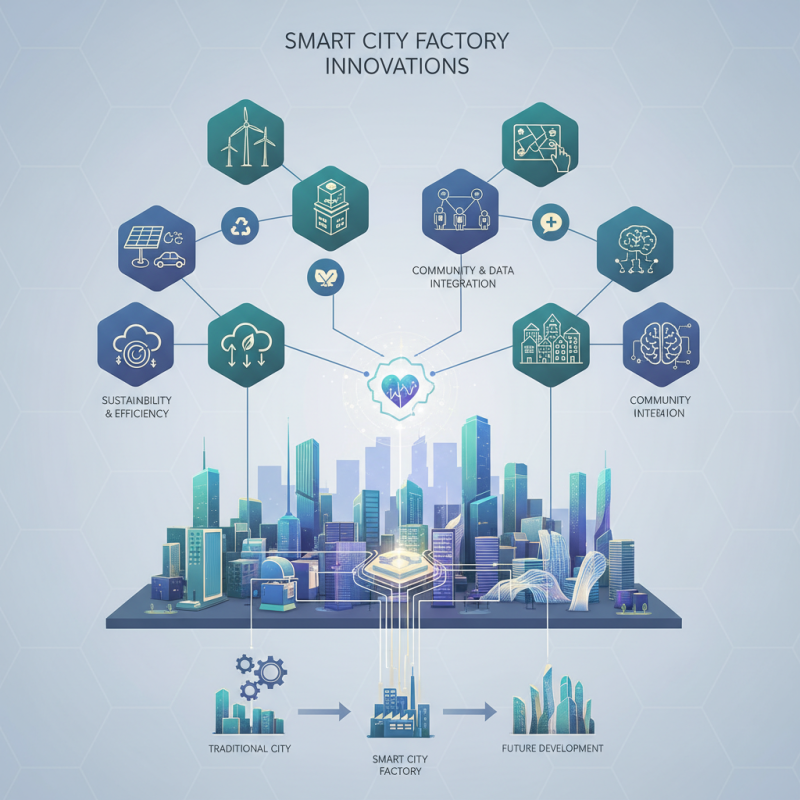
The concept of smart cities has gained traction worldwide. These cities rely on technology to enhance urban living. They aim to streamline services, improve energy efficiency, and ensure better resource management. But the importance of this initiative goes beyond mere convenience.
Smart cities are vital for addressing urban challenges. As populations grow, cities face increased traffic, pollution, and energy demands. Incorporating smart technologies can mitigate these issues. For instance, intelligent traffic systems can reduce congestion. Smart grids can optimize energy usage by integrating renewable sources. However, implementing these technologies is not without challenges. Infrastructure must be updated, and data privacy concerns arise.
Community engagement is essential in building smart cities. Residents need to be part of the development process. Their feedback can guide improvement and refinement. Technology must serve the people, not the other way around. Sometimes, the focus on innovation overshadows the need for inclusivity. Balancing advancement with public interest is crucial for creating truly smart urban environments.
Key Innovations in Smart City Factories
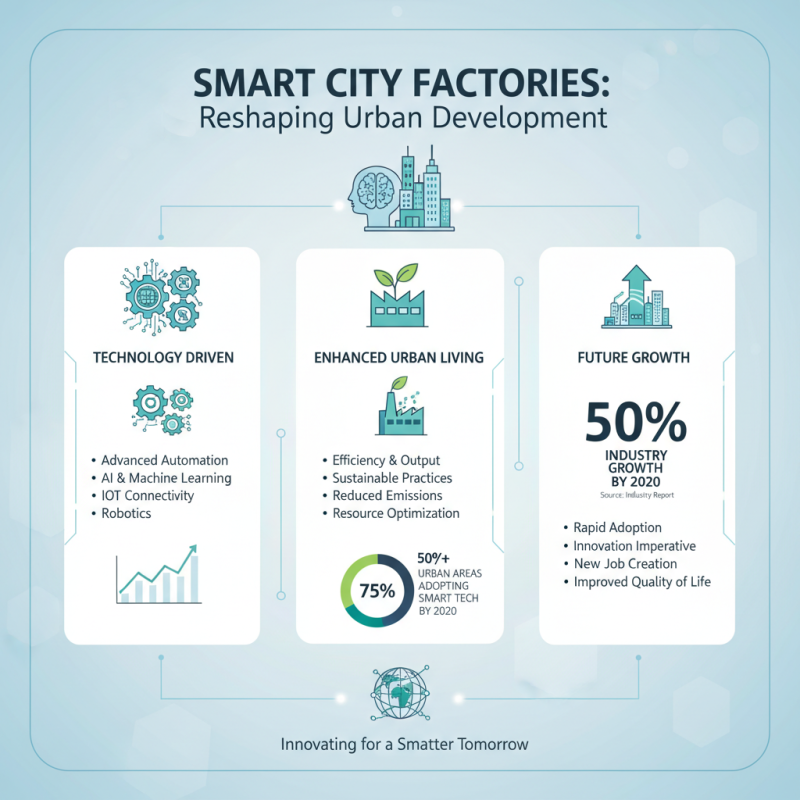
Innovations in smart city factories are reshaping urban development. These facilities utilize advanced technologies, enhancing efficiency and sustainability. According to a recent industry report, over 50% of urban areas are adopting smart technologies by 2030. This rapid growth drives the need for innovative solutions.
Automation is a key element. Automated systems streamline production processes. Data analytics improve decision-making and resource allocation. Moreover, IoT devices collect real-time data for better monitoring. Cities that implement these technologies see a 20% increase in operational efficiency.
Tips: Start small. Implement pilot projects to assess effectiveness. Learning from successes and failures is crucial. For example, a city may struggle with data integration. Addressing these issues early can save resources.
Renewable Energy sources play a vital role. Factories powered by solar and wind can significantly cut emissions. In fact, a recent study found that smart factories could reduce energy consumption by up to 30%. However, integrating these systems requires investment and careful planning.
Cities face challenges in this transition. Infrastructure may not support new technologies. Resistance to change among stakeholders can also hinder progress. Continuous evaluation and adjustment are essential for successful implementation.
Integration of IoT in Smart City Manufacturing
The integration of IoT in smart city manufacturing revolutionizes urban development. Smart factories leverage real-time data to enhance efficiency. Sensors monitor machinery and track production dynamics. This enables predictive maintenance, reducing downtime drastically. Data analytics provides insights into energy consumption and waste management.
Tips: Focus on data security. As cities become interconnected, data breaches can lead to serious issues. Regularly update security protocols to protect sensitive information.
Moreover, IoT helps with resource allocation. Manufacturing plants address local needs, creating a sustainable ecosystem. However, the technology can be overwhelming. Operators must be trained to handle complex systems. Continuous learning and adaptation are essential. Without a knowledgeable workforce, potential benefits may not be fully realized.
Tips: Encourage collaboration. Stakeholders should work together. Sharing knowledge leads to improved practices and innovation.
Sustainable Practices in Future Smart Factories
Smart factories are transforming urban landscapes. These innovations must embrace sustainable practices. Waste reduction is crucial in smart city developments. Factories that recycle materials lessen environmental impact. Urban spaces can benefit from such strategies.
Local sourcing is another key practice. It reduces the carbon footprint of transportation. Smart city initiatives thrive when communities support local economies. Energy-efficient machines are essential, yet monitoring their performance can be challenging. Without proper oversight, energy savings might not happen.
Water conservation is often overlooked. Smart factories can implement systems to recycle water. However, the initial investment can be daunting. Many hesitate to adopt these technologies. In a smart city, what is crucial is understanding the need for constant improvement. Regular assessments ensure sustainability efforts stay effective.
Top 10 Best Custom Smart City Factory Innovations for Future Development
| Innovation | Description | Sustainability Impact | Implementation Stage |
| AI-Powered Resource Management | Optimizes resource allocation and minimizes waste. | Reduces energy consumption by 30%. | Pilot Phase |
| Modular Production Systems | Flexible manufacturing setups that can be resized easily. | Lowers material usage and increases efficiency. | Implementation |
| Blockchain Supply Chain Tracking | Ensures transparency and reduces fraud. | Improves ethical sourcing and minimizes waste. | Development |
| Smart IoT Sensors | Monitors equipment health in real-time. | Prevents unplanned downtime and reduces energy waste. | Pilot Phase |
| Circular Economy Initiatives | Focus on reusing materials and products. | Minimizes landfill waste significantly. | Planning |
| Automated Waste Segregation | Uses AI to sort waste efficiently. | Enhances recycling rates and reduces landfill use. | Implementation |
| Energy-Efficient Robotics | Robots designed to use less power while operating. | Reduces overall factory energy costs. | Development |
| Virtual Reality Training | Immersive training programs for workforce development. | Reduces travel and material costs. | Active |
| Cloud-Based Manufacturing Platforms | Facilitates collaboration and remote monitoring. | Minimizes resources used for on-site processes. | Implementation |
Artificial Intelligence and Automation in Production
Artificial intelligence (AI) and automation are transforming the production landscape in smart city factories. According to a report by McKinsey, up to 45% of tasks can be automated using current technology. This shift promises increased efficiency but raises questions about workforce displacement. Many will need to adapt to new roles as machines take over repetitive tasks.
AI's role in enhancing decision-making is significant. For instance, predictive analytics can reduce downtime in manufacturing processes. A study from the World Economic Forum shows that optimizing production lines can boost efficiency by 20-30%. However, integrating such technologies poses challenges. The initial investment can be substantial, and results may vary. Not all companies are ready for this transformation.
Moreover, ethical concerns arise with automation. Job loss is a real fear for many workers. The balance between innovation and societal impact needs careful consideration. As smart factories implement AI, they must also invest in reskilling programs. Ignoring the human element could lead to unrest. Sustainable development must prioritize both technological advancements and workforce well-being.
Data Analytics for Optimizing Smart City Operations
Data analytics plays a crucial role in optimizing smart city operations. By harnessing large volumes of data, city planners can make informed decisions. Analyzing traffic patterns can lead to improved flow and reduced congestion. This means less time spent on the road and decreased emissions. Yet, not all data is accurate. City officials must be cautious when interpreting results.
Take the example of Dubai Smart City Solar Street Light Installation. Data collected from sensors can enhance energy efficiency. However, issues can arise in sensor accuracy or placement. If sensors are not strategically placed, the data could misrepresent energy usage. Cities need to ensure proper calibration and maintenance of these devices.
Moreover, urban environments are ever-changing. What works today may not be effective tomorrow. Continuous feedback is essential for adapting to urban dynamics. Cities must be prepared to re-evaluate their strategies based on fresh data. Leveraging data analytics requires constant vigilance and improvement. Failure to innovate may eventually hinder a city's growth.
Collaborative Technologies for Enhanced Urban Development
Collaborative technologies promise to reshape urban development. Cities are evolving rapidly, driven by innovation. Partnerships among governments, private sectors, and communities are essential. These collaborations can enhance efficiency and decision-making in urban planning. Effective communication tools play a crucial role, ensuring all stakeholders are heard.
Consider integrating a Smart City MPPT Solution in urban projects. This technology can optimize energy production, making cities more sustainable. It assists in managing resources better. Real-time data sharing can lead to smarter resource allocation.
It's important to reflect on potential challenges. Not all collaboration efforts result in success. Miscommunication can lead to wasted resources. Additionally, balancing diverse interests is tough. Urban environments often face resistance to change. Open discussions are key to overcoming these hurdles. Stay flexible and adaptable. Embracing innovation can yield unexpected benefits.
FAQS
: Categories often include electronics, clothing, and home goods. Popular items vary by season and trend.
Check customer reviews and ratings. Look for detailed descriptions and reliable sellers.
Contact customer service for updates. Delays can occur due to high demand or shipping issues.
Most retailers offer a return window. Check the specific conditions on the website before purchasing.
Yes, tracking options are usually provided. Use your order number on the shipping carrier’s website.
Report the issue to customer service promptly. Document the defect with pictures if possible.
Typically, credit/debit cards and digital wallets. Some may offer alternative payment options.
Most companies have support teams. Availability may vary based on time zones.
Subscribe to newsletters or follow social media channels. Many retailers post updates regularly.
Use the “forgot password” feature. Follow the instructions in the email you receive.
Conclusion
The concept of Smart Cities represents a transformative approach to urban development, where technology and innovation play crucial roles in enhancing the quality of life for residents. In this context, Smart City factories are at the forefront of innovation, integrating key advancements such as the Internet of Things (IoT) to streamline manufacturing processes. These factories not only prioritize sustainable practices but also leverage artificial intelligence and automation to optimize production efficiency.
Furthermore, data analytics is utilized to fine-tune operations within Smart Cities, allowing for more informed decision-making and resource allocation. Collaborative technologies foster enhanced urban development by enabling cross-industry partnerships and community engagement. Overall, the evolution of Smart City factories highlights the potential for future growth and the importance of integrating cutting-edge innovations for a sustainable urban environment.