Leave Your Message
0%

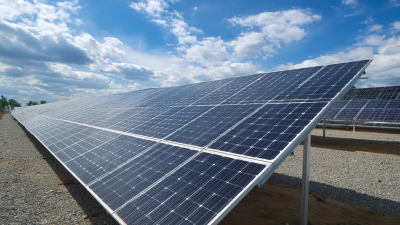
Vertical Pv Module technology is really changing the game when it comes to making the most of limited spaces—think along walls, roadsides, or even over agricultural land. Unlike your typical south-facing solar panels, vertical setups can catch sunlight from both sides during morning and afternoon. That’s pretty neat for land sharing, but keep in mind, how well they perform depends on stuff like your location (latitude), ground reflectivity (albedo), wind conditions, spacing between panels, and the inverter setup.

In this article, we take a closer look at the Top 10 vertical PV module manufacturers around the world, based on real industry criteria—things like bifacial efficiency, mechanical robustness, how fast they degrade, certifications, manufacturing scale, warranties, and project experience. We compare brands like JinkoSolar, LONGi, Trina Solar, Canadian Solar, JA Solar, and others who are big names in the game. We also make a point to distinguish between products that are genuinely designed for vertical use versus those just installed vertically without being optimized for it—that difference really does matter.

Professor Greg Barron-Gafford, who’s a leading expert in agrivoltaics, describes this approach as “a win-win-win for food, energy, and water.” It’s a pretty accurate way to put it, but I’d add, don’t take that as an automatic guarantee of success. Vertical solar projects can definitely help reduce shading issues and create useful farming corridors, but they often come with higher installation costs, face stronger wind loads, and the energy output can be a bit unpredictable—because let’s face it, real-world conditions are often messier than the ideal scenarios.

The manufacturers listed here are evaluated based on solid evidence, not just marketing hype. Keep in mind, official datasheets can sometimes leave out actual field results, and regional availability changes pretty fast. So, this ranking is meant to help with technical screening, not to replace engineering tailored to your specific site. And hey, as new products, test data, and actual projects come out, some of these conclusions may need updating—that’s just part of the game.
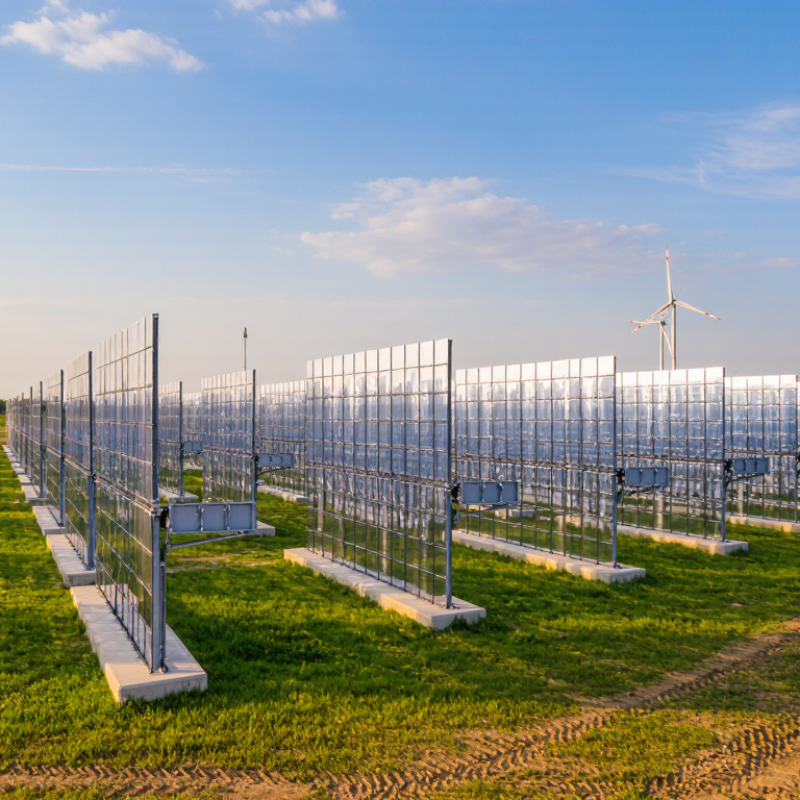
Top 10 Vertical PV Module Manufacturers Worldwide

Definition and Scope of Vertical PV Module Manufacturing

Vertical PV module manufacturing describes more than assembling glass, cells, and frames. It covers controlled production across several stages, including silicon processing, wafer preparation, cell fabrication, module assembly, testing, and quality traceability. A manufacturer may be called vertically integrated only when it owns or directly manages a meaningful part of this chain. Contracted capacity alone should not qualify.

The market scale explains why this distinction matters. The IEA PVPS Trends 2024 report recorded about 407 GW of new photovoltaic capacity installed worldwide in 2023. IRENA’s Renewable Capacity Statistics 2025 placed global Solar Power capacity above 1,800 GW by the end of 2024. Such volume increases pressure on yield, delivery, and warranty control. A factory floor shows the difference: fewer handoffs, clearer batch records, and faster investigation when a cell fails. Still, integration does not automatically mean better performance.

The scope may also include specialized formats, such as a Vertical Wrapped Module, when its structure supports vertical installation or protected cell encapsulation. This phrase is not universally standardized. Therefore, a credible ranking must state its criteria, production ownership, annual capacity, and certification evidence. Public reports often combine factory announcements with shipment estimates. That can create uncertainty. A careful assessment should separate verified production from planned capacity and distinguish module output from total corporate capacity.

Top 10 Vertical PV Module Manufacturers Worldwide — Definition and Scope

Vertical PV module manufacturing refers to the production and integration of photovoltaic modules designed for vertical or near-vertical installation, including building façades, agrivoltaic structures, fences, rail infrastructure and other space-constrained applications. Because public datasets generally report manufacturing capacity by location rather than by vertical-PV product line, this chart uses rounded 2023 estimates of overall PV module manufacturing capacity by major production location as a market-scope indicator, without identifying companies or brands.

Values represent approximate shares of global PV module manufacturing capacity in 2023. Figures are rounded and synthesized from public manufacturing assessments by the IEA and IEA PVPS; vertical-module capacity is not separately disclosed in most official datasets.

Key Technologies Used in Vertically Integrated PV Production

Vertical Pv Module manufacturers increasingly rely on vertically integrated production, linking silicon processing, wafer cutting, cell fabrication, and module assembly. This structure gives engineers direct visibility into yield losses, material quality, and energy use. Diamond-wire saws reduce kerf waste, while automated cameras detect microcracks before lamination. Production data then moves through manufacturing execution systems, allowing teams to compare batches instead of relying on final inspections.

Cell production now uses passivated contacts, selective emitters, and advanced screen-printing or copper-based metallization. These methods can improve current collection and reduce recombination, but they require strict temperature control. A few degrees can affect coating uniformity. Module lines add multi-busbar interconnection, robotic string laying, and electroluminescence testing. For a Vertical Pv Module, thermal cycling, damp-heat exposure, and mechanical-load tests can reveal weaknesses hidden by production speed.

Integration also supports faster changes in glass, encapsulants, junction boxes, and cell formats. Inline sensors track soldering temperature, torque, and lamination pressure. Digital twins help, but they are not perfect. Internal data may create overconfidence, while recycled materials can vary beyond expected specifications. Engineers still need calibrated instruments, independent testing, and traceable records. Some failures remain difficult to predict. A module can pass every checklist yet age unevenly under dust, salt air, or repeated temperature changes.

Criteria for Ranking the Top 10 Global Manufacturers

A credible ranking of the top global vertical PV module manufacturers needs more than shipment figures. We assess production capacity, factory automation, process controls, and documented quality systems. Manufacturing scale matters, but volume alone proves little. Factory audits matter. So does evidence.

Product performance receives close attention. We compare power output, temperature behavior, degradation rates, mechanical strength, and performance in real vertical installations. Installer feedback can reveal issues that laboratory tests miss, such as cable routing problems or difficult cleaning access. The phrase “CE Certification Vertical Wrapped Module” must be checked against official documents, product scope, validity dates, and testing bodies. A CE mark supports conformity in applicable markets, but it does not guarantee higher efficiency. Independent test results carry greater weight than promotional claims.

Commercial reliability also shapes the ranking. We review warranty language, defect response times, spare-part access, delivery records, and financial continuity. Supply data should cover several years, not one unusually strong quarter. Transparent manufacturers disclose testing methods and limitations. Some do not. That gap deserves a lower score. No ranking is perfect. Weighted criteria should be published, and results should be revisited when field evidence changes. This approach rewards measurable performance, practical installation experience, and dependable service rather than visibility alone.

Profiles of the Top 10 Vertical PV Module Manufacturers

The top 10 vertical PV module manufacturers are best assessed through measurable capabilities, not publicity.

Their profiles should cover annual output, cell technology, glass design, warranty terms, and field testing. IEA PVPS Trends 2024 recorded approximately 456 GW of new solar capacity in 2023. That scale has intensified pressure on manufacturers to improve reliability, installation speed, and material efficiency.

Several leading manufacturers now develop modules for façades, balconies, agrivoltaic structures, and high-latitude sites. Their vertical designs can capture morning and afternoon sunlight while reducing ground occupation. Profiles should examine bifacial response, low-light performance, snow-load resistance, and cable placement.

A CE Certification Vertical Solar Module also requires careful review of documentation, electrical safety, and market-specific conformity evidence. Certification alone does not prove long-term field performance.

IRENA’s Renewable Capacity Statistics 2024 reported global solar capacity above 1.4 TW by the end of 2023.

This rapid expansion makes production traceability increasingly important. The strongest manufacturers publish degradation data, factory quality controls, and independent test results. Some profiles may show excellent laboratory efficiency but limited evidence from vertical installations. That gap deserves attention.

Real façades experience dirt, wind turbulence, partial shading, and difficult maintenance access. Rankings can change quickly when delivery records, warranty claims, and regional service capacity are included.

Global Production Capacity and Market Distribution

Top 10 Vertical PV Module Manufacturers Worldwide

Global Production Capacity and Market Distribution

The leading vertical photovoltaic module manufacturers are expanding beyond traditional rooftop and utility designs. Their production networks now serve façades, agrivoltaic fields, transport corridors, and space-limited commercial sites. Nameplate capacity can look impressive, but actual output often depends on silicon supply, labor availability, and local demand.

Asia remains the largest manufacturing center, supported by mature supply chains and high-volume automation. Europe focuses more on building-integrated modules, carbon reporting, and regional resilience. North America is increasing domestic capacity through new factories and policy support. Emerging facilities in the Middle East, Southeast Asia, and South America may reduce shipping distances, although their scale is still uneven.

Vertical module capacity should be assessed carefully. A factory may announce several gigawatts, while current production remains below that figure. Public data can also mix planned, installed, and operational capacity. That creates ranking problems. Real experience comes from examining shipment records, factory utilization, certification timelines, and installation performance under snow, wind, and heat.

Market distribution is equally important. Vertical systems often need stronger mounting structures, customized inverters, and careful row spacing. Manufacturers with local engineering teams can respond faster to these requirements. Still, production volume alone does not prove reliability. Field data remains limited for some newer configurations, and maintenance costs may change after several seasons. The strongest manufacturers are therefore those combining scalable capacity with transparent testing, regional service, and honest reporting of technical limitations.

Manufacturing Challenges, Innovations, and Future Trends

Top 10 Vertical PV Module Manufacturers Worldwide

Manufacturing Challenges, Innovations, and Future Trends

Vertical photovoltaic systems are moving from niche projects into agrivoltaics, balconies, highways, and snowy regions. The IEA PVPS Trends 2024 report recorded more than 1.6 terawatts of global PV capacity by the end of 2023. That scale increases pressure on the top ten manufacturers to improve durability, installation flexibility, and supply transparency.

Vertical modules can capture morning and afternoon sunlight efficiently. Bifacial designs may also collect reflected light from soil, snow, or pale surfaces. However, manufacturers face uneven irradiance, higher wind loads, cable-routing problems, and unfamiliar maintenance routines. The International Renewable Energy Agency reported global renewable capacity additions of 585 gigawatts in 2024. Yet, rapid deployment does not remove quality risks. Field testing still matters. Some claimed gains remain project-dependent.

Tips: Compare annual yield, not only rated power. Request verified bifacial data, fire testing, wind-load results, and degradation guarantees. Check snow reflection and cleaning access before ordering. A simple site model can reveal disappointing returns.

The International Technology Roadmap for Photovoltaic report identifies n-type cells, thinner wafers, and advanced interconnections as major development paths. These innovations can reduce material use and improve performance, but factory upgrades require capital, skilled workers, and stricter process control.

Recycling is another weak point. The industry is growing faster than its recovery systems. Manufacturers should publish material inventories and realistic end-of-life plans, even when the information looks imperfect.

China Suppliers’ Square Vertical Solar Pole LED Garden Lights: Insights from Grand View Research & Mordor Intelligence

Square vertical solar pole garden lights are gaining attention as outdoor spaces increasingly prioritize energy efficiency, attractive design, and low-maintenance operation. Market insights commonly associated with Grand View Research and Mordor Intelligence highlight the growing interest in solar-powered lighting, smart outdoor infrastructure, and sustainable landscaping solutions. Within this trend, square vertical designs offer a clean architectural appearance that complements modern gardens, pathways, courtyards, parks, and residential yards. Their integrated solar panels collect daylight, store energy in rechargeable batteries, and provide illumination after sunset without requiring complex underground wiring.

China-based suppliers and factories are responding to this demand with versatile solar pole lights designed for different landscaping styles and installation environments. High-quality materials, weather-resistant construction, efficient LED technology, and reliable light distribution help these products perform in outdoor conditions while reducing electricity consumption and routine maintenance. The square pole structure also provides a stable, contemporary profile, making it suitable for both decorative and practical lighting applications. With customizable finishes, light colors, sizes, and control options, these eco-friendly garden lights can support projects ranging from private residential upgrades to public-area improvements.

FAQS

What does vertically integrated PV production include?

It connects silicon processing, wafer cutting, cell fabrication, and module assembly. Engineers can track yield losses, material quality, and energy use. This visibility helps. It does not remove every failure.

Which technologies help reduce manufacturing defects?

Diamond-wire saws reduce cutting waste. Automated cameras detect microcracks before lamination. Inline sensors monitor soldering temperature, torque, and lamination pressure. Small errors still matter.

How do advanced solar cells improve performance?

Passivated contacts and selective emitters can reduce electrical losses. Screen printing and copper-based metallization improve current collection. Temperature control must remain precise. A few degrees matter.

What tests are important for vertical modules?

Electroluminescence testing can reveal hidden cracks. Thermal cycling exposes stress from repeated temperature changes. Damp-heat and mechanical-load tests examine durability. Dust and salt air remain difficult.

How should manufacturers be compared fairly?

Review annual output, cell technology, glass design, warranties, and field results. Check shipment records and factory utilization. Planned capacity can look better than actual production.

Does certification prove long-term module reliability?

No. Certification mainly confirms documented safety and regional conformity requirements. It does not guarantee decades of outdoor performance. Independent testing still matters.

Where is vertical module production concentrated?

Asia remains the largest manufacturing center. Europe emphasizes integrated building designs and carbon reporting. North America is expanding domestic production. Other regions are developing unevenly.

What practical issues affect vertical system performance?

Vertical systems may need stronger mounting structures and customized inverters. Row spacing affects shading and energy capture. Local service can reduce repair delays. Maintenance assumptions are often too optimistic.

Conclusion

This article explores the development of the Vertical Pv Module industry, focusing on manufacturers that integrate multiple stages of production, from material processing and cell manufacturing to module assembly, quality testing, and distribution. It explains the scope of vertical integration and examines key technologies such as advanced cell architectures, automated production lines, high-precision interconnection, intelligent monitoring, and improved encapsulation methods. The ranking framework considers production capacity, technological capability, product reliability, global reach, investment in research, supply-chain control, and long-term market performance.

The profiles of the top ten global manufacturers provide a comparative view of their production strategies, regional distribution, and competitive strengths without focusing on individual brand names. The article also reviews worldwide manufacturing capacity, major market trends, and the challenges affecting the sector, including raw material availability, energy consumption, cost pressure, logistics, and quality consistency. Finally, it highlights future opportunities driven by automation, sustainable manufacturing, higher-efficiency cells, recyclable materials, flexible designs, and smarter digital production systems.
Sophia

Sophia

Sophia is a dedicated marketing professional at Zhongshan Sanhui Lighting Technology Co., Ltd., where she leverages her expertise to elevate the company's brand presence. With a deep understanding of the lighting industry, she excels in showcasing the innovative products that Sanhui offers. Her......
Previous How to Choose Smart City Solutions for Global Buyers