Leave Your Message
0%

Lately, with all these digital tech boom, it feels like every sector’s getting a makeover—maybe not everyone notices, but it's a fact. One area that's really seeing some great progress is Forest Fire Detection. You know, with wildfires happening more often and getting pretty intense, catching them early isn’t just helpful—it's critical if we want to keep things from getting really out of hand. Thankfully, new tech is making a difference, speeding up response times, and helping keep people safe.

Big players like IBM and Google are working on some pretty slick algorithms now. They analyze satellite images and crunch real-time data to give early alerts. But let’s be honest—nothing’s perfect. These systems can't always catch every fire perfectly. The environment's complex, and all those factors can sometimes throw off the data, leading to false alarms or, worse, missing real threats.

And it’s not just about having cool tech. Sometimes, the biggest hurdles are things like funding or infrastructure. Some areas just aren’t quite ready to adopt these new solutions, even if they’re out there. So, it’s really important to find a good balance—between pushing ahead with innovation and making sure it’s practical and doable on the ground. Only then can we genuinely boost how effectively we detect and respond to forest fires.
Top 10 Digital Technologies for Forest Fire Detection?

Overview of Forest Fire Detection Technologies

Forest Fire Detection technologies have evolved significantly over the years. They encompass various methods that aim to spot fires at their earliest stages. One notable approach is the use of thermal imaging cameras. These devices can detect heat signatures that indicate a potential fire, allowing for quicker response times. However, they can be expensive and may not always cover large areas effectively.

Another method involves the deployment of drones equipped with sensors. Drones can traverse difficult terrains, identifying smoke or fire from above. This technology offers a bird's-eye view, enhancing monitoring capabilities. Yet, their reliance on weather conditions can limit effectiveness. Furthermore, integration with existing systems may require time and resources.

CE Certification Forest Fire Detection is crucial to ensure safety standards are met. While technology plays a vital role in preventing wildfires, human oversight remains essential. Training personnel in these technologies can make a significant difference. A balance between technology and human expertise is necessary for a robust fire detection system. As we embrace innovative solutions, it's important to reflect on their limitations and the need for continuous improvement.

Top 10 Digital Technologies for Forest Fire Detection

Technology Description Advantages Disadvantages Typical Use Case
Satellite Remote Sensing Utilizes satellites to monitor forests and detect heat signatures. Wide area coverage, high-resolution images. High operational costs, latency in data access. Large forest areas and remote regions.
Drones Equipped with thermal cameras to identify hotspots. Flexible deployment, real-time data capture. Limited flight time, regulatory restrictions. Initial detection in specific locations.
IoT Sensors Devices that monitor environmental conditions like temperature and humidity. Real-time data collection, low power consumption. Installation complexity, limited range. Local forest management.
Machine Learning Analytics Algorithms that analyze data to predict fire outbreaks. High accuracy with large datasets. Requires significant data to train models. Fire risk assessment and early warning systems.
Mobile Applications Apps that provide alerts and information to users. Increased public awareness, easy access. Dependent on user engagement and connectivity. Community awareness and reporting.
Weather Forecasting Models Models that predict weather conditions favorable for fires. Utilizes a wide array of meteorological data. Forecasts can vary in accuracy. Long-term fire prevention strategies.
Optical Sensors Devices that capture light variations indicating fire presence. Immediate detection capabilities. Limited effectiveness in dense foliage. Monitoring in open areas.
Communication Networks Networks that transmit data from various detection systems. Enhances coverage and data accessibility. Vulnerable to signal loss in remote areas. Integration of multiple detection technologies.
Ground Surveillance Teams On-site teams that patrol and monitor forest areas. Immediate response capability. Labor and cost-intensive. High-risk fire zones.
Fire Weather Index Index used to predict fire occurrence based on weather conditions. Standardized measure across regions. May not account for localized conditions. Seasonal fire risk assessment.

Importance of Timely Forest Fire Detection

Timely forest fire detection is crucial for preventing widespread damage. Wildfires can devastate ecosystems in minutes. According to a 2021 study, over 4 million hectares of forest were lost globally due to wildfires. This not only affects wildlife but also impacts air quality. Rapid detection helps initiate immediate responses, potentially saving lives and property.

Tips for enhancing fire detection include using satellite imagery and drone technology. These tools can monitor vast areas effectively, identifying heat signatures even in remote locations. Collaboration with Forest Fire Detection Manufacturers can lead to improved systems. Implementing AI in detection can also help predict fire outbreaks based on weather patterns, which can be critical.

Investments in these technologies are essential. As per a recent report, early detection systems reduce firefighting costs by up to 50%. Yet, awareness of their importance remains low. Communities must prioritize education on fire risks. Individuals should be informed about local fire hazards and reporting mechanisms. Engaging with local authorities can enhance fire prevention strategies.

Use of Satellite Imagery in Fire Monitoring

Satellite imagery has transformed how we monitor forest fires. These images capture data across vast areas, providing real-time insights into fire behavior. This technology helps detect hotspots before they escalate. By analyzing changes in vegetation and temperature, satellite imagery reveals potential fire risks.

Tips: Regularly review satellite imagery data. Look for irregular patterns; they can indicate areas of concern. Combining this tool with ground-based observations enhances accuracy.

Yet, challenges remain. Cloud cover can obscure images, limiting visibility. In some regions, data may be delayed, which can hinder quick response efforts. Ensuring timely updates is crucial for effective fire management.

Collaboration between agencies can improve data sharing and responses. Building robust communication strategies can enhance overall forest fire detection efforts.

Role of Drones in Forest Fire Surveillance

Drones are transforming the landscape of forest fire surveillance. These flying devices can cover vast areas quickly. Equipped with thermal imaging cameras, they detect heat signatures emitted by flames. Those signals help identify fires that ground crews might miss. The real-time data collection is crucial for timely response. Drones often fly lower than planes, offering precise views of fire dynamics.

Despite their advantages, drones have limitations. They can struggle in bad weather or high winds. Additionally, Battery life can restrict their operational time. It’s essential to assess these factors when planning a mission. Nevertheless, when used effectively, they provideHigh-Quality Forest Fire Detection. Combining drone technology with ground-based teams enhances overall efficiency. Training operators is important for maximizing drone potential. Improper use can lead to missed opportunities in fire prevention.

The role of drones in forest monitoring is clear. They offer new perspectives on fire behavior and forest conditions. Their integration into existing surveillance systems can significantly improve response efforts. Yet, constant evaluation of their effectiveness is needed. Achieving optimal results requires ongoing adjustments to techniques and technologies.

Top 10 Digital Technologies for Forest Fire Detection

This chart illustrates the effectiveness of various digital technologies used for forest fire detection. Drones lead in effectiveness, followed by infrared cameras and AI algorithms, while mobile apps and weather stations show lower scores.

IoT Sensors for Real-Time Fire Alerts

IoT sensors have revolutionized forest fire detection. They provide real-time fire alerts that are crucial for timely responses. These sensors can monitor temperature, humidity, and smoke levels. When conditions are right, these systems send notifications to local authorities. This enhances the speed of notification, potentially saving vast areas of forest.


Despite this technology's promise, challenges remain. Maintaining sensor functionality in remote areas can be tough. Battery life and network connectivity are common issues. Many sensors may fail during critical moments due to environmental factors. A Forest Fire Detection Manufacturer continually faces the challenge of ensuring reliability under harsh conditions.


Moreover, data accuracy is essential. False alarms can lead to resource misallocation. Training staff to interpret sensor data can also be complex. Sensors need robust algorithms to distinguish between natural events and actual fires. Overall, integrating IoT sensors into forest management requires careful planning and constant refinement.

Machine Learning in Predicting Fire Spread

Top 10 Digital Technologies for Forest Fire Detection?

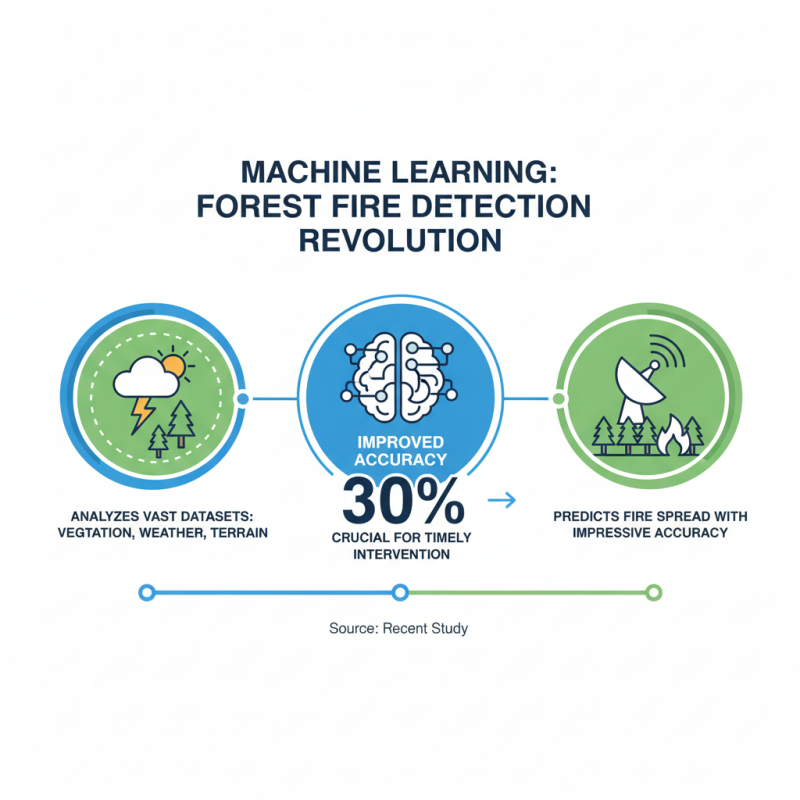
Machine learning is revolutionizing forest fire detection. It predicts fire spread with impressive accuracy. For instance, a recent study noted that machine learning algorithms can improve prediction accuracy by up to 30%. This increase is crucial for timely intervention. Using vast datasets, these algorithms analyze patterns in vegetation, weather, and terrain.

Real-time data collection plays a key role in this approach. Equipped with sensors and satellite technology, we can gather information on humidity, temperature, and wind speed. The integration of this data enhances predictive models. However, relying solely on technology may overlook some human factors, which are often unpredictable. Some algorithms underperform in diverse ecological conditions, showing room for improvement.

Continuous refinement of machine learning models is necessary. Researchers are exploring various algorithms to optimize predictions. An industry report shows that false positives still pose challenges, affecting resource allocation. Even with advances, there is a need for ongoing evaluation. The balance between technology and human oversight remains delicate yet vital in fire management strategies.

Integration of Mobile Apps for Public Reporting of Fires

In recent years, mobile apps have emerged as powerful tools for public reporting of forest fires. These apps allow users to quickly document and report signs of fire. With just a few taps on a smartphone screen, users can share critical information about fire locations and conditions. This speeds up response times and aids firefighting efforts.

However, relying solely on public reports has its downsides. Many people may not know how to identify a fire correctly. Some reports can be inaccurate or exaggerated. This leads to confusion and misallocation of resources for emergency services. More education is needed to ensure users can make accurate reports.

Additionally, the effectiveness of these apps can be hindered by technical issues. Connectivity may be lost in remote areas, limiting the utility of the app. Users may struggle with interface difficulties or lack the necessary smartphone skills. Addressing these challenges is crucial for maximizing the positive impact of technology in forest fire detection. It is a work in progress.

FAQS

: What is the primary purpose of this product?

: The product aims to enhance daily routines. It seeks to improve efficiency and provide convenience.

How should I use this product effectively?

Follow the provided instructions closely. Regular usage can lead to better results over time.

Are there any common mistakes to avoid?

Yes, people often overlook important steps. Neglecting maintenance can also lead to issues.

What materials are used in this product?

The product consists of durable and lightweight components. Each material has been chosen for its performance.

Can this product be used by anyone?

Generally, yes. However, individuals with specific conditions should consult a professional first.

How long does it take to see results?

Results vary by user. Some may notice changes quickly, while others may need more time.

Is there any warranty or guarantee?

There may be limited guarantees provided. Always check the specific terms for your purchase.

What are some alternative uses for this product?

Many users find creative applications. Experimenting can lead to unexpected benefits.

Can I get support if I have questions?

Support is available through various channels. It's important to reach out early if issues arise.

What feedback do users commonly share?

Feedback is mixed. Some appreciate its features, while others suggest improvements. Listening is key.

Conclusion

Forest Fire Detection has become increasingly crucial due to the devastation caused by wildfires. Various technologies have emerged to improve the accuracy and speed of fire detection. Satellite imagery provides a comprehensive view of large forested areas, enabling quick identification of potential fire outbreaks. Drones enhance surveillance by offering real-time aerial monitoring and can reach areas that are hard to access on foot.

Additionally, IoT sensors play a vital role in delivering real-time fire alerts, ensuring rapid response to containment efforts. Machine learning techniques are being utilized to predict fire spread patterns, giving authorities better tools for prevention and control. Furthermore, integrating mobile applications allows the public to report fire sightings promptly, creating a community-based approach to Forest Fire Detection that enhances overall safety and resource allocation in wildfire management.

Isabella

Isabella

Isabella is a dedicated marketing professional at Zhongshan Sanhui Lighting Technology Co., Ltd., where she has honed her expertise in the lighting industry. With a keen understanding of the company's innovative products and services, Isabella plays a crucial role in promoting the company's core......
Previous Unlocking Smart City Solutions Top Tips for Sourcing Quality Suppliers