Lately, it seems like everyone's talking about Solar Lamps — and honestly, the demand has just skyrocketed worldwide. I came across a report from Allied Market Research, and get this – they're saying the solar lighting market might hit around $11.7 billion by 2027, growing at an impressive 20.8% annually. That kind of growth just screams that people are leaning toward more sustainable energy options, you know?
Solar lamps are such a great eco-friendly alternative to the old-school lighting we’re used to. Not only do they help cut down on electricity bills, but they’re also a small step toward protecting our planet. Still, a lot of folks tend to overlook how important the quality of the product actually is. Picking the right brand really matters since not all Solar Street Lampsare created equal — some perform way better than others. Trusted sources like the International Renewable Energy Agency stress the importance of reliable, high-quality products because, honestly, that can make or break your whole experience.
That said, there are some bumps in the road. Things like Battery life or how well the lamp actually lights up can be a letdown sometimes. Plus, let's be real — hunting down the right product in such a crowded market can feel pretty overwhelming. It’s definitely worth doing some homework to understand what features matter most. Sticking with reputable manufacturers is a good move; that way, folks worldwide can find solar lamps that truly fit their needs and expectations.

Overview of Solar Lamps and Their Importance in Sustainable Lighting
Solar Lamps play a vital role in sustainable lighting solutions. They harness sunlight during the day, converting it into energy for nighttime use. This transition from traditional energy sources reduces carbon footprints significantly. Many communities can benefit from solar lamps, especially in remote areas. They provide a reliable light source without relying on the grid.
Solar lamps are not only eco-friendly but also cost-effective. Users save on their electricity bills, making them an appealing choice for many households. However, the effectiveness varies by design and quality. Some solar lamps may not charge fully on cloudy days, leading to frustration. Quality and materials can impact durability, so buyers need to be discerning.
The importance of solar lamps extends beyond mere lighting. They promote energy independence and can improve safety in dark areas. Communities can thrive with adequate lighting, encouraging nighttime activities. Individuals must research options carefully. Not all products meet expectations, and varied customer experiences highlight the need for critical evaluation.
Key Features to Look for When Choosing a Solar Lamp
When choosing a solar lamp, consider key features that ensure reliability and usability. A bright output is essential. Look for lumens ratings. Experts suggest a minimum of 100 lumens for adequate illumination in outdoor spaces. The lamp's energy efficiency is crucial too. High-efficiency solar panels can convert more sunlight, which means longer usage times.
Additionally, durability should not be overlooked. Solar lamps are exposed to the elements. Choose materials that resist rust and corrosion. According to industry studies, ABS plastic and aluminum are effective choices. Waterproof ratings are also important; an IP65 rating can withstand rain and dust.
Tips: Always check the battery capacity as well. A solar lamp with a larger battery can provide illumination for longer periods. Users often undervalue this feature.
Another detail is the lamp's design. Motion sensors and adjustable brightness settings add convenience. However, some users find that inexpensive models lack adequate sensor sensitivity. This may lead to frustrations in outdoor settings. It’s worth investing in a model from trusted research sources that evaluate user feedback extensively.
Top 10 Solar Lamps for Global Buyers to Consider
Top 10 Solar Lamps: A Comprehensive Review of Performance and Design
When selecting solar lamps, performance and design are crucial. A good solar lamp balances brightness with energy efficiency. Many products on the market boast high lumens, but their battery life can differ significantly. Design also matters; an aesthetically pleasing lamp can enhance any outdoor space. Look for models that blend well with your landscape. Functionality should never be sacrificed for looks.
CE Certification Solar Street Lamps offer a measure of reliability. These lamps meet specific European safety standards, ensuring a safer choice for consumers. However, not every certified lamp performs well in all conditions. Some may struggle in areas with limited sunlight. It’s important to check user reviews and experiences to gauge real-world performance.
Many users overlook the importance of installation. Improper placement can lead to reduced efficiency. While some lamps are easy to set up, others may require professional installation. Be prepared to consider your local environment. The right lamp can light your path, but it’s essential to reflect on your needs and circumstances before making a purchase.
Comparison of Solar Lamp Brands: Quality and Price Evaluation
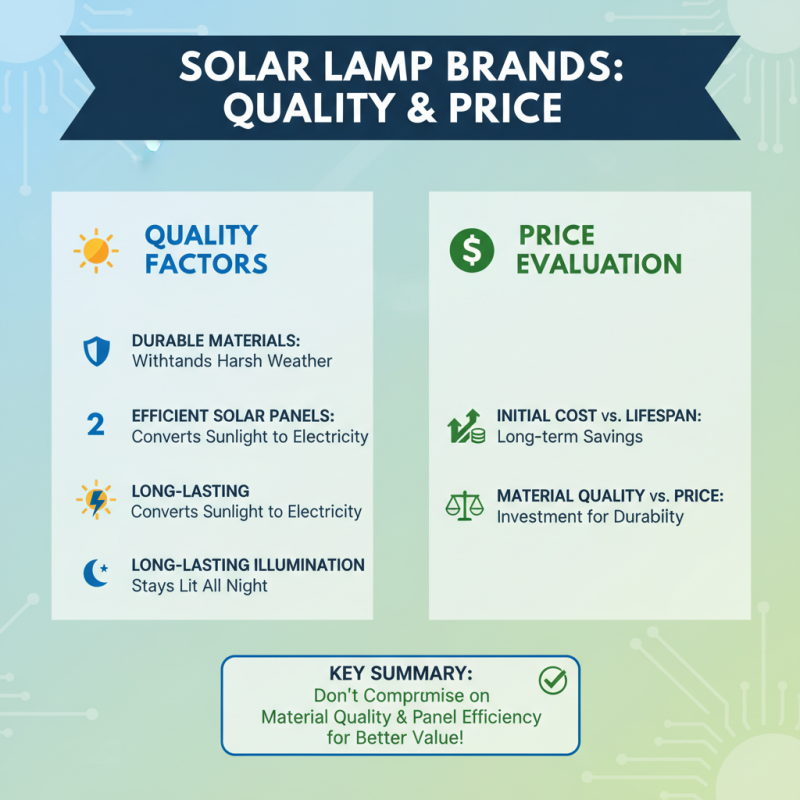
When evaluating solar lamps, quality and price are crucial factors. Many buyers overlook the significance of materials used in construction. A durable lamp can withstand harsh weather conditions. Solar panels should be efficient, converting sunlight effectively into electricity. This efficiency affects how long the lamp remains lit at night.
Some brands offer a variety of price ranges, catering to different budgets. However, a lower price may indicate poor quality. It's essential to check customer reviews and expert evaluations for insights. Reliable information helps buyers avoid wasting money on subpar products. On the other hand, investing in a high-quality lamp usually pays off in the long run.
Always consider the warranty periods offered by different Solar Street Lamps Manufacturers. A longer warranty often signals confidence in product durability. Look for features like adjustable brightness and motion sensors. These functionalities enhance usability. Some solar lamps may promise high performance but fail to deliver consistently. Hence, thorough research is essential before making a decision.
User Experiences: Testimonials and Ratings of Popular Solar Lamps
When choosing solar lamps, user experiences play a vital role. Many people share their stories about different models. One common theme is brightness. Users often mention how some lamps provide adequate light, while others fall short. It’s crucial to read these testimonials to understand what to expect.
Another recurring comment is durability. Some solar lamps perform well initially but break down after a few months. Users express frustration when their investments do not last. Conversely, several models receive praise for their longevity, reinforcing their reliability. People appreciate when a product stands the test of time.
Ratings also vary widely, reflecting both satisfaction and disappointment. A user might give a high score for easy installation, while another might downgrade due to poor battery life. These conflicting reviews highlight the importance of thorough research. Not every lamp will meet every user's needs, and some models require adjustments or replacements sooner than expected. Engaging with real experiences brings clarity to potential buyers.
Innovative Technologies in Solar Lamp Design and Efficiency
Innovative technologies in solar lamp design are transforming how we harness solar energy. Modern solar lamps utilize advanced photovoltaic cells that increase efficiency. Some models now convert over 20% of sunlight into electricity. This remarkable enhancement leads to longer battery life and brighter illumination. A variety of charging options further support users. Some lamps offer USB charging, enabling convenience in urban settings.
The materials used have also evolved. Lightweight and durable polymers make solar lamps portable and weather-resistant. Many designs feature adjustable brightness settings. Users can adapt lighting according to their needs. However, achieving the perfect balance between durability and cost remains a challenge. Some options may compromise longevity for a lower price.
Moreover, energy storage technology has seen significant improvements. Lithium batteries provide longer-lasting power but can present disposal issues. Eco-conscious consumers seek products that minimize environmental impact. Continuous innovation is needed to address these concerns. The push for sustainable solar solutions must consider efficiency alongside usability. It’s an ongoing journey to perfect solar lamp designs.
Tips for Maintenance and Maximizing the Lifespan of Solar Lamps
Maintaining solar lamps can extend their life significantly. Regular cleaning is essential. Dust and debris can block sunlight, reducing their efficiency. Use a soft cloth or sponge to wipe the surface and keep it clear. This simple step can help maximize performance.
Check the battery regularly. Over time, batteries lose capacity. Replace them to ensure your solar lamps continue to shine brightly. Consider weather changes too. Harsh conditions can affect their functionality. Take them indoors during severe weather to protect them.
Utilizing solar lamps for street lighting can enhance visibility and security. However,
regular assessments are crucial. Observe if the lights dim over time. Adjustments may be needed to reposition them for optimal sunlight exposure. This proactive approach helps maintain bright, reliable
Street Lamps.
Leveraging Industry Data: Analyzing the Impact of Bifacial Integrated Solar Street Lights on Urban Sustainability and Energy Efficiency
As urban areas continue to expand, the need for sustainable and energy-efficient solutions becomes increasingly critical. Bifacial integrated solar street lights emerge as a formidable innovation in this landscape, showcasing how technology can significantly improve urban sustainability. By harnessing solar energy on both sides of the panel, these lights maximize energy capture and output, boosting efficiency while reducing reliance on conventional power sources. This dual-sided approach not only enhances illumination but also supports the initiative to transition cities toward greener energy alternatives.
Moreover, the versatility of bifacial solar street lights makes them suitable for various environments, from bustling metropolitan areas to serene rural communities. Their all-in-one design simplifies installation, making it accessible and convenient for municipalities to adopt. The integration of smart technology further elevates their functionality, allowing for intelligent adjustments based on pedestrian traffic and environmental conditions. This adaptability is essential for modern urban planning, reflecting a shift toward smarter, more responsive city infrastructures that prioritize energy efficiency and sustainability in public spaces.
FAQS
: Aim for a minimum of 100 lumens for adequate outdoor brightness.
High-efficiency solar panels convert more sunlight, leading to longer usage times.
Look for ABS plastic and aluminum, as they resist rust and corrosion.
An IP65 rating is ideal, as it can withstand rain and dust exposure.
Larger battery capacity is crucial for longer illumination, yet often undervalued by users.
Motion sensors and adjustable brightness can add convenience but may vary in effectiveness.
Read testimonials focusing on brightness and durability to assess potential weaknesses.
Conflicting reviews often arise from differences in installation ease and battery life satisfaction.
Many encounter durability issues, with lamps breaking down sooner than expected.
Engage with real user experiences and do your research to understand individual preferences.
Conclusion
Solar lamps are becoming increasingly essential in the realm of sustainable lighting, offering an environmentally friendly alternative to traditional lighting methods. This article explores the importance of solar lamps, highlighting their role in promoting energy efficiency and reducing carbon footprints. When selecting a solar lamp, key features such as battery life, brightness, design, and durability are critical considerations.
The piece reviews ten exceptional solar lamps, evaluating their performance, aesthetics, and overall value. Additionally, it provides a comparison of various brands, emphasizing the balance between quality and price. User testimonials add further insight into the effectiveness and satisfaction derived from these products. Finally, the article discusses innovative technologies driving the evolution of solar lamp design and offers practical tips on maintenance to ensure longevity and optimal performance.