Leave Your Message
0%

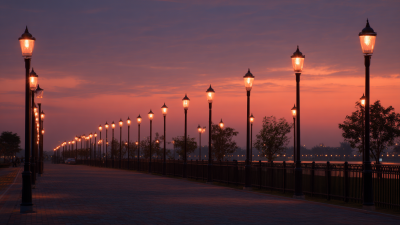
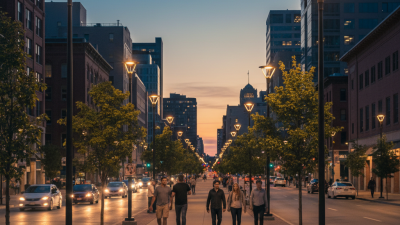
Public Lighting is basically the engineered network that keeps streets, parks, sidewalks, tunnels, and transit areas visible once the sun goes down. It typically includes poles, LED lights, wiring, control cabinets, photocells, and communication systems. For example, a photocell can turn on the lights when it gets dark outside. Some smart controls can even adjust the brightness, report issues, or dim down lights on quiet roads. According to the U.S. Department of Energy, LED lights can use up to 75% less energy and last up to 25 times longer than those old-school incandescent bulbs. But let’s be real—that’s not the full story when it comes to public lighting. Street fixtures often run longer, face tough weather, and need specialized maintenance.

Plus, Public Area Lighting isn’t just about visibility; it plays a big role in making neighborhoods safer, helping folks find their way, and making civic spaces more accessible. The International Commission on Illumination (CIE) offers technical guidance on things like performance, visibility, glare, and how evenly the light is spread. All these details matter—especially when you’re crossing a wet street, where reflections can hide road markings or faces. The International Energy Agency’s 2023 Energy Efficiency report highlights that smarter technologies and better system management are key to saving energy. That’s why cities are increasingly mixing LEDs with adaptive controls and remote monitoring.

Of course, results can really vary. If fixtures are poorly aimed, they can waste light or disturb nearby homes. Too much brightness might make people uncomfortable and hurt nighttime visibility. So, simply being energy-efficient isn’t enough. A good design needs to find a balance—lighting that’s safe, cost-effective to operate, easy to maintain, and kind to the nighttime environment. Honestly, that’s still a work in progress. Cities should regularly check their lighting setups through on-the-ground audits, feedback from residents, and energy data before rolling out bigger networks or making big changes.
What Is Public Lighting and How Does It Work?

Definition and Purpose of Public Lighting

What Is Public Lighting and How Does It Work?

Definition and Purpose of Public Lighting

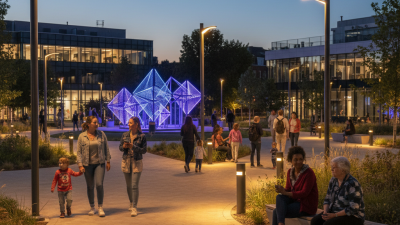
Public lighting is the planned use of Outdoor Lights in shared spaces. It includes roads, sidewalks, pedestrian crossings, parks, transit stops, and public squares. Its main purpose is to improve visibility after dark. People need to recognize paths, vehicles, signs, and nearby obstacles.

A typical system uses light fixtures mounted on poles or building structures. Electricity travels through an underground or overhead network to each fixture. Timers, photocells, or digital controls turn lights on when daylight fades. Some systems adjust brightness according to traffic, weather, or pedestrian activity. Proper design considers mounting height, spacing, brightness, glare, and light color.

In practical inspections, uneven lighting is easy to notice. One bright pole may leave the next sidewalk section almost invisible. Good public lighting supports safer movement without making every area excessively bright. It can also help emergency workers identify addresses and access routes more quickly. However, lighting alone cannot prevent accidents or crime. This point is sometimes overlooked. Excessive brightness can create glare, disturb residents, and affect nearby wildlife. A reliable plan therefore combines technical measurements with observations from people who use the space at night. Conditions change, too. Trees grow, fixtures age, and construction can block light. Regular maintenance remains part of the system’s purpose, not an optional extra.

What Is Public Lighting and How Does It Work?

Public lighting uses outdoor luminaires, electrical power, control systems, and support structures to illuminate roads, sidewalks, crossings, parks, and other public areas. The chart compares typical annual electricity use for three commonly used lighting technologies, assuming each luminaire operates for 4,000 hours per year.

Key Components of a Public Lighting System

Public Lighting is a coordinated system that keeps roads, sidewalks, parks, and public spaces visible after dark. Its main components include poles, luminaires, wiring, control cabinets, and foundations. Each pole must resist wind, vibration, moisture, and repeated temperature changes. A well-designed luminaire directs light toward the pavement, not bedroom windows or the night sky. This improves visibility while reducing glare and wasted energy. Field inspections often reveal small issues, such as loose access doors or water inside junction boxes.

Controls form the system’s operating center. Timers, photocells, motion sensors, and remote monitoring devices can switch lights on, adjust output, and report faults. Photocells respond to changing daylight, while sensors can dim fixtures when streets are empty. Electrical protection devices help limit damage from overloads or surges. Maintenance teams should also check cable insulation, grounding, pole corrosion, and uneven lighting levels. No design is perfect. Nearby trees, new buildings, or road changes can create dark patches over time. Regular photometric reviews remain useful.

Tips: Match light levels to the space’s actual use. Avoid excessive brightness. Clean lenses and inspect connections during scheduled maintenance. Record repeated failures, because they may indicate moisture, poor grounding, or unstable power. Test emergency procedures with trained staff. A simple night walk can expose problems that daytime inspections miss. Look carefully.

How Public Lights Generate and Distribute Illumination

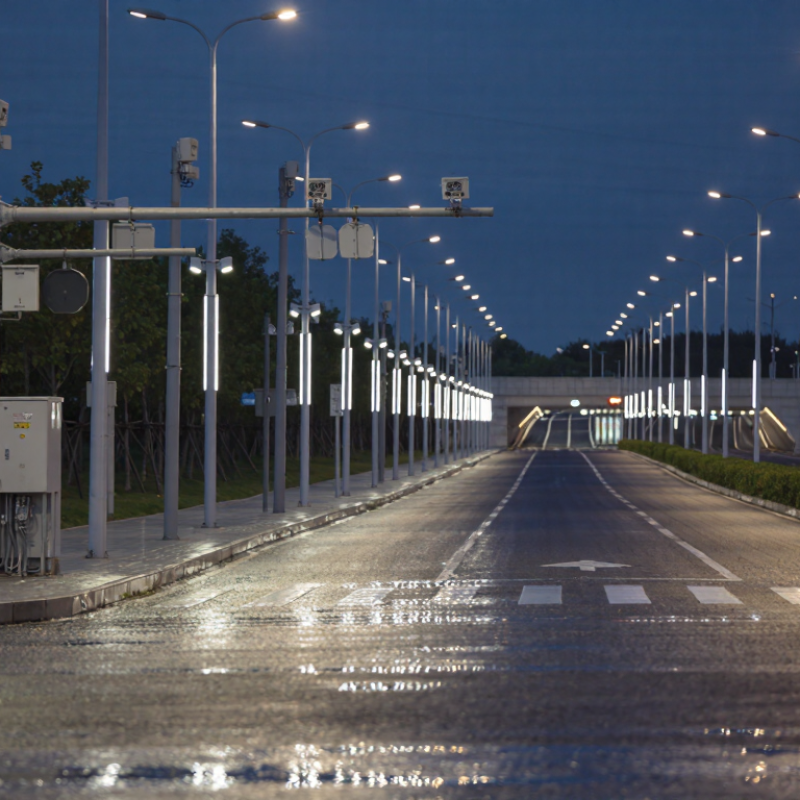
Public lighting turns electrical energy into practical illumination for roads, sidewalks, crossings, and public spaces. Power usually travels through underground or overhead cables to a control cabinet. From there, circuits feed individual light poles. A sensor, timer, or central control system signals when lighting should operate.

Inside each fixture, an electrical driver regulates incoming power. The light source then produces illumination, while lenses and reflectors shape its spread. This optical design directs light toward the pavement instead of wasting it above the street. Pole height, spacing, surface color, and weather all affect the final result. Wet asphalt can reflect glare, while trees may block useful light.

Distribution is not simply about making everything bright. Good planning supports visibility without creating harsh contrasts. Measurements such as illuminance and uniformity help engineers check whether pedestrians and drivers can see clearly. In practice, field inspections often reveal problems that drawings miss. A tilted fixture, dirty lens, or damaged cable can create a dark patch.

Tips: Keep fixtures clean, test controls seasonally, and inspect uneven lighting after storms. Use measured data rather than visual guesses. Lower brightness is not always better. Too little light can reduce confidence, but excessive light can cause glare and disturb nearby homes. Maintenance records also help teams identify repeated failures and improve future designs.

How Lighting Controls and Sensors Manage Operation

Public lighting includes the fixtures that illuminate streets, parks, walkways, and public spaces after dark. Its operation depends on more than a simple on-and-off switch. Lighting controls receive information from photocells, timers, motion sensors, and central management systems. A photocell detects falling daylight and signals the lights to turn on. A timer can adjust operation by season, while motion sensors increase brightness when people or vehicles approach.

In practical installations, technicians often combine these controls instead of relying on one device. A pathway may remain dim at night, then brighten when movement is detected. This reduces energy use while preserving visibility. However, sensors can misread headlights, tree shadows, or heavy rain. That is why commissioning tests should cover different times and weather conditions. Operators also need manual control for maintenance and unexpected events. A design may look efficient on paper, yet perform poorly if the sensor is poorly positioned.

Tips: Mount sensors away from direct fixture glare. Check detection zones with a walking test. Keep control cabinets labeled and accessible. Review dimming levels with local users, not only with installers. For projects involving CE Certification Public Area Lighting, verify applicable safety, electrical, and documentation requirements before installation. Records should include test results, maintenance dates, and control settings. Small details matter. Yet even careful plans need review after real use.

Common Types of Public Lighting and Their Applications

Public lighting is designed to make shared spaces safer, clearer, and easier to navigate after sunset. It includes roads, sidewalks, parks, transit stops, tunnels, and public buildings. Each location needs a different lighting approach. A tall streetlight can spread light across a roadway, while a lower bollard light can guide pedestrians without flooding nearby windows.

Common Types of Public Lighting and Their Applications

Streetlights are widely used along highways, residential roads, and city intersections. Their precise beam patterns help reduce dark patches and unnecessary glare. Floodlights serve wider areas, such as sports grounds, construction entrances, and emergency access zones. In parks, path lights create a softer visual guide. They should reveal steps and uneven ground without making the space feel harsh. Transit shelters often use compact fixtures under roofs, where shadow control matters more than maximum brightness.

Tunnel lighting requires careful adjustment. Drivers entering a tunnel need a gradual change from daylight to artificial light. Sudden contrast can be uncomfortable and unsafe. Public Area Lighting Manufacturers often develop systems with dimming controls, weather protection, and replaceable components. However, equipment alone cannot fix poor planning. A light may meet its output target but still shine into bedrooms or create glare for cyclists. Field measurements, nighttime inspections, and feedback from maintenance teams remain important. The first installation is rarely perfect. Dust, tree growth, and changing traffic patterns can alter performance over time.

What Is Public Lighting and How Does It Work? - Common Types of Public Lighting and Their Applications
Public-lighting performance depends on road geometry, traffic conditions, local regulations, weather, mounting height, and the selected lighting class.
Lighting Type Primary Purpose Typical Installation Location Common Mounting Height Typical Light Distribution Common Light Sources Typical Applications Common Control Method Key Design Considerations
Road and Street Lighting Improve visibility for drivers, cyclists, and pedestrians during hours of darkness. Roads, intersections, bridges, roundabouts, and urban streets. Approximately 6–12 m Asymmetric roadway distribution that directs light along the carriageway while limiting excessive spill. LED; older installations may use high-pressure sodium or metal-halide lamps. Urban roads, residential streets, arterial roads, and transport routes. Photocell, astronomical time clock, dimming schedule, or remote monitoring system. Road classification, traffic volume, uniformity, glare control, pole spacing, maintenance access, and energy efficiency.
Pedestrian and Pathway Lighting Support safe movement and improve visual comfort in areas used primarily by people on foot. Sidewalks, pedestrian promenades, cycle paths, parks, and campus walkways. Approximately 3–6 m Wide, low-glare distribution designed to provide even illumination on walking surfaces. LED, generally with warm or neutral white light. Footpaths, bicycle routes, public parks, plazas, and residential walkways. Photocell, time clock, motion detection, or scheduled dimming. Pedestrian comfort, facial recognition, accessibility, light trespass, tree coverage, and nighttime security.
Area and Flood Lighting Illuminate large open spaces and improve visibility across broad outdoor areas. Public squares, parking areas, market spaces, recreation grounds, and service yards. Approximately 5–20 m Medium- to wide-beam distribution, often using multiple aiming directions. LED; legacy systems may use metal-halide or high-pressure sodium lamps. Car parks, public gathering areas, outdoor facilities, and emergency assembly areas. Photocell, time clock, occupancy sensor, or centralized lighting control. Uniformity, glare, spill light toward nearby properties, structural wind load, and aiming accuracy.
High-Mast Lighting Provide broad-area illumination from a small number of tall structures. Large interchanges, ports, logistics areas, airports, and major transport facilities. Approximately 20–45 m Multiple wide beams directed from a high elevation to cover extensive areas. LED; older systems may use high-intensity discharge lamps. Motorway interchanges, freight terminals, large parking areas, and industrial access zones. Photocell, programmable time control, staged switching, or remote monitoring. Wind loading, access for maintenance, aviation or residential glare, uniformity, and emergency operation.
Tunnel Lighting Maintain visual adaptation and safe visibility when vehicles enter, travel through, and exit a tunnel. Road tunnels, underpasses, and covered transport corridors. Ceiling-mounted or side-mounted; mounting height varies with tunnel geometry. Longitudinal or symmetric distribution aligned with the direction of travel. LED, with controllable output for different operating conditions. Vehicle tunnels, underpasses, and enclosed road sections. Photocells, luminance sensors, tunnel control systems, and emergency controls. Daylight adaptation, entrance-zone brightness, ventilation conditions, emergency lighting, maintenance, and water resistance.
Bollard Lighting Provide localized, low-level guidance lighting for pedestrians. Paths, plazas, gardens, residential public areas, and landscaped spaces. Approximately 0.5–1.2 m Short-range downward or radial distribution with strong glare shielding. LED Landscape pathways, pedestrian zones, courtyards, and public gardens. Photocell, time clock, motion sensor, or low-voltage control system. Vandal resistance, trip hazards, shielding, landscape integration, water ingress protection, and spacing.
Decorative and Architectural Lighting Enhance the identity, visibility, and nighttime appearance of public structures and spaces. Historic buildings, bridges, monuments, civic plazas, and streetscapes. Ground-mounted, façade-mounted, or pole-mounted Projector, grazing, wall-wash, or accent distribution depending on the surface and feature. LED, often with adjustable intensity or color temperature. Public art, landmarks, civic buildings, bridges, and urban place-making projects. Time clock, astronomical controller, dimming system, or event-based control. Glare, light pollution, heritage requirements, viewing angles, energy use, and protection of wildlife.
Solar-Powered Stand-Alone Lighting Provide lighting where grid connection is difficult, costly, or unavailable. Remote roads, rural paths, parks, bus stops, and isolated public facilities. Approximately 4–10 m Similar to roadway or pathway distribution, depending on the luminaire design. LED powered by photovoltaic panels and rechargeable batteries. Rural walkways, off-grid roads, emergency routes, and remote public amenities. Photocell, programmed dimming, battery management, or motion detection. Solar exposure, battery capacity, winter weather, autonomy days, panel orientation, theft protection, and maintenance.
Smart and Adaptive Lighting Adjust light output according to time, traffic, occupancy, or environmental conditions. Connected road networks, city centers, pedestrian districts, and transport corridors. Typically 4–12 m, depending on the underlying application. Application-specific distribution combined with controllable light output. Digitally controllable LED Energy-managed streets, adaptive pedestrian areas, smart intersections, and municipal lighting networks. Networked controls, sensors, remote management, traffic data, and scheduled dimming. Interoperability, cybersecurity, data privacy, fail-safe operation, communications coverage, and maintenance planning.
Public lighting generally works by converting electrical energy into light through a lamp or LED module, directing that light with optics, and managing operation with controls such as photocells, timers, sensors, or networked systems.

Energy Efficiency, Safety, and Maintenance Considerations

What Is Public Lighting and How Does It Work?

Energy Efficiency, Safety, and Maintenance Considerations

Public lighting uses poles, luminaires, controls, and electrical networks to illuminate roads, sidewalks, parks, and transit areas. High-Quality Public Area Lighting should provide clear visibility without creating harsh glare or dark gaps. A photometric survey helps technicians place fixtures correctly. It also reveals uneven brightness near crossings, benches, and building entrances.

Energy efficiency depends on more than using LED equipment. Accurate optical design directs light toward the ground, not nearby windows or empty skies. Dimming schedules can reduce consumption during quiet hours. However, excessive dimming may weaken security in busy areas. Motion sensors require careful adjustment because false triggers waste energy. Color temperature matters too. Very cool light can feel sharp and uncomfortable. Warmer light may support a calmer public environment.

Maintenance protects both performance and safety. Technicians should inspect poles for corrosion, check wiring, clean lenses, and replace damaged seals. Trees can block light within one growing season. A simple nighttime inspection may reveal problems that daytime checks miss. Maintenance records should include outage dates, repair causes, and energy readings. These details support reliable planning and budget decisions. Still, no system performs perfectly. Sensors drift, fixtures age unevenly, and promised savings may not appear without regular review. A well-lit walkway can remain unsafe if glare hides faces or pavement damage.

China Bifacial Integrated Solar Street Lights: Efficiency & Cost Insights from IEA 2024 and IRENA 2023

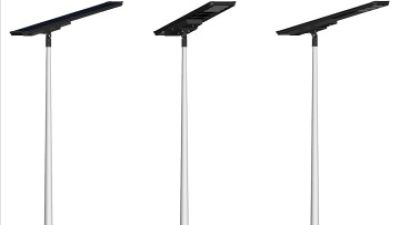
China’s bifacial integrated solar street lights reflect the rapid progress of photovoltaic technology and the growing demand for efficient outdoor infrastructure. According to the IEA’s *Renewables 2024* report, China is expected to contribute almost 60% of global renewable power capacity expansion between 2024 and 2030, supported by strong solar manufacturing and deployment. This industrial scale helps improve component availability and can reduce procurement costs for municipal, commercial, and rural lighting projects. Bifacial panels capture sunlight from both front and rear surfaces, while an all-in-one structure integrates the lamp, battery, controller, and photovoltaic module into a compact unit.

Cost competitiveness is also supported by wider solar-market trends. IRENA’s *Renewable Power Generation Costs in 2022*, published in 2023, reported that the global weighted-average levelized cost of electricity from utility-scale solar PV fell by 89% between 2010 and 2022, reaching approximately USD 0.049 per kWh. Although street-light economics depend on battery capacity, local sunlight, pole spacing, and maintenance requirements, lower PV costs strengthen the case for solar lighting compared with grid-connected installations. Designed for easy installation, these bifacial all-in-one lights can reduce trenching, cabling, and routine servicing, making them practical for streets, parks, village roads, industrial areas, and remote locations. Reliable manufacturing and quality-focused production further support long-term lighting performance in diverse outdoor environments.

FAQS

What are the main components of a public lighting system?

Key parts include poles, luminaires, wiring, control cabinets, and foundations. Each part needs regular inspection.

How does public lighting improve visibility?

Properly aimed fixtures illuminate pavement, steps, crossings, and entrances. They should not shine into windows or the night sky.

Which controls can operate public lights?

Timers, photocells, motion sensors, and remote monitoring devices control switching, dimming, and fault reporting. Settings need occasional adjustment.

What types of public lighting are commonly used?

Streetlights serve roads and intersections. Path lights guide pedestrians. Floodlights cover wide areas. Tunnel lights manage changing daylight conditions.

Why do tunnel lights need gradual adjustment?

Drivers moving from daylight into a tunnel face strong visual contrast. Gradual lighting changes can reduce discomfort and improve visibility.

How can public lighting reduce energy use?

Accurate optics direct light toward the ground. Dimming during quiet hours can reduce consumption, but excessive dimming may reduce safety.

What maintenance checks are important?

Inspect corrosion, cable insulation, grounding, seals, lenses, access doors, and junction boxes. Look for water.

Why are nighttime inspections necessary?

Daytime checks may miss glare, dark patches, blocked fixtures, or uneven brightness. A simple night walk can reveal practical problems.

Can a newly installed lighting system remain imperfect?

Yes. Trees grow, buildings change, and traffic patterns shift. Regular measurements and honest review may be needed.

Conclusion

Public Lighting refers to the systems used to illuminate streets, sidewalks, public spaces, parks, roads, and other shared areas after dark. Its main purpose is to improve visibility, support safer movement, enhance public comfort, and help communities use outdoor spaces more effectively. A typical system includes light fixtures, poles or mounting structures, electrical wiring, power supplies, and distribution equipment. Together, these components deliver light where it is needed and maintain consistent coverage across an area.

Public lights create illumination by converting electrical energy into visible light, which is then directed and spread through carefully designed fixtures. Timers, photocells, motion sensors, and remote controls can adjust operation according to daylight, traffic, or activity levels. Common applications include roadway lighting, pedestrian-area lighting, parking-area lighting, and outdoor security lighting. Efficient equipment, appropriate brightness, and smart controls can reduce energy use while maintaining safety. Regular inspection, cleaning, repairs, and timely replacement are also essential for reliable performance, lower maintenance costs, and a longer system life.
Isabella

Isabella

Isabella is a dedicated marketing professional at Zhongshan Sanhui Lighting Technology Co., Ltd., where she has honed her expertise in the lighting industry. With a keen understanding of the company's innovative products and services, Isabella plays a crucial role in promoting the company's core......
Previous What Are the Top Vertical Solar Tubes for Global Buyers?