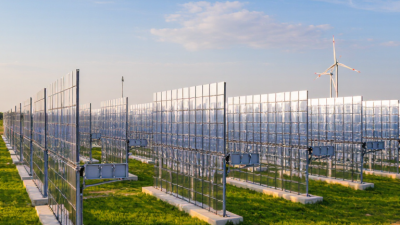
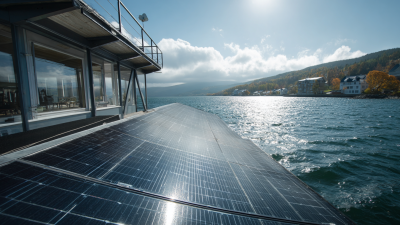
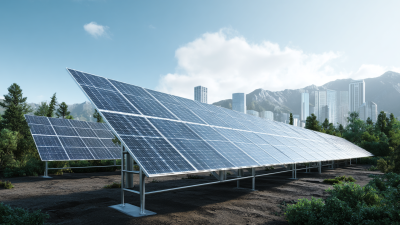
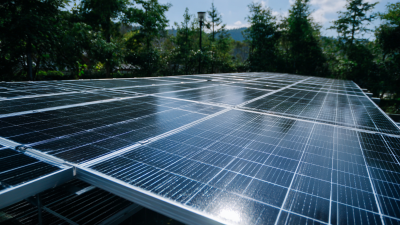
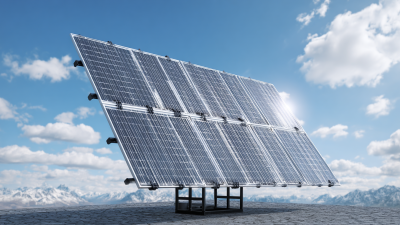
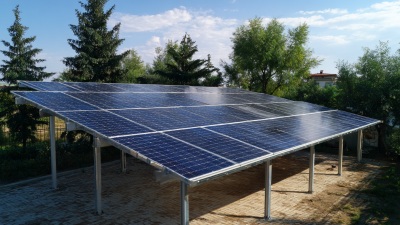
So, why might you want to consider Vertical Solar Pv for your project? Well, it’s actually changing the game when it comes to dealing with limited space, sunlight angles, and mixed-use setups. You see, traditional south-facing solar panels usually need quite a bit of room between them, but vertical systems are a different story. They can be tucked along the edges of fields, next to roads, rail lines, parking lots, or industrial areas without taking up much space. Plus, their slim profile helps avoid conflicts over land and keeps access open for vehicles, workers, or farm equipment—big plus if you ask me.
Dr. Christian Breyer, a pro in renewable energy systems, hits the nail on the head when he says, “Solar Power isn’t just about the tech; it’s about the whole system opportunity.” This idea really matters, especially when your project has a few different goals in mind. A vertical bifacial array can grab sunlight from both sides, so it tends to generate electricity during those tricky morning and evening rush hours. That can nicely complement standard rooftop or ground-mounted setups. And, if you’re feeling creative, you might even pair vertical solar pole street lights with pedestrian walkways, security zones, or remote access roads—adding both function and flexibility.
But, heads up—this kind of setup isn’t just a walk in the park. Vertical structures tend to face stronger winds, more shading issues, and different cleaning challenges. How much energy you get out of it depends on lots of things—like which way it’s facing, the local weather, how high the modules are, and what’s around them. Sometimes, a design that looks great on paper might not perform so well when you put it next to trees or taller buildings. Here’s the reality: vertical systems aren’t automatically better. They need careful planning, good modeling, and realistic maintenance strategies.
Builders and developers should do a thorough comparison—look at yearly energy output, how the land value is affected, ease of installation, battery requirements, and long-term reliability. Companies like Nextracker, Trina Solar, and LONGi have some really solid tech to support this kind of assessment, but ultimately, you’ve gotta choose based on the actual site conditions. The real strength of vertical solar PV lies in its practicality—using space smartly, offering planning flexibility, and leaving room for honest evaluation along the way.
Define Vertical Solar PV: East–West and South-Facing System Configurations
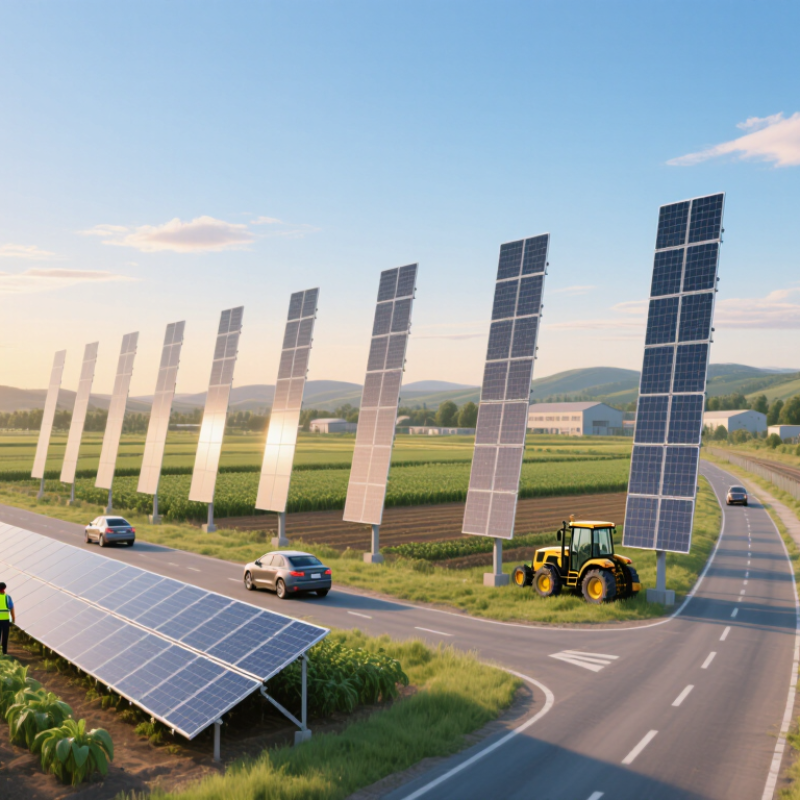
Vertical solar PV places panels upright or at a steep angle, often along fences, field boundaries, or building edges. Its layout changes how sunlight reaches the modules. The two common options are east–west and south-facing configurations.
In an east–west system, one panel face points east and the other west. The east-facing side receives more morning light; the west-facing side catches later afternoon sun. This can spread generation across more hours instead of concentrating it near midday. On a farm boundary, the rows may resemble narrow vertical fins. Bifacial modules can also collect light reflected from nearby ground, though performance depends on surface color, spacing, and shade. Dark soil gives less help than pale gravel. Details matter.
A south-facing vertical system directs the active face toward the southern sky in the Northern Hemisphere. It may suit a site that needs a simpler orientation or has limited room for paired east–west rows. Yet steep panels receive sunlight differently across seasons, and low winter sun can create long shadows. Engineers should check local weather data, obstacles, soil conditions, and access for cleaning and repairs. A map alone can miss a tree’s afternoon shadow. Vertical layouts can also complicate cable routing and mounting, so early site measurements are worth the effort. The best configuration is not always obvious.
Measure Bifacial Gains, Typically 5–15% Above Comparable Monofacial Modules
Why Choose Vertical Solar PV for Your Project?
Vertical solar PV can capture light on both module faces, making bifacial performance a key part of the project assessment. Bifacial modules may deliver 5–15% more energy than comparable monofacial modules, but this is a measured potential, not a guarantee. The actual gain depends on ground reflectivity, row spacing, shading, orientation, and local weather. Pale gravel may reflect more light than dark soil. Small details matter.
Tips: Compare annual energy per installed kilowatt, not peak output alone. Record the baseline, site conditions, and measurement period. Keep the comparison fair.
A useful assessment models both module faces and checks assumptions against site data. Vertical Solar Tubes may suit locations where land use, access, or changing sun angles shape the design, though they are not ideal for every site. Track rear-side irradiance and energy output after installation. Check for nearby obstructions and seasonal shadows. Even a modest gain can matter across a large array, but projections can be wrong. Revisit them when actual operating data arrives.
Compare Daily Generation: Broader Morning and Evening Output in East–West Arrays
Vertical east–west arrays can reshape the working day. East-facing module surfaces catch low morning sun; west-facing surfaces respond later, spreading output beyond the midday peak typical of south-facing arrays. This can suit sites with morning and evening demand, such as buildings that start early or continue operating after sunset. A wider curve, not magic.
The IEA PVPS Snapshot of Global PV Markets 2024 estimates that solar generated 1,628 TWh in 2023, around 5.4% of global electricity. That scale makes generation timing increasingly relevant, but annual energy alone cannot show whether an array matches a project’s load. Compare hourly profiles. NREL’s National Solar Radiation Database provides hourly solar and weather data for site-specific modeling; use it to test local seasons, shading, and weather rather than relying on a generic yield claim. There is a catch: vertical modules may collect less annual energy than optimally tilted panels, and rear-side gains depend on ground reflectivity and spacing. NREL’s bifacial performance research highlights how strongly these site conditions affect results. A pale gravel surface and an open row gap behave differently from dark paving and a tight layout. Model both daily output and annual yield before choosing.
Why Choose Vertical Solar PV for Your Project? - Compare Daily Generation: Broader Morning and Evening Output in East–West Arrays
Representative clear-sky planning comparison for a south-facing tilted array and a vertical east–west array
| Time Period | Typical Solar Position | South-Facing Tilted Array
Share of Daily Output | Vertical East–West Array
Share of Daily Output | East–West Advantage | Planning Interpretation |
| 06:00–08:00 | Low eastern sun | 0% | 13% | +13 percentage points | Earlier output can support morning demand and reduce the daily start-up gap. |
| 08:00–10:00 | Rising eastern sun | 3% | 19% | +16 percentage points | East-facing module surfaces receive useful direct irradiance before midday. |
| 10:00–12:00 | Moderate to high sun | 11% | 18% | +7 percentage points | The east–west profile remains productive while avoiding a narrow midday peak. |
| 12:00–14:00 | Near solar noon | 23% | 15% | −8 percentage points | A tilted south-facing array generally produces more concentrated midday energy. |
| 14:00–16:00 | Declining western sun | 30% | 18% | −12 percentage points | The south-facing reference reaches its strongest daily period, while the east–west profile stays flatter. |
| 16:00–18:00 | Low to moderate western sun | 22% | 13% | −9 percentage points | The west-facing side of the vertical array continues contributing after the midday peak. |
| 18:00–20:00 | Low western sun | 9% | 4% | −5 percentage points | Output depends strongly on latitude, season, horizon shading, and local sunset time. |
| 20:00–22:00 | After sunset or negligible sun | 2% | 0% | −2 percentage points | Both configurations normally produce negligible energy after local sunset. |
| Daily Total | Normalized comparison | 100% | 100% | Broader profile | The key benefit is a wider generation window, not necessarily a higher annual energy yield. |
Data basis: The percentages represent a normalized, clear-sky planning profile for a mid-latitude site using equal installed capacity, comparable system losses, no shading, and two-hour time intervals. A vertical east–west array generally shifts more generation toward the morning and late afternoon, while a south-facing tilted array typically concentrates more energy around solar noon. Actual results vary with latitude, season, module bifaciality, row spacing, albedo, weather, inverter clipping, and site shading.
Assess Land Use, Crop Compatibility, Glare, Snow, Wind, and Access Requirements
Vertical solar PV can make sense where land is valuable, uneven, or still needed for farming. A Vertical Solar Pole uses a narrow footprint, leaving wider paths between rows for tractors, irrigation lines, and seasonal work. However, spacing must match crop height and machinery width. A design that looks efficient on paper may delay harvesting in practice.
Crop compatibility depends on shade patterns, panel height, and daily sunlight. Test plots can reveal whether vegetables, forage, or grains tolerate reduced morning or afternoon light. Glare also needs careful review near roads, homes, and aircraft routes. Adjusting panel angles and checking sightlines during low winter sun can prevent avoidable complaints. Small oversights matter.
Snow can slide from elevated modules onto access lanes, so clearance and maintenance routes should be planned together. Wind loading requires site-specific engineering, especially on exposed fields or ridgelines. Foundations must suit local soil, frost depth, and drainage conditions. Keep enough room for inspection vehicles and emergency access. I would not trust a generic layout. Field conditions often challenge the first drawing, and revising the plan early is cheaper than moving equipment later.
Verify Compliance with IEC 61215, IEC 61730, and Site-Specific Wind Standards
Vertical Solar Pv can improve land use, morning and afternoon generation, and rear-side irradiance. However, its value depends on verified compliance, not appearance. The IEA PVPS Trends in Photovoltaic Applications 2024 report recorded approximately 456 GW of new solar capacity in 2023. That growth increases the need for disciplined product and structural checks.
IEC 61215 confirms design qualification and type approval through tests such as thermal cycling, humidity-freeze exposure, and mechanical loading. IEC 61730 addresses electrical and fire safety. Request the complete test reports, not only certificates. Check whether the tested module matches the proposed glass, frame, junction box, and mounting configuration. A certificate alone is not enough.
Wind design needs a separate, site-specific review. Apply the relevant local standard, such as EN 1991-1-4 or ASCE 7, according to jurisdiction. Include building height, terrain category, basic wind speed, gust effects, edge zones, and vertical-array pressure coefficients. Vertical rows can experience unusual uplift and torque around clamps. Fraunhofer ISE’s Photovoltaics Report 2024 notes that bifacial output depends heavily on spacing, albedo, and geometry. That same geometry affects wind exposure. Paper compliance can still feel safe. It is not always safe. Recheck assumptions with structural calculations, field measurements, and independent engineering review.
Compare Project Economics Through Yield, LCOE, O&M, and Lifetime Degradation Data
A Vertical Solar Module changes when and how a project generates electricity, so annual yield alone can hide important differences. Model hourly output against local weather, shading, and the site’s electricity prices. Vertical arrays may produce more during morning and evening hours, but snow, dust, and nearby buildings can alter the result. Check measured data where possible. One year is rarely enough.
Compare levelized cost of energy using the same assumptions for every design: installed cost, financing, useful life, and net generation. A lower upfront price does not always mean lower LCOE. Nor does a higher modeled yield guarantee better project economics. Small changes in inverter losses or energy value can shift the comparison. The spreadsheet can look precise; the inputs may not be.
Include operations and maintenance costs, such as access equipment, inspection time, and replacement parts. Vertical layouts may simplify some ground-level cleaning, yet site-specific repairs still need planning. Review lifetime degradation data and ask how it was measured. A modest annual decline compounds over decades. Be cautious when comparing results from different climates or test methods; the evidence may not line up neatly. Builders should validate assumptions with field records before treating forecasts as bankable.
Conclusion
Vertical Solar Pv systems mount modules upright in either east–west or south-facing configurations, offering a different generation profile from conventional tilted arrays. Bifacial modules can capture light on both sides and may deliver 5–15% more energy than comparable monofacial modules, depending on site conditions. East–west layouts can spread production across the day, increasing morning and evening output. To realize these benefits, project designers should evaluate row spacing, tilt, ground clearance, surface reflectivity (albedo), and rear-side irradiance.
A sound assessment should also consider land use, compatibility with crops or other site activities, glare, snow, wind exposure, and access for maintenance. System design and installation should meet applicable IEC 61215 and IEC 61730 requirements, as well as site-specific wind standards. Finally, compare project economics using expected energy yield, levelized cost of energy, operations and maintenance needs, and lifetime degradation data. Together, these factors help determine whether a vertical configuration is suitable for a particular location and project goal.