So, why choose Led Street Lights if you're buying for projects around the world?
First off, an LED street light can cut energy use, maintenance trips, and nighttime operating costs. The International Energy Agency says lighting eats up around 15% of global electricity—so efficient Outdoor Lighting isn't just a green move, it's a budget move too. The U.S. Department of Energy notes that LED products can use at least 75% less energy than incandescent lighting. They can also last up to 25 times longer. That said, actual street-lighting results depend on fixture design, control strategy, and what lamps you're replacing. And yeah, that detail matters.
For global buyers, a bright product photo is not enough. You'll want to dig into photometric files, thermal performance, surge protection, ingress protection, and warranty terms. A reliable Led Light Street Light should spread uniform illumination across roads, sidewalks, and crossings. The Illuminating Engineering Society recommends looking at visibility, glare, uniformity, and maintenance conditions together. If you're buying for a city or municipality, also check local voltage, pole spacing, climate, and how easy replacements will be. Small mistakes here get expensive fast after installation.
No product is perfect—none of them are. A poorly specified LED can cause glare, dark zones, or early failures. And a low price by itself can hide weak drivers or vague warranty coverage. So ask for test reports from recognized labs, and compare performance claims against independent standards. The DesignLights Consortium and ENERGY STAR are useful reference points for qualifying products in relevant markets. Still, real projects need field inspection. Weather, dust, traffic vibration, and installation quality can all change the results. At the end of the day, careful selection is still the strongest reason to go with LED street lights.
What Are LED Street Lights and How Do They Work?
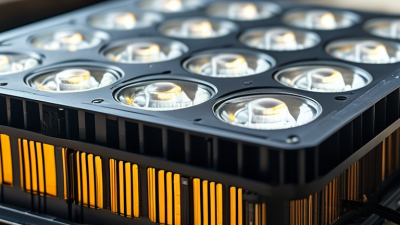
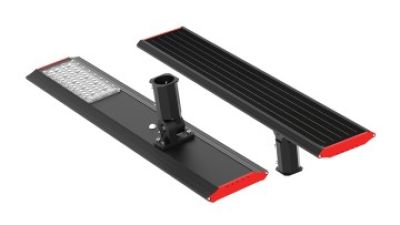
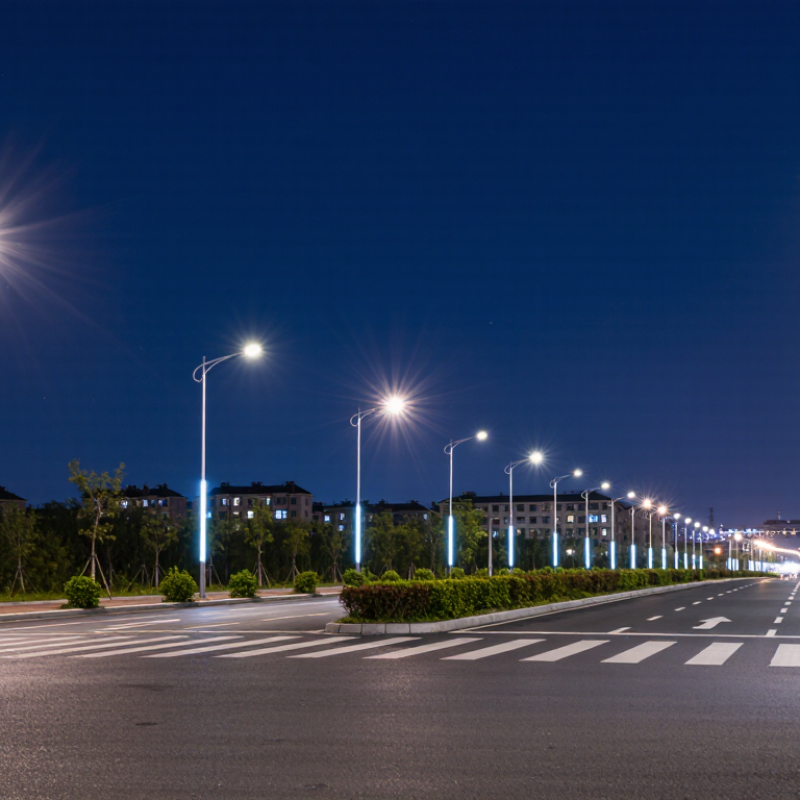
LED street lights are solid-state fixtures that convert electricity into light through semiconductor diodes. Unlike older discharge lamps, they require no warm-up period. A driver regulates current, while heat sinks move thermal energy away from the LED chips. Optical lenses then shape light onto roads, crossings, and sidewalks. Simple in principle.
The U.S. Department of Energy’s Solid-State Lighting R&D Opportunities report identifies LED efficacy above 150 lumens per watt in advanced products. Actual street performance is lower because lenses, drivers, dirt, and temperature reduce output. The International Energy Agency reports that lighting uses about 15% of global electricity, showing why efficient Public Lighting matters. However, savings depend on operating hours and controls.
From field evaluations, adaptive dimming can reduce late-night energy use while maintaining safer illumination levels. Photocells detect daylight, and networked controllers can report failures before dark streets become a complaint. Buyers should verify surge protection, ingress protection, thermal testing, and photometric files. CE Certification Led Light Street Light may appear in procurement searches, but conformity documents should match the exact model and market requirements. Certificates alone do not prove good road lighting. Poor spacing can create dark patches, even with powerful fixtures. That detail is often underestimated. Performance also changes in humid, dusty, or freezing locations. Independent testing remains valuable, although it adds time and cost.
Why Choose LED Street Lights for Global Buyers?
LED street lights use semiconductor light-emitting diodes to convert electrical energy into light. A built-in driver regulates current, while optical lenses distribute illumination across roads and public spaces.
Representative industry values show that LED street lights can provide a substantially longer rated service life than traditional discharge technologies, which may reduce relamping frequency, maintenance work, and lifecycle operating costs. Actual performance depends on thermal design, operating conditions, and product specifications.
Why Are LED Street Lights More Energy-Efficient?
For global buyers, LED street lights earn attention mainly through lower energy demand. An LED converts more electricity into useful illumination than older high-pressure sodium or metal-halide fixtures. That difference appears on a meter every night. A 100-watt LED may replace a higher-wattage lamp, but the correct comparison includes delivered lumens, optics, and lighting standards. Wattage alone can mislead.
Efficiency improves when the fixture sends light toward the road, not into windows or the sky. Precise optics reduce wasted output and may support wider spacing between poles. Built-in dimming can lower power during quiet traffic hours, while photocells prevent daytime operation. In a coastal town, sealed housings and suitable thermal design also matter. Dust, humidity, and heat can reduce real performance.
From project reviews, the strongest estimates use measured operating hours, tariff data, maintenance records, and a realistic replacement schedule. LEDs usually need fewer lamp changes, reducing lifts, labor, and traffic disruption. Still, the calculation is not perfect. Poor controls, excessive brightness, or weak installation can erase expected savings. Buyers should request test reports, photometric files, warranty terms, and independent performance data before ordering. A small road pilot can reveal glare, shadows, and actual nighttime consumption.
How Do LED Street Lights Reduce Long-Term Operating Costs?
LED street lights can lower long-term operating costs through efficient energy use and reduced maintenance. A well-designed LED fixture often delivers the same road brightness with less electricity than older lighting technology. That difference becomes visible on monthly utility bills, especially across highways, parking areas, and city roads.
The savings continue after installation. LEDs usually last longer, so crews replace fewer lamps and use fewer service vehicles. This reduces labor, traffic control, and equipment expenses. Smart controls can dim lights during quiet hours, while motion or scheduled settings provide additional savings. However, LEDs are not magic. Poor thermal management, incorrect wattage, or weak installation can shorten service life. Careful photometric planning matters. It prevents dark patches and avoids paying for unnecessary brightness. Working with experienced Led Light Street Light Manufacturers can also support accurate specifications, testing records, and reliable warranty terms.
Tips: Compare total ownership cost, not only purchase price. Check lumen output, operating temperature, surge protection, and expected maintenance hours. Request a small field trial before a citywide upgrade. Measure energy use before and after installation. Real projects sometimes reveal unexpected glare or control issues, so allow room for adjustment. A lower invoice is useful, but stable performance matters more over ten or fifteen years.
Why Choose LED Street Lights for Global Buyers? - How Do LED Street Lights Reduce Long-Term Operating Costs?
| Cost and Performance Metric | LED Street Light | 150 W High-Pressure Sodium Light | Estimated LED Advantage |
| Typical electrical input used for comparison | 100 W | 150 W | 33% lower connected load |
| Annual operating hours | 4,380 hours | 4,380 hours | Same lighting schedule |
| Annual electricity consumption per fixture | 438 kWh | 657 kWh | 219 kWh saved annually |
| Annual electricity cost at US$0.12/kWh | US$52.56 | US$78.84 | US$26.28 saved per year |
| Ten-year electricity consumption | 4,380 kWh | 6,570 kWh | 2,190 kWh saved |
| Ten-year electricity cost | US$525.60 | US$788.40 | US$262.80 saved |
| Rated life commonly used for planning | 50,000–100,000 hours, depending on design and temperature | Approximately 20,000–24,000 lamp hours | Fewer planned relamping events |
| Maintenance requirement | No routine lamp replacement; periodic cleaning and electrical inspection remain necessary | Lamp and ballast replacement may be required during the service period | Lower labor and access-equipment costs |
| Control compatibility | Compatible with dimming, photocells, motion sensors and network controls when specified | Control capability depends on the ballast and control system | Greater energy-saving potential |
| Light output over time | Gradual lumen depreciation, normally measured by an L70 or similar rating | Lamp lumen depreciation and color shift can increase replacement needs | More consistent light distribution |
| Ten-year energy-related saving per fixture | — | — | US$262.80, before maintenance savings |
Calculation assumptions: The comparison uses one 100 W LED fixture and one 150 W high-pressure sodium fixture operating 12 hours per day for 365 days per year. Electricity costs are calculated at US$0.12 per kWh. Actual savings vary with local electricity tariffs, lighting levels, fixture wattage, operating schedules, climate, maintenance access, and control settings. The LED and conventional fixtures must provide comparable roadway illumination for a fair project evaluation.
What Performance Features Matter to Global Buyers?
Why Choose LED Street Lights for Global Buyers?
Global buyers need more than bright fixtures. They need predictable performance across different roads, climates, and maintenance systems. A High-Quality Led Light Street Light should provide stable illumination with low energy use. Check its measured efficacy, color consistency, and photometric distribution before comparing prices. A narrow road may need controlled forward lighting, while a wide junction requires broader coverage.
“More lumens” is not always better.
Thermal management matters in hot cities. A strong aluminum housing, reliable heat dissipation, and suitable surge protection can reduce early failures. Look for published tests covering ingress protection, impact resistance, electrical safety, and operating temperature. These documents make technical claims easier to verify.
Ask for LM-79 or equivalent photometric data, lifetime testing, and clear warranty terms. Small details matter, such as sealed cable glands and replaceable control components.
Smart controls can lower energy consumption further through dimming, schedules, and fault alerts. However, compatibility deserves careful attention. A control system that works in one country may not fit another city’s network or maintenance skills. I have seen projects choose advanced features and later use only basic switching. That is an expensive lesson. Buyers should also inspect sample units, review installation manuals, and confirm spare-part availability. Performance on paper can still disappoint in dusty streets, coastal air, or heavy rain.
How Do LED Street Lights Support Smart-City Infrastructure?
Why Choose LED Street Lights for Global Buyers?
How Do LED Street Lights Support Smart-City Infrastructure?
LED street lights are no longer simple fixtures above a road. They can become connected urban assets. The International Energy Agency reports that lighting uses about 15% of global electricity. Efficient street lighting can therefore reduce municipal demand and operating pressure. The U.S. Department of Energy also reports that LED systems can deliver substantial energy savings and longer service life than conventional lighting. In practice, this means fewer night-time maintenance visits and more consistent illumination on streets, paths, and intersections.
The real smart-city value comes from connected controls. Sensors can adjust brightness when traffic falls, detect cabinet faults, and report outages remotely. A central platform can combine lighting data with traffic, weather, and public-safety systems. The International Telecommunication Union’s smart sustainable city framework emphasizes interoperable data, efficient services, and measurable resource use. LED fixtures support these goals because their digital controls allow precise, zone-based management. A quiet residential road need not stay fully bright all night.
But the case is not flawless. Poor network planning can create isolated systems and unnecessary costs. Wireless signals may weaken around dense buildings, while sensors need calibration and replacement. The U.S. National Institute of Standards and Technology stresses the importance of cybersecurity and interoperable urban platforms. Buyers should examine repair access, open communication protocols, energy baselines, and total lifecycle cost. Brightness alone is not intelligence. A well-designed pilot, measured across several seasons, can reveal problems before a city scales the system.
What Should Buyers Check Before Selecting an LED Street Light Supplier?
Choosing an LED street light starts with the supplier, not the housing design. A reliable Led Light Street Light Manufacturer should explain optical distribution, driver efficiency, surge protection, and thermal control clearly. Ask for recent photometric files, test reports, and production photographs. Check whether the sample matches the quoted specification. A bright sample can still create dark road edges. Small details matter.
Tips: Request one sample for a night trial. Measure illuminance at the road center and edges. Confirm IP and IK ratings, operating temperature, cable quality, and driver replacement options. Ask how warranty claims are handled, including response times and spare-part availability. Visit the factory remotely if travel is difficult. Watch the assembly process. It may reveal more than a polished catalog.
Look beyond certificates. Verify issuing laboratories and test dates, then compare documents with current components. A supplier should provide clear installation instructions and maintenance guidance. Ask about control compatibility, local voltage, and corrosion resistance near coasts. I have seen projects fail because mounting bolts rusted early, not because LEDs stopped working. That mistake is easy to overlook. Actual heat, dust, and voltage variation can change lifetime results. Do not let a perfect brochure replace a difficult question.
All-in-One Solar Street Lights from China: Smart, Affordable Outdoor Lighting for Global Projects
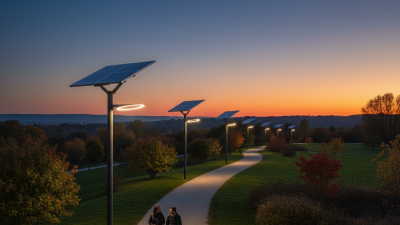
All-in-one solar street lights are reshaping outdoor lighting for urban roads, rural communities, parks, campuses, and construction sites. By integrating the solar panel, LED module, battery, controller, and luminaire into one compact housing, these systems reduce cabling, civil works, and installation time compared with conventional grid-connected lighting. Their off-grid design also helps projects avoid trenching and ongoing electricity charges. According to IRENA’s *Renewable Capacity Statistics 2024*, global solar power capacity reached approximately 1,419 GW by the end of 2023, reflecting the expanding supply chain and improving cost competitiveness behind solar-powered infrastructure.
For international projects, products from experienced Chinese manufacturers can offer practical customization, including adjustable lighting programs, motion sensing, remote monitoring, high-efficiency photovoltaic modules, and lithium battery storage. Smart controls can reduce output during low-traffic hours while maintaining safety when movement is detected, extending battery life and improving operating efficiency. The United Nations Environment Programme’s en.lighten initiative reports that lighting accounts for about 15% of global electricity consumption, highlighting the value of efficient LED systems and renewable power. Selecting robust materials, weather-resistant enclosures, certified batteries, and reliable quality-control processes is essential for long service life in coastal, desert, tropical, and cold environments. These features make all-in-one solar street lights a scalable option for affordable, low-maintenance outdoor illumination across global projects.
FAQS
LED street lights use semiconductor diodes to convert electricity into light. A driver controls current. Heat sinks move heat away from the LED chips. Lenses direct light toward roads, crossings, and sidewalks.
They can provide required road brightness with less electricity than older lighting systems. Actual efficiency depends on lenses, drivers, dirt, temperature, and operating hours. The savings estimate can be wrong. Measure energy before and after installation.
Longer service life can reduce lamp replacements, labor, vehicles, and traffic control. Crews may visit fewer locations at night. Poor cooling or weak installation can shorten service life. Lower purchase cost does not guarantee lower ownership cost.
Photocells detect daylight and switch lighting schedules. Networked controls can reduce brightness during quiet late-night periods. Sensors may respond to traffic or movement. Dimming must preserve safe visibility. Too much reduction becomes a problem.
Check lumen output, surge protection, ingress protection, and thermal test results. Request photometric files for roads, sidewalks, and intersections. Confirm documents match the exact model and target market. Certificates alone do not prove good lighting.
Powerful fixtures can still create dark patches when spacing is poor. Photometric planning helps distribute light more evenly. It can also reduce unnecessary brightness and glare. More power is not always better.
Connected fixtures can report outages, cabinet faults, and energy data remotely. Central platforms can adjust brightness by zone. Lighting data may connect with traffic or weather information. Brightness alone is not intelligence.
Wireless signals may weaken near dense buildings. Sensors need calibration, repairs, and occasional replacement. Different systems may not exchange data smoothly. Cybersecurity and open communication protocols require careful review. Planning is imperfect.
Yes, a small field trial can reveal glare, dark areas, and control failures. Measure performance across different seasons and weather conditions. Review maintenance access and energy results before expansion. A pilot costs time. It can prevent larger mistakes.
Conclusion
Led Street Light technology uses light-emitting diodes to convert electricity into bright, focused illumination with less energy loss than traditional lighting sources. Its high efficiency, long service life, and reduced maintenance needs can significantly lower long-term operating costs for municipalities, contractors, and infrastructure operators. In addition to providing consistent lighting, modern LED street lights may offer features such as adjustable brightness, reliable outdoor performance, effective heat management, and adaptable optical designs for different roads and public areas.
For global buyers, LED street lights can also support smart-city development through dimming controls, remote monitoring, fault detection, and compatibility with networked management systems. Before selecting a supplier, buyers should evaluate lighting performance, product durability, certifications, environmental adaptability, warranty terms, technical support, delivery capability, and total cost of ownership. A careful comparison of these factors helps ensure that the chosen solution meets local standards, project requirements, and long-term operational goals.