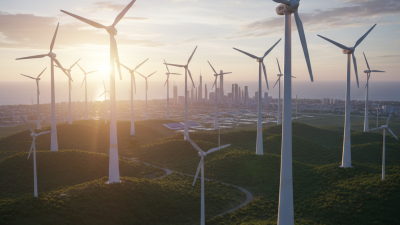
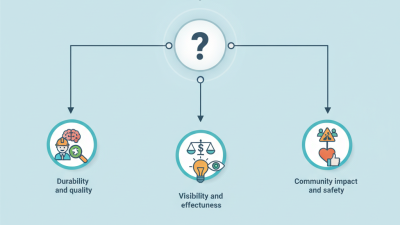
A wind turbine turns moving air into electricity, and honestly, the whole process is a surprisingly precise bit of engineering. Wind pushes the blades and spins them, which turns a rotor hooked up to a generator. From there, the generator sends electricity through transformers and transmission lines. And behind all that simple-looking motion? Sensors are constantly adjusting things like blade pitch, rotor speed, and braking systems.
So, according to the Global Wind Energy Council, the world added over 117 gigawatts of new wind capacity in 2023. And globally? Installed capacity passed 1,000 gigawatts—a pretty clear sign of just how fast wind power has been growing. The International Energy Agency, meanwhile, points to wind and solar as key tools for cutting emissions from the power sector. Still, it’s important to say: these numbers show progress, not perfection. After all, manufacturing all that equipment still needs steel, copper, composites—and a whole lot of transport. Plus, building turbines isn’t just about the turbines themselves—it can also have an impact on the landscape, on wildlife, and on the local communities nearby too.
Henrik Stiesdal — you know, the widely recognized wind-industry engineer and founder of Stiesdal — once put it like this: “The wind industry is now a mature industry.” And honestly, that line is worth sitting with for a second. Mature doesn’t mean it’s done and dusted. These days, offshore turbines are getting taller towers and longer blades, and big names like Vestas, Siemens Gamesa, and GE Vernova keep pushing on reliability. But smaller projects? They call for a different set of choices. Take a remote farm—there, people might care more about keeping maintenance simple. But an urban setup? That one may need to run a lot quieter. And honestly, just saying CE Certification Vertical Axis Wind Turbine Design isn't enough. You've still got to show technical evidence, do a risk assessment, and handle compliance—pretty marketing alone won't cut it. So, this article is going to look at how turbines actually work, how the designs vary, and where they still hit their practical limits. Yeah—the details really do matter.
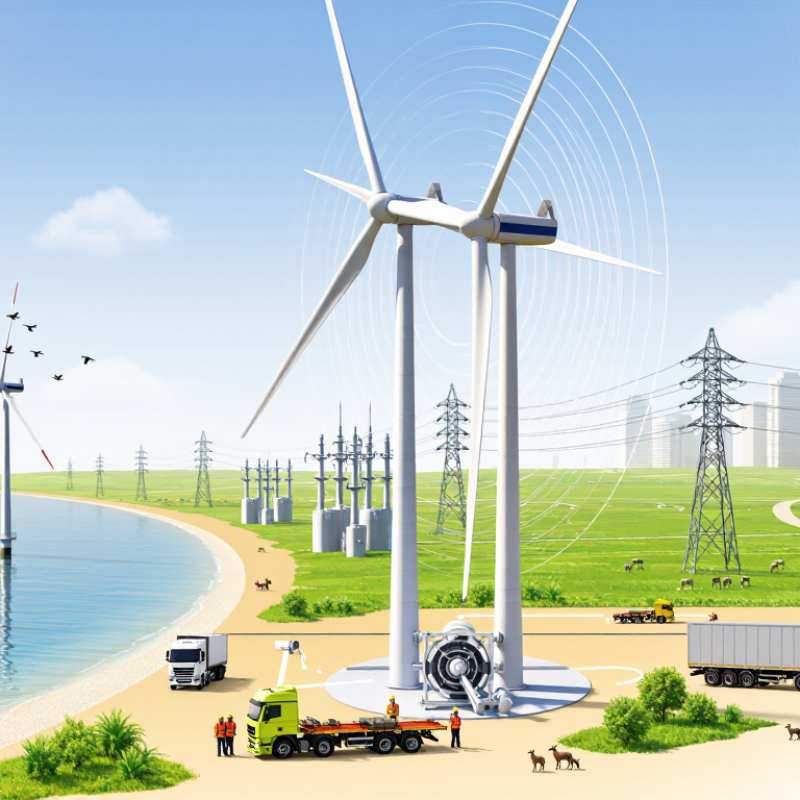
A wind turbine is a machine that converts moving air into electrical energy. Its visible parts include blades, a rotor, a nacelle, and a tall tower. Wind pushes the curved blades, making the rotor turn around a central shaft. Inside the nacelle, a generator changes that rotation into electricity. The tower lifts the rotor above trees and buildings, where winds are often stronger and steadier.
The blades do not simply catch wind like a sail. Their airfoil shape creates lift, similar to an aircraft wing. Sensors measure wind speed and direction, while control systems adjust the nacelle and blade angle. This helps the turbine capture energy without placing unnecessary stress on its structure. A modern unit may stand taller than a city building, with each blade stretching many meters.
Wind turbines work best in carefully studied locations. Engineers examine wind records, soil conditions, wildlife movement, grid access, and local communities. Output changes when the wind weakens. Wind is variable. Therefore, turbines cannot produce a constant amount of power. That limitation is easy to overlook. Maintenance crews inspect bolts, brakes, bearings, and blade surfaces for cracks or erosion. Small defects matter. Even with accurate models, real weather remains unpredictable, and performance may differ from early estimates.
A wind turbine converts the kinetic energy of moving air into electricity. As wind speed rises, the rotor produces more power until the turbine reaches its rated output. It then maintains that output until the wind becomes too strong, when the turbine shuts down for safety.
Representative power curve: This simplified example models a typical 3 MW wind turbine. It begins generating electricity at approximately 3 m/s, reaches rated power near 13 m/s, and stops operating at about 25 m/s to protect its components.
What Is a Wind Turbine and How Does It Work?
The Main Parts of a Wind Turbine
A wind turbine converts moving air into electrical power through several connected systems. Its rotor has blades, a hub, and a main shaft. Curved blades capture lift, much like an aircraft wing. The hub transfers that force into the nacelle, the housing behind the rotor.
Inside the nacelle, the gearbox may increase shaft speed before the generator produces electricity. Some modern turbines use direct-drive generators instead. A yaw system turns the nacelle toward the wind, while pitch controls adjust each blade’s angle. These controls matter during gusts. They also reduce mechanical stress. The tower supports the nacelle and rotor, while the foundation carries enormous bending loads. At the base, a transformer raises voltage for grid connection. Cabling, brakes, cooling equipment, and sensors complete the working system.
The Global Wind Energy Council reported 117 gigawatts of new wind capacity in 2023. Total global capacity passed 1,000 gigawatts. Those figures show the scale of these machines, but capacity alone does not explain performance. The International Renewable Energy Agency notes that wind output depends on site conditions, technology, and operating factors. A simplified diagram can mislead. Real turbines are less tidy, and maintenance access often shapes component design.
Tips: Inspect blade edges for erosion, check unusual vibration, and monitor temperature trends. Small changes can reveal bearing or gearbox problems early. Do not assume a larger rotor always performs better. Local wind speed and turbulence still matter.
A wind turbine converts moving air into rotating mechanical motion. Wind pushes curved blades, not simply “blows” them around. As air flows across each airfoil, pressure differences create lift and torque around the hub. The rotor turns slowly, often 10 to 20 revolutions per minute in large land turbines. That motion enters a gearbox or direct-drive generator. The generator converts rotation into electricity through electromagnetic induction. Small detail, major effect.
According to IRENA’s Renewable Capacity Statistics 2024, global wind capacity reached 1,017 gigawatts by the end of 2023. The Global Wind Report 2024 recorded 116.6 gigawatts of new wind capacity that year. These figures show scale, but installed capacity is not continuous output. Wind speed changes hourly. The U.S. Department of Energy explains that power rises approximately with the cube of wind speed within operating limits. A modest speed increase can produce much more torque. Still, turbulence, blade angle, air density, and wake losses complicate that neat equation.
In discussions among Vertical Axis Wind Turbine Design Manufacturers, engineers examine torque, starting behavior, fatigue, and maintenance access. Vertical-axis rotors accept wind from changing directions, yet some designs face lower efficiency or difficult structural loading. Field experience can challenge laboratory predictions. One performance number is never universal. A blade may look still from the ground, while its tip moves faster than a highway car. That contrast makes wind energy elegant, useful, and imperfect.
| Data Dimension | Typical or Reference Value | How It Relates to Wind Energy |
|---|---|---|
| Basic Wind Turbine Characteristics | ||
| Primary energy source | Moving air | The turbine converts the kinetic energy of wind into rotational mechanical energy and then into electrical energy. |
| Main energy-conversion sequence | Wind → blade rotation → shaft rotation → electricity | Aerodynamic lift turns the rotor, the drivetrain transfers torque, and the generator produces electrical power. |
| Common rotor configuration | Three blades, horizontal axis | Three-bladed horizontal-axis designs provide a practical balance of efficiency, stability, structural loading, and noise control. |
| Typical utility-scale rated capacity | 2–6 MW on land; 8–15 MW offshore | Rated capacity is the maximum continuous electrical output under the turbine's design conditions. |
| Typical rotor diameter | 80–180 m on land; 150–250 m offshore | A larger rotor sweeps a larger area and can capture more energy, especially at sites with lower average wind speeds. |
| How the Blades Create Motion | ||
| Main aerodynamic force | Lift | Air flowing around the curved blade creates a pressure difference that produces a tangential force and turns the rotor. |
| Secondary aerodynamic force | Drag | Drag acts in the direction of airflow and is managed through blade shape and operating controls. |
| Blade cross-section | Airfoil-shaped profile | The airfoil shape helps generate lift efficiently as air passes over the blade. |
| Blade pitch control | Blade angle is adjusted during operation | Changing the pitch angle controls aerodynamic force, limits loads, and helps maintain the desired power output. |
| Yaw control | Rotor aligned with wind direction | A yaw system turns the nacelle so the rotor faces the incoming wind more effectively. |
| Typical rotor speed | Approximately 5–20 revolutions per minute for large turbines | The large rotor turns relatively slowly, while a gearbox or power-electronic system enables efficient generator operation. |
| Wind Speed and Operating Range | ||
| Cut-in wind speed | Approximately 3–4 m/s | The rotor begins producing useful electrical power when the wind reaches this minimum operating speed. |
| Rated wind speed | Approximately 11–15 m/s | The turbine typically reaches its rated electrical output near this wind-speed range. |
| Cut-out wind speed | Approximately 20–25 m/s | The turbine shuts down or parks its rotor at very high wind speeds to protect the blades, drivetrain, and tower. |
| Wind-speed unit conversion | 1 m/s = 3.6 km/h | This conversion helps compare turbine operating speeds with commonly used weather reports. |
| Energy and Power Relationships | ||
| Wind power equation | P = ½ ρ A v3 | Available wind power depends on air density (ρ), swept area (A), and the cube of wind speed (v). |
| Air density reference | Approximately 1.225 kg/m³ at sea level and 15°C | Colder, denser air contains more energy per unit volume than warmer or higher-altitude air. |
| Rotor swept area | A = πR2 = πD2/4 | Because swept area increases with the square of rotor diameter, larger rotors can intercept substantially more wind. |
| Effect of doubling wind speed | Available power increases by a factor of 8 | The cubic relationship explains why small increases in wind speed can produce large increases in potential power. |
| Theoretical maximum aerodynamic efficiency | 59.3% of the wind's kinetic power | The Betz limit shows that no wind turbine can extract all the energy from moving air because some wind must continue through the rotor. |
| Typical practical power coefficient | Approximately 0.35–0.45 | The power coefficient represents the fraction of available wind power captured by the rotor under operating conditions. |
| Capacity factor | Commonly about 25–45%, depending on the site | Capacity factor compares actual annual energy production with the energy that would be produced if the turbine operated at rated power continuously. |
| Major Components and Their Functions | ||
| Blades | Usually 3 large composite blades | Blades capture wind energy and convert it into rotational torque at the hub. |
| Hub | Central rotor connection | The hub connects the blades to the main shaft and transfers their rotation into the nacelle. |
| Nacelle | Housing mounted on top of the tower | The nacelle contains or supports the gearbox, generator, brake, shafts, controls, and monitoring equipment. |
| Gearbox | Used in many turbine designs; direct-drive designs may omit it | A gearbox increases the relatively slow rotor speed to a speed suitable for some generators. |
| Generator | Electromagnetic energy converter | The generator converts mechanical rotation into electrical energy through electromagnetic induction. |
| Power converter | Electronic conditioning system | Power electronics regulate voltage, frequency, and grid compatibility before electricity is delivered to the electrical network. |
| Tower | Typically 80–150 m for many modern land-based turbines | Greater height often provides access to stronger and less turbulent winds, although it also increases structural requirements. |
| Foundation | Reinforced concrete on land; fixed or floating structures offshore | The foundation transfers turbine loads into the ground or seabed and keeps the structure stable. |
| Electricity Production and Safety | ||
| Generator output | Variable voltage and frequency before conditioning | Rotor speed can vary with wind conditions, so electrical output is commonly regulated before grid connection. |
| Mechanical braking | Used for stopping and maintenance | Brakes can hold the rotor stationary when required, while aerodynamic pitch control is often used for normal power limiting. |
| Emergency shutdown | Automatic control response | High winds, excessive vibration, electrical faults, or abnormal temperatures can trigger a protective shutdown. |
| Energy measurement | Usually reported in kW, MW, kWh, or MWh | Power describes the rate of energy production, while energy describes the accumulated electricity generated over time. |
Note: Values are representative engineering ranges rather than specifications for a particular turbine. Actual dimensions, wind-speed limits, power output, and efficiency vary with design, location, altitude, temperature, and operating conditions.
A wind turbine converts moving air into mechanical energy before producing electricity. Its blades capture the wind and rotate around a central hub. The rotor transfers this motion to a shaft inside the nacelle. Mechanical energy begins here. Some turbines use a gearbox to increase rotational speed, while direct-drive systems connect the shaft to the generator. Both designs have advantages, but neither removes every engineering challenge.
Inside the generator, rotating magnets move past copper coils. This movement creates an electrical current through electromagnetic induction. The electricity then passes through power electronics, which adjust its voltage and frequency. A transformer raises the voltage for safer, more efficient transmission. Sensors continuously monitor wind speed, rotor speed, temperature, and vibration. When conditions become dangerous, the control system reduces rotation or applies the brake.
A Vertical Axis Wind Turbine Design Manufacturer may focus on compact machines for urban or turbulent wind conditions. Their designs often place the generator closer to the ground, simplifying inspection and maintenance. However, lower noise does not always mean higher output. Air turbulence, blade drag, and generator losses can reduce performance. Field measurements matter more than attractive computer models. Even small alignment errors can create uneven loads across the shaft. Engineers learn from these imperfections, although real-world testing can reveal problems that calculations miss.
A wind turbine converts moving air into electricity through a simple chain: blades turn, a rotor spins, and a generator produces power. Most land-based machines use horizontal-axis designs, with blades facing the wind like a giant propeller. They suit open farmland and steady wind corridors. Taller towers reach faster air above trees and buildings. Still, height increases transport, foundation, and maintenance demands. That trade-off is easy to underestimate.
Vertical-axis wind turbines rotate around a vertical shaft. Their blades can accept wind from several directions, so they do not need a yaw system. This makes them interesting for urban edges, remote sensors, and compact sites. A High-Quality Vertical Axis Wind Turbine Design must control vibration, fatigue, noise, and starting performance. Some models struggle to start without adequate wind. Real-world testing matters more than attractive drawings.
Offshore turbines use stronger towers and corrosion-resistant components. They can capture steadier winds, but installation and repairs require specialized vessels. Onshore turbines usually cost less and support farms, factories, microgrids, or isolated homes. Small turbines can charge batteries for weather stations or communication equipment. Output changes with wind speed, so storage or another power source may be necessary. Site surveys should measure turbulence, wildlife movement, local weather, and nearby obstacles. Even experienced designers revise plans after monitoring a site for a full season.
Wind turbine performance depends on more than rated power. Wind speed is the strongest factor, because available energy rises roughly with the cube of speed. A small increase can produce a large output change. The Global Wind Energy Council reported 117 GW of new wind capacity in 2023, showing continued growth, but location remains critical. Turbines need steady airflow, not occasional strong gusts.
Air density also matters. Cold, dense air can improve production, while hot air slightly reduces it. Turbulence from buildings, trees, and uneven ground creates vibration and uneven loading. Blade length, rotor height, control settings, gearbox condition, and maintenance schedules affect real output. The International Energy Agency notes that capacity factors vary widely by site and technology. A rated 5 kW turbine will not deliver 5 kW continuously. That assumption is common, but wrong.
Tips: Measure wind at the planned hub height for several months. Check seasonal patterns, obstacles, and turbulence before buying. For a CE Certification Wind Power Turbine For Home, confirm that certification covers the complete unit and relevant safety requirements. Certification supports compliance, not guaranteed energy production. Keep blades clean and inspect bolts after severe weather. A neat spreadsheet can still mislead. Local measurements are often less impressive, yet more useful than promotional estimates.
The 500W Vertical Solar Tubular Panel is designed to deliver dependable renewable power while adapting to a wide range of environments. Its vertical structure captures sunlight efficiently throughout the day and creates a slim, free-standing installation that fits naturally into residential, commercial, agricultural, and outdoor spaces. Compared with broader horizontal systems, the streamlined design presents less surface area to strong winds, helping improve stability and reduce structural demands in exposed locations.
Built for practical, long-term use, this solar-powered structure combines efficient energy generation with a compact footprint and minimal maintenance requirements. Its clean appearance allows it to integrate smoothly into surrounding landscapes without occupying excessive ground space. Manufactured by an experienced supplier and factory in China, the system is developed with careful attention to quality, durability, and sustainable energy needs. The 500W capacity supports a variety of applications, from supplemental electricity for remote facilities to environmentally friendly power solutions for everyday infrastructure.
Moving air crosses curved blades and creates pressure differences. This produces lift and torque around the central hub.
Many large land turbines rotate about 10 to 20 times per minute. The blade tips still move surprisingly fast.
The rotor turns a shaft connected to a generator. Magnets pass copper coils, creating current through electromagnetic induction.
Power electronics adjust voltage and frequency. A transformer then raises voltage for more efficient transmission.
Within operating limits, power rises approximately with the cube of wind speed. A small speed increase can create much more torque.
No. Wind changes hourly, so actual output varies. Capacity shows potential scale, not continuous generation.
Sensors track wind speed, rotation, temperature, and vibration. Controls can slow the rotor or apply brakes.
They can accept wind from changing directions. Their generators may sit near the ground, making inspection easier.
Some designs experience lower efficiency, blade drag, or difficult structural loading. Real field results may differ from computer predictions.
Turbulence, air density, blade angle, wake losses, and alignment affect results. One number rarely tells the whole story.
A Wind Turbine is a machine that converts the natural movement of air into useful energy. Its main parts include the blades, rotor, hub, nacelle, tower, generator, gearbox or direct-drive system, and control equipment. When wind pushes against the blades, their curved shape creates lift and causes the rotor to spin. This rotating motion travels through the main shaft and drives a generator, which changes mechanical energy into electrical power. The electricity can then be delivered to a local system or stored for later use.
Wind turbines come in different designs and sizes. Horizontal-axis turbines are commonly used in large wind farms, while vertical-axis models can be suitable for certain urban or compact locations. They may support homes, businesses, remote facilities, or large power networks. Performance depends on wind speed, air density, blade design, turbine height, terrain, maintenance, and the consistency of the wind. Careful placement and efficient control systems help a turbine produce more reliable electricity.