


Why Vertical Solar Tubes Are Suitable for MIPV Systems?
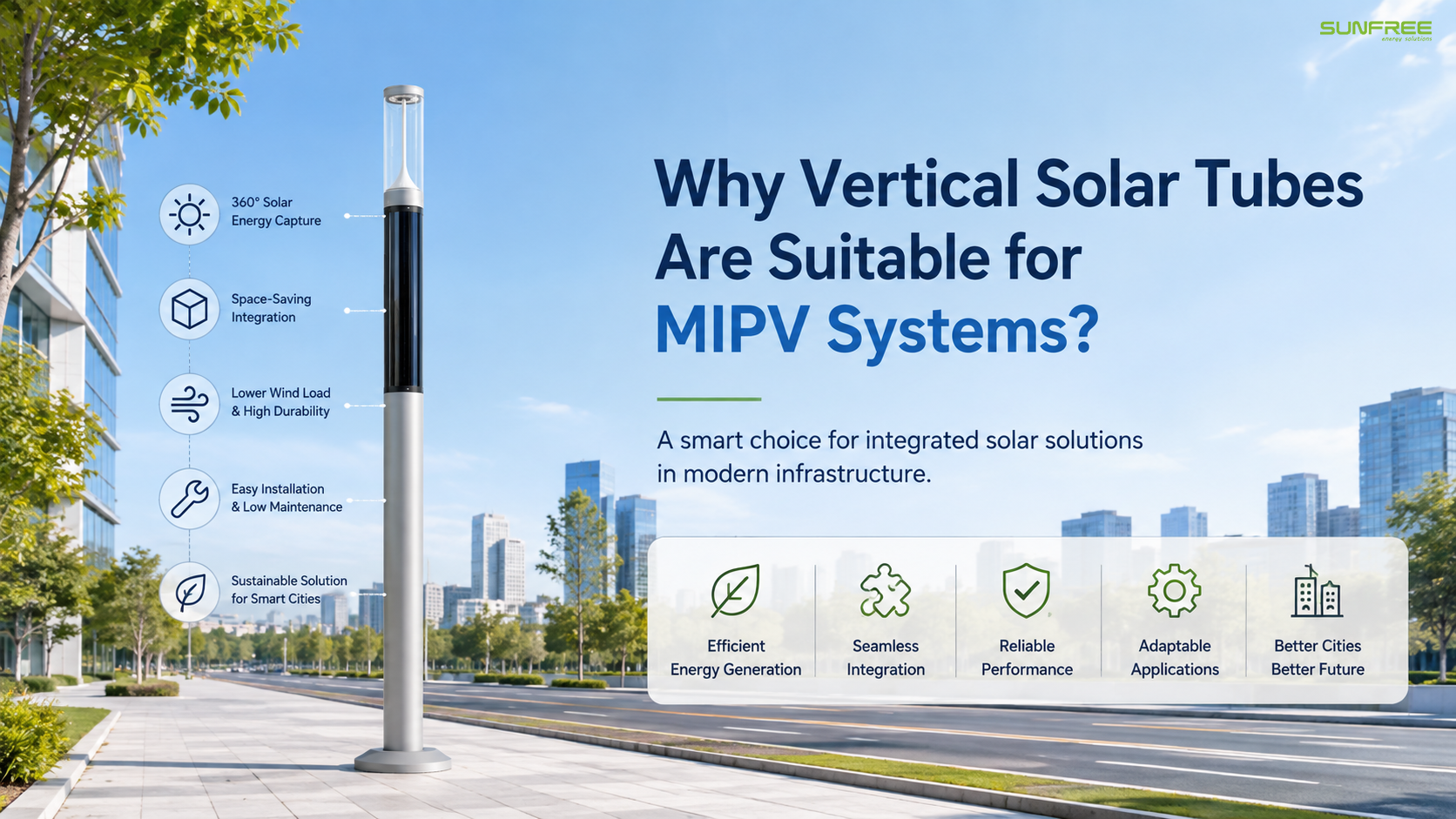
MIPV stands for Mount Integrated Photovoltaics. It focuses on integrating Solar Power directly into infrastructure. This includes light poles, smart poles, parking facilities, and surveillance gear. Unlike traditional solar applications, MIPV modules do more than just generate electricity. They must also fit the structure, space, and operating environment of the infrastructure itself. Because of this, the shape and the mounting method of the modules are vital parts of the whole system design.
In this context, Vertical Solar Tubes offer a fresh design concept. They are very different from traditional flat solar panels. So, why do vertical solar tubes fit MIPV systems so well?
- Better suited for space-constrained infrastructure
Traditional flat solar panels usually require a large installation area. Engineers must mount them onto infrastructure using separate brackets. When we deploy them on city roads, parking lots, parks, or other public spaces, these extra brackets and mounting areas increase structural complexity.
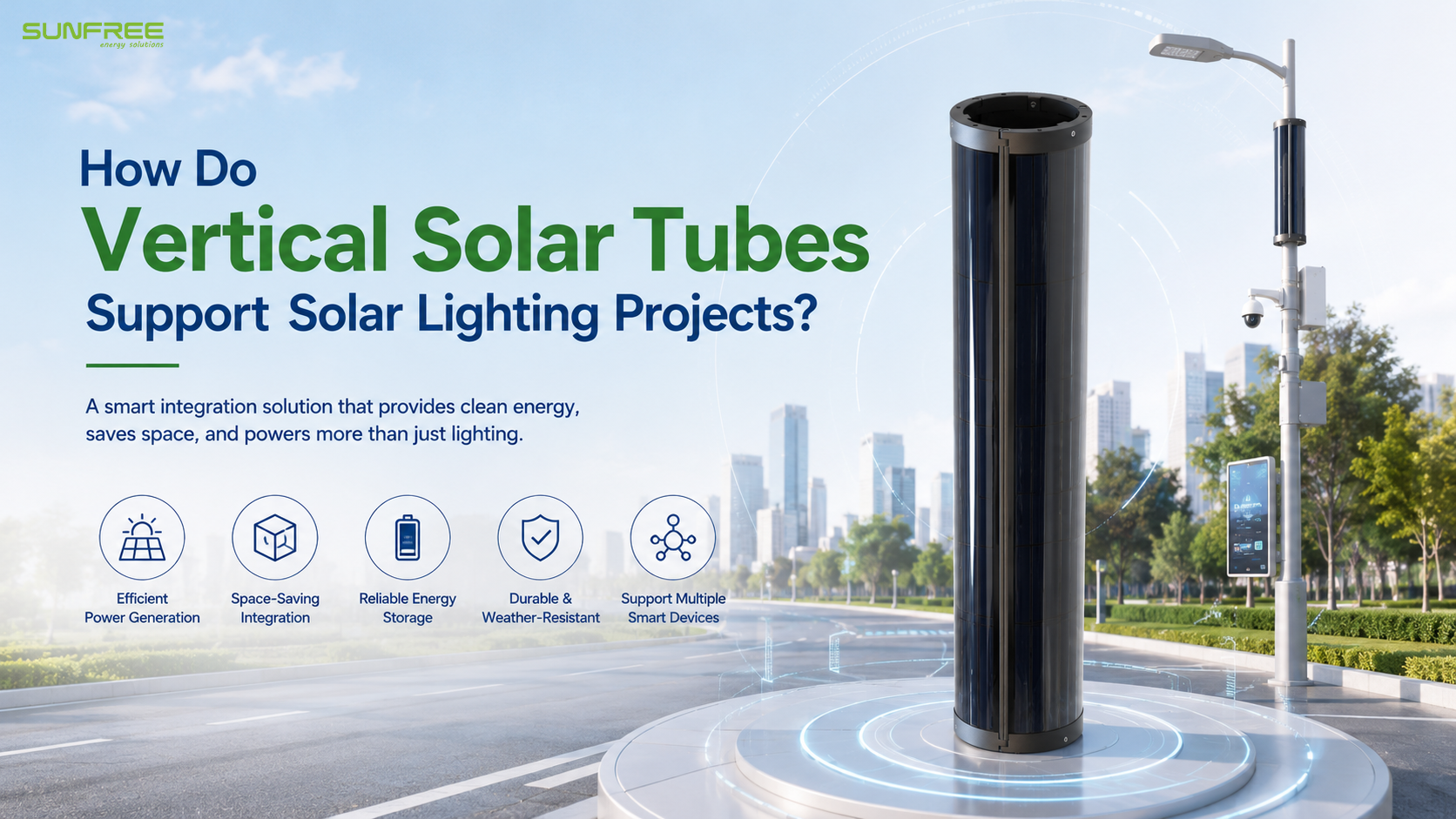
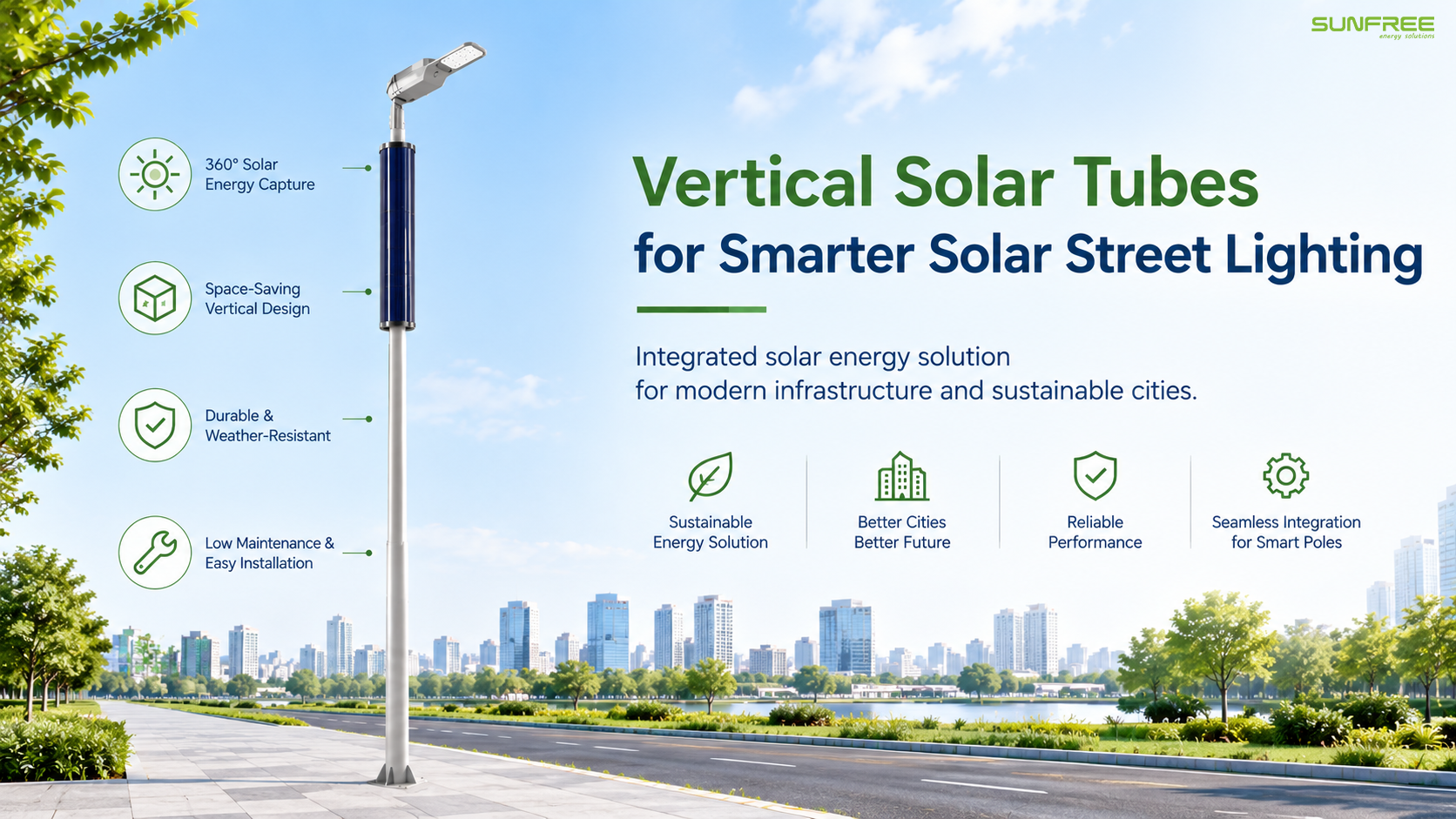
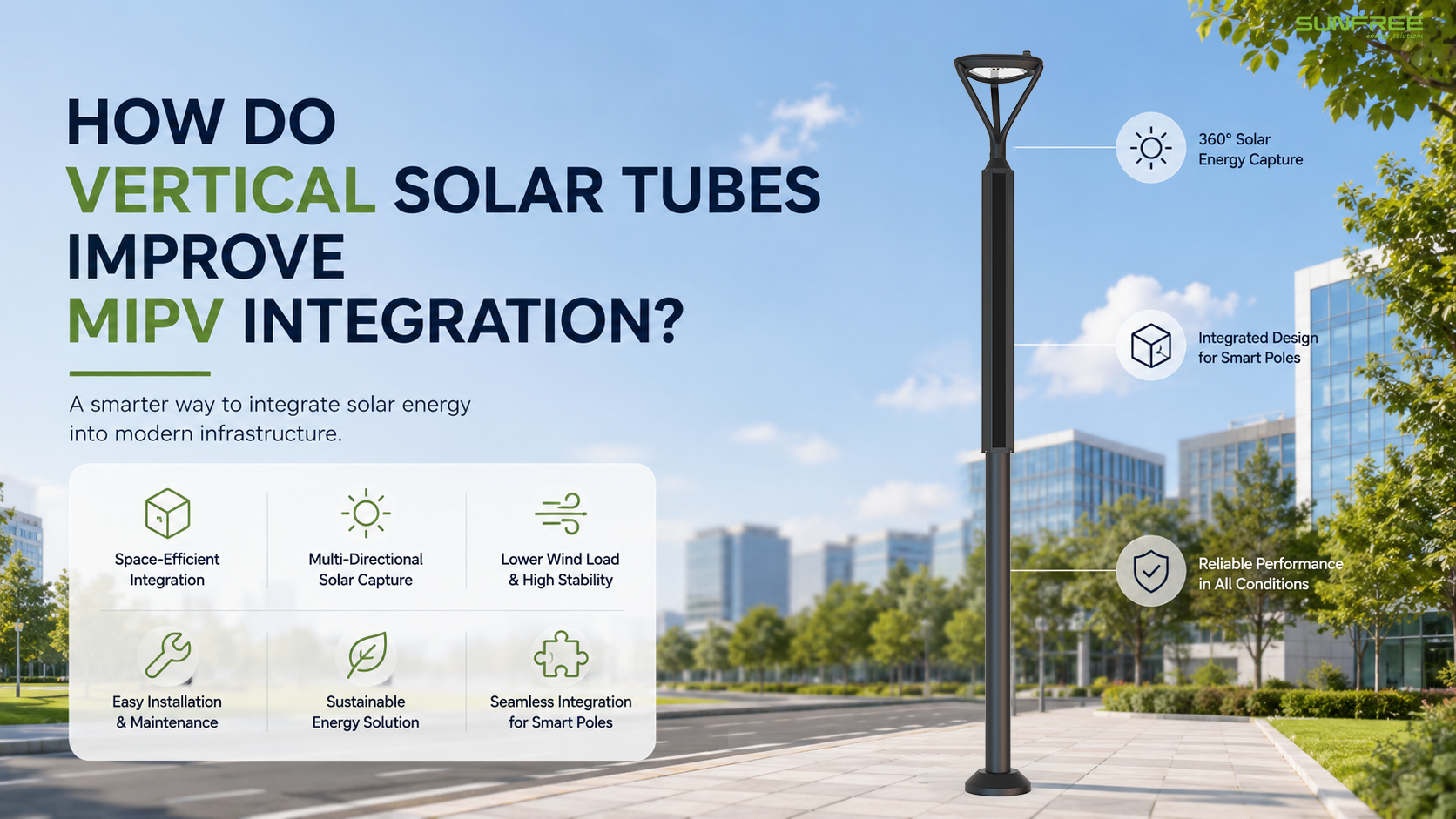
Vertical solar tubes use a cylindrical structure. We can wrap them directly around a pole or integrate them straight into the pole body. We do not need large, tilted mounting brackets anymore. For urban projects with limited space, this design makes full use of vertical space on existing infrastructure.
This is a major difference between MIPV and traditional setups. In traditional setups, people simply mount solar panels onto infrastructure. In MIPV, solar modules become a natural part of the infrastructure design itself.
- Capturing sunlight from multiple directions
Traditional flat solar panels require careful planning for orientation and tilt angles. Vertical solar tubes, on the other hand, feature a curved cylindrical surface. Solar cells can spread across surfaces facing different directions.
For road and urban street applications, the sun moves across the sky throughout the day. If a solar panel faces only one direction, it captures less light during certain hours. Vertical solar tubes receive natural light from different angles, which gives system designers much more flexibility.
Of course, actual power output still depends on local latitude, season, weather, shading, and module specifications. We still need to evaluate each project on a case-by-case basis.
- Reducing extra structural design
The core idea of MIPV is integration. If solar modules still rely on complex external brackets, they remain separate from the pole structure. That complicates both engineering design and on-site construction.
Vertical solar tubes allow seamless integration with the pole body. They turn the solar components and the infrastructure into one unified structure. This eliminates extra mounting frames. It also allows engineers to coordinate the solar modules, the pole, lighting fixtures, and other functional devices right from the start of the project.
This design approach is ideal for urban public facilities that must balance clean aesthetics, structural strength, and practical function.
- Adapting to diverse MIPV applications
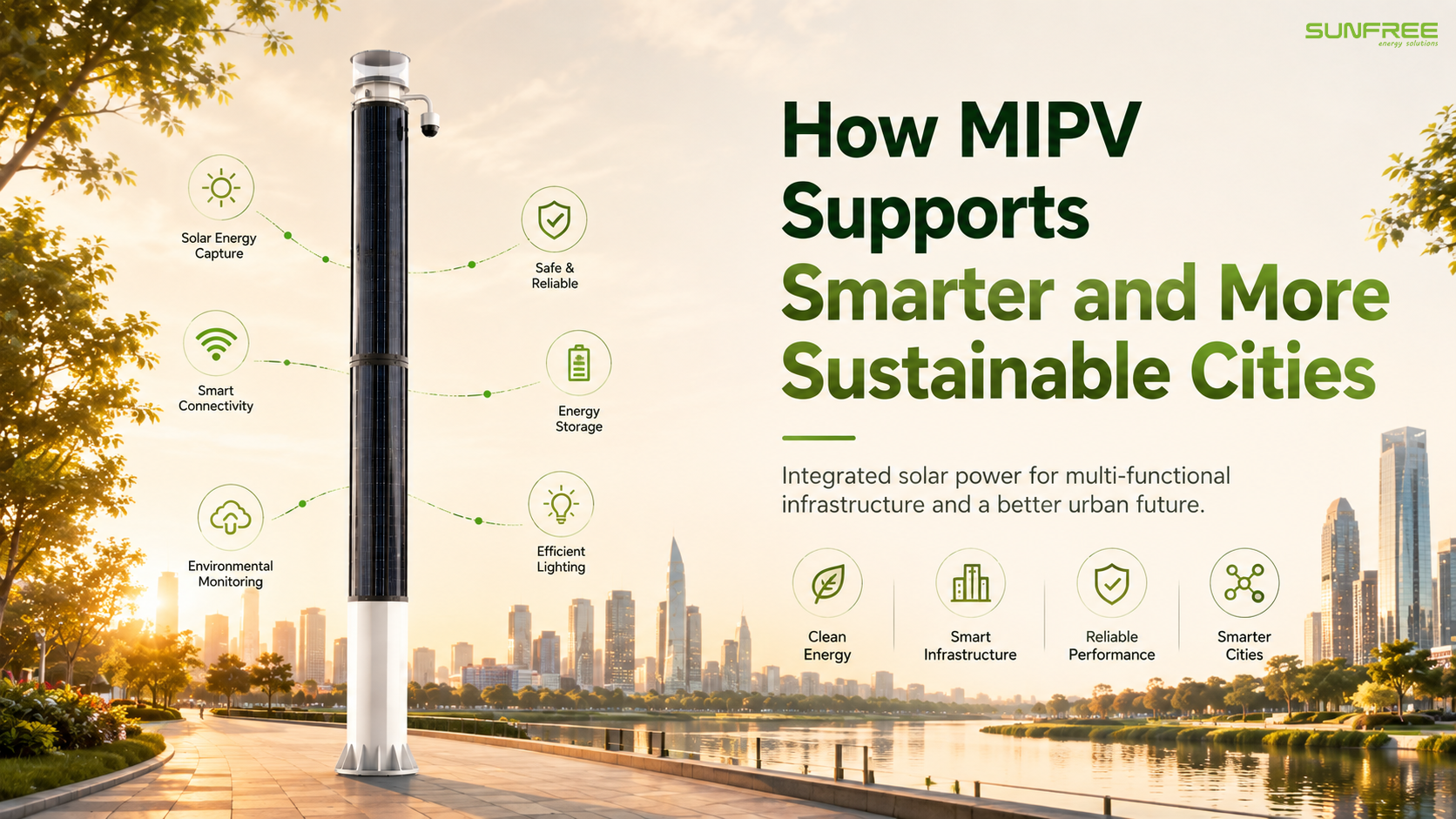
MIPV goes far beyond standard solar streetlights. Depending on project needs, a single pole might combine lighting, video surveillance, parking guidance, weather monitoring, and telecom equipment.
Vertical solar tubes feature a modular design. We can tailor them to match different poles and combine them with various functional devices. For example, in street lighting projects, we can combine them directly with LED luminaires. In smart city projects, we can pair them with cameras, sensors, and other smart devices.
Therefore, vertical solar tubes offer more than just a new product shape. They provide a flexible integration method for diverse MIPV systems.
- Better suited for system-level design
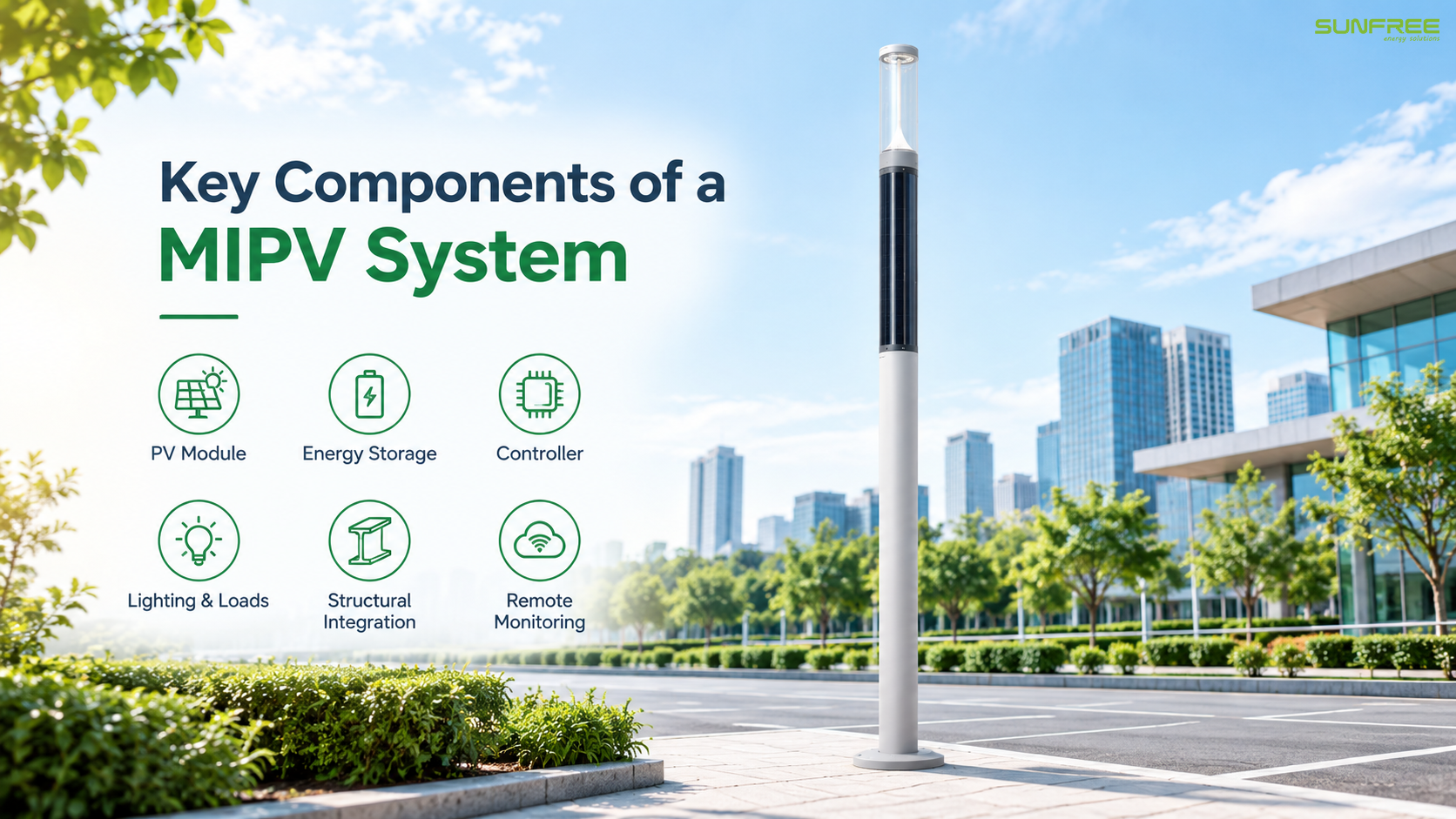
An MIPV system requires an integrated design. It brings together solar power generation, battery storage, controllers, lighting, and other electrical loads. Solar modules do not operate in isolation. Their size, power rating, and mounting method directly shape the entire system setup.
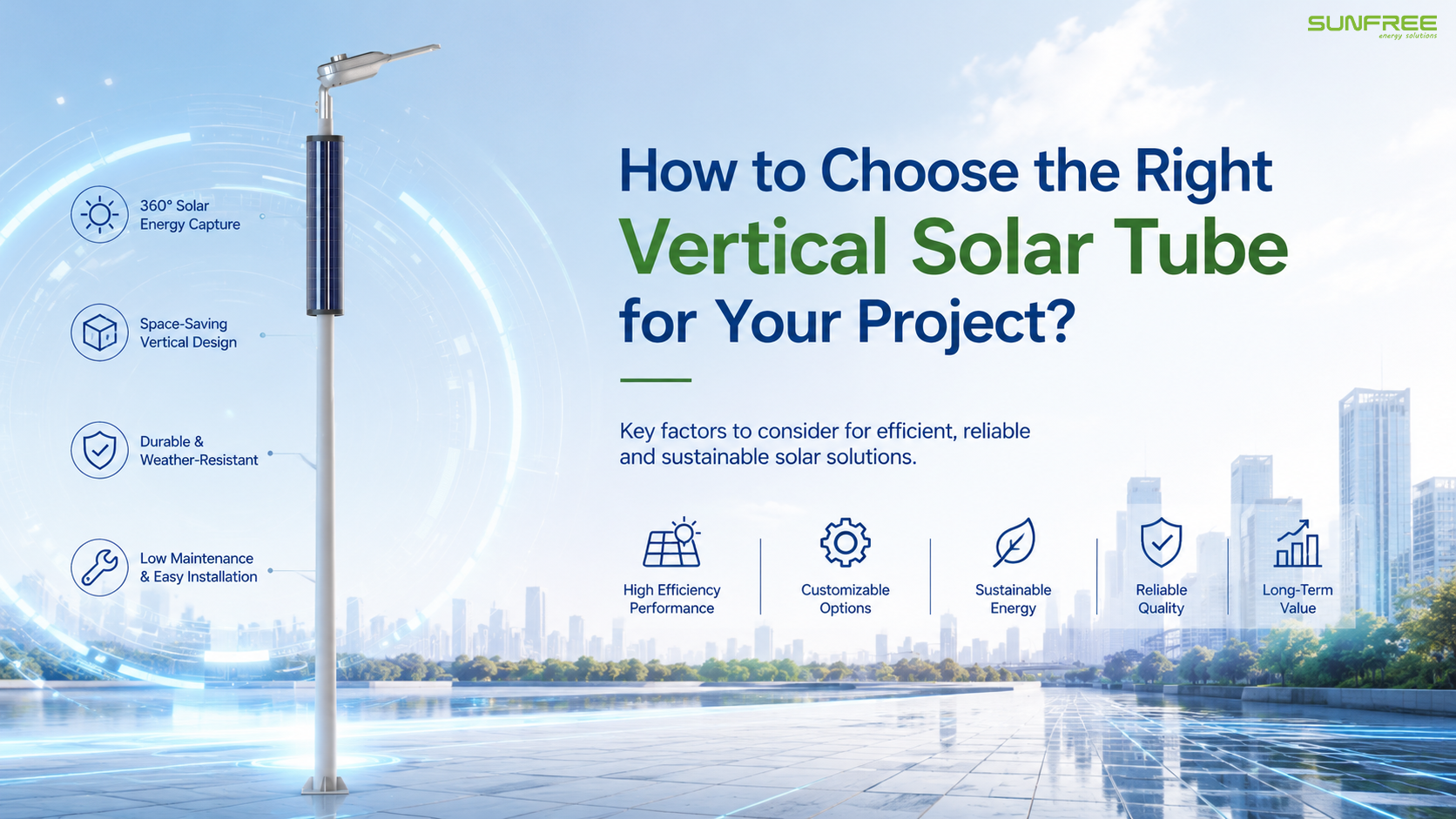
Vertical solar tubes can match pole height, application scenarios, power demands, and connected devices. For example, different projects can select different tube lengths, module counts, and wattage options. Designers can then balance these choices with battery capacity, controller features, and load requirements.
When designing an MIPV system, the goal is not simply to pick a bigger solar panel. The goal is to find the right solar form that matches the infrastructure, the energy demand, and the local environment.
- Shifting from mounting solar to integrating solar
Traditional solar applications follow a simple sequence: build the infrastructure first, and then find a place to bolt on solar panels. MIPV takes the opposite approach. It incorporates solar power into the overall structure right at the initial design phase.
Vertical solar tubes fit this philosophy completely. They blend power generation directly into poles and other vertical structures. This allows us to combine power generation, lighting, and other services within very compact spaces.
For urban roads, parks, parking lots, and smart cities, this approach removes the need for extra ground space. It also creates a much tighter bond between solar energy and public infrastructure.
Summary
Vertical solar tubes fit MIPV systems not because they replace all flat solar panels. They stand out because they offer a brand-new design option for infrastructure integration.
Many projects face tight space constraints, need multi-directional sunlight, want fewer brackets, and must combine solar power with lights, cameras, and sensors. For these projects, vertical solar tubes serve as an effective solution within MIPV systems.
Today, solar power is moving away from standalone power plants and entering our roadways, municipal facilities, and smart city networks. Solar modules must now evolve from being easy to install to being easy to integrate. That is the true design value of vertical solar tubes in MIPV systems.